Christmas
AlwaysChristmas is the novel’s recurring marker of family life: a holiday Linc hopes to share with Emma and the children they love, and the occasion around which their wedding becomes a promise of a household taking shape. Its meaning culminates in the Christmas-week ceremony that joins Emma and Linc while leaving room for Paige’s return and the repair of damaged bonds.
Family and the Hope of Parenthood
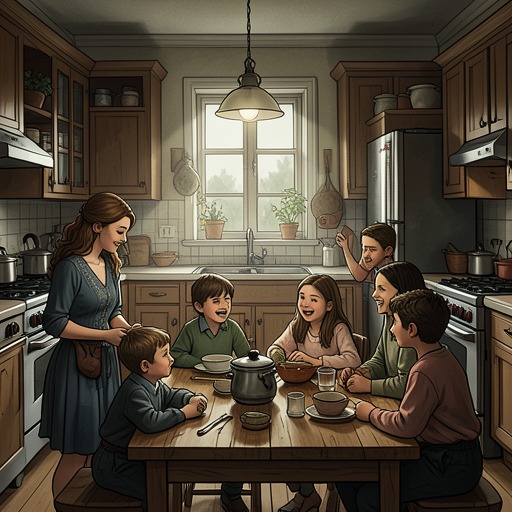
Linc’s connection to Christmas sits within a larger longing for a family. He enjoys time with Nathan and Gillian and their children, and with Jake, Sara, and their young son; over the preceding months, he has seriously considered adopting children of his own. His failed relationship with Colleen had left that hope bruised: she had ended a pregnancy without telling him, and he learned the truth only after answering her clinic’s call and confronting her. The contrast between that experience and the family life he observes around him helps explain why the prospect of a home matters so much to him.
When Linc looks at the bungalow’s front door, he recognizes it as a home. The thought gives his wish for family a concrete setting rather than leaving it as an abstract dream. Christmas later supplies a shared occasion for that home: the couple decides to marry before the holiday so they can celebrate together at Linc’s house as a family.
A Holiday Against Rupture
The Christmas gathering is shadowed by the wounds that have unsettled this family. Paige’s disappearance is ultimately explained by her guilt over sleeping with Emma’s husband, Barrett. Emma first hears the revelation from Linc; Paige then recounts how the encounter began with laughter during a movie and Barrett’s kiss, followed by his insistence that it remain a secret. Emma understands the betrayal as bound up with Barrett’s resentment and Paige’s distress, and embraces her sister as they grieve both what has been lost and the possibility that their relationship may never be the same.
That reconciliation remains a hope rather than a completed restoration. At the wedding, Paige takes Becky’s hand and smiles at Emma with the hope of putting things right. She is staying through the holidays, and Emma hopes the time together will help them recover their former closeness. Christmas therefore gathers the family without pretending that betrayal has vanished: its promise rests in their willingness to be together while the repair is still unfinished.
Wedding and Family Gathering
The epilogue places the wedding during the week before Christmas. In the candlelit service at the small church Emma attends, a harpist plays as Emma, wearing a cream satin gown and a wreath of pink sweetheart roses, walks down the aisle holding Becky’s hand. Linc waits at the altar in a tuxedo. The ceremony turns the approaching holiday into the couple’s first planned celebration as a family.
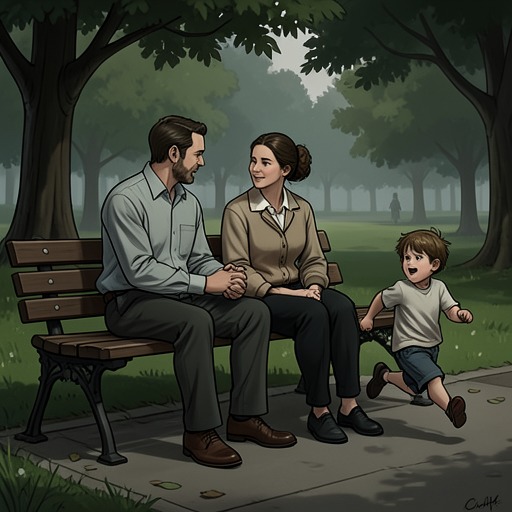
Their guests make that family visible. Paige stands in the first pew with Becky; Emma also sees Jake, Sara, and Christopher, Nathan and Gillian with their young son Matthew, and Maris, Olivia, and Earl. The gathering draws together people whose lives have been shaped by loss, separation, and new attachments. Rather than resolving every difficulty, the wedding gives these relationships a shared setting and a future occasion around which to continue.
Promises and the Meaning of Christmas
The vows give the holiday’s family promise explicit form. Emma promises to consider Linc’s wishes in raising Becky and to let him be the father he wants to be. Linc tells her that she and Becky are gifts he never expected, and calls the coming Christmas the most joyful he has experienced. Their bands are engraved with “Always,” a word that joins their declarations of love to an enduring commitment.
The narrative’s final Christmas is thus more than a date on the calendar: it is the first holiday the couple expects to share after choosing marriage, while Paige remains with them and the wider circle gathers around them. The celebration represents a family made not by an unbroken past but by present decisions—to love, to include, and to keep open the possibility of reconciliation.