
The Circle of Companions
AnalectsThis thread traces how Confucius's students form a community through distinct temperaments, shared questioning, mutual formation, and competing ideas of a good life.
increasing Bearing strength in each event
 decreasing
Bearing strength in each eventdecreasingA Group of Different Strengths
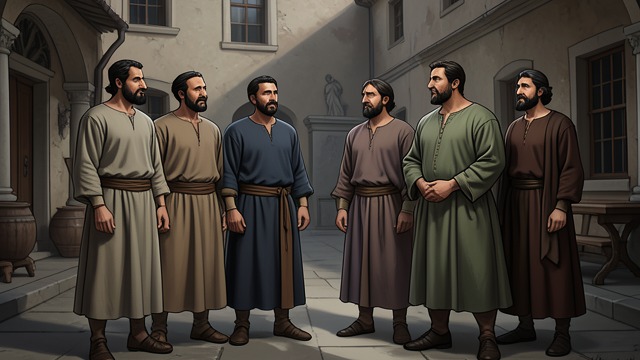
A Community of Abilities
Distinct Fields
Confucius remembers Yan Hui, Min Ziqian, Ran Boniu, and Zhonggong for virtuous conduct.
Zai Yu and Zigong are noted for speech; Ran You and Zilu for administration.
Ziyou and Zixia are associated with literary learning.
A Shared School
The list does not make one student the measure of all others.
Each brings a different capacity into the community.
Their variety gives teaching a social form.
Sitting Together to Speak

A Teacher Invites Candor
No Deference Required
Confucius tells Zilu, Zeng Xi, Ran You, and Gongxi Hua not to let his age silence them.
He asks what they would do if a ruler recognized them.
The question invites political hopes into the group.
Distinct Answers
Zilu imagines governing a threatened state; Ran You describes making a smaller territory prosperous.
Gongxi Hua wants to assist at ceremonies.
Their differences reveal both shared ambition and different temperaments.
Zeng Xi's Spring Vision

An Alternative to Office
A Different Desire
Zeng Xi sets aside his instrument and describes washing in a stream with young people in spring.
He imagines enjoying the breeze and returning home singing.
His answer contrasts with plans for administration and ceremony.
Confucius's Approval
Confucius sighs and says he agrees with Zeng Xi.
The approval does not dismiss public service.
It makes room for communal ease as a worthy human aspiration.
Returning From Chen and Cai
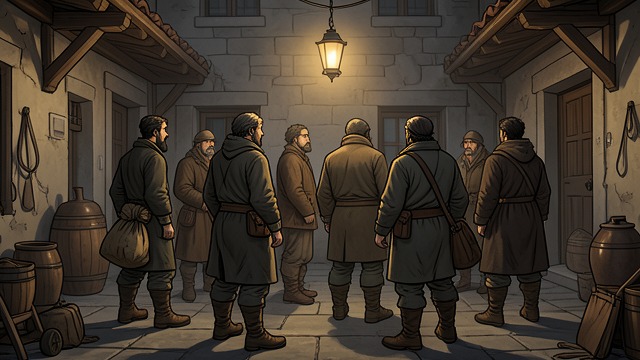
Companionship Tested by Want
A Fractured Journey
Confucius recalls that the students who accompanied him in Chen and Cai are no longer gathered at his door.
The journey had tested their bodies and loyalty.
The absence gives the school a history of separation.
Memory as Fellowship
He names different students by their strengths.
The recollection keeps the scattered group present through teaching.
Shared hardship becomes part of their common identity.
Friendship as Moral Support
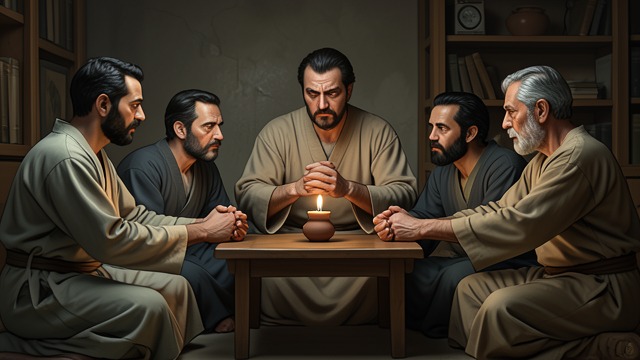
Learning Together
Culture Makes a Meeting
Zengzi says the superior person meets friends through culture and learning.
Conversation is not merely companionship or advantage seeking.
It creates occasions to test understanding.
Friendship Sustains Virtue
Friends help one another cultivate humane conduct.
The circle of students is therefore an ethical community.
Its ties continue beyond a single lesson or journey.
During Confucius's account of his students
During the conversation about each student's wishes
At the close of the students' discussion of their wishes
After the ordeal at Chen and Cai
During Zengzi's reflection on friendship
