
Public Service and Withdrawal
AnalectsThis thread follows Confucius's recurring choice to seek useful office, refuse corrupt conditions, and continue serving through teaching when politics fails.
increasing Bearing strength in each event
 decreasing
Bearing strength in each eventdecreasingA Conditional Welcome
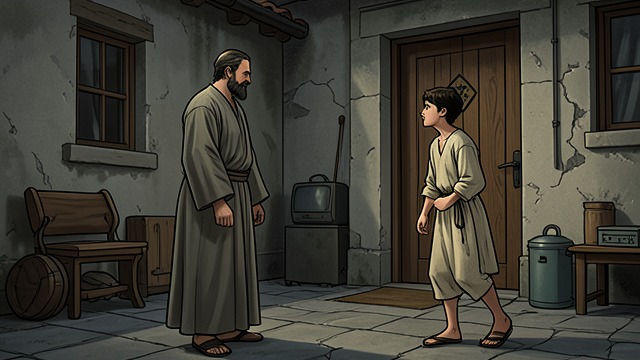
The Call of Office
A Reluctant Opening
Yang Huo challenges Confucius for keeping his abilities out of public service.
He argues that the passing years make continued delay irresponsible.
Confucius finally says he will take office.
Service Under Pressure
The reply leaves open whether the summons is just or self-serving.
Public usefulness pulls against caution about political company.
The episode establishes a recurring tension in his career.
The Eastern Zhou Possibility

Opportunity in Rebellion
A Controversial Invitation
Gongshan Furao, holding Bi in revolt, invites Confucius to visit.
Confucius considers going, imagining that a new political order might be made.
Zilu objects that the invitation comes from a rebel.
Purpose Against Reputation
Confucius asks whether the summons could be without purpose.
The possibility of reform draws him toward a dangerous patron.
Zilu's challenge exposes the cost of mistaking access for legitimate service.
The Gourd's Use
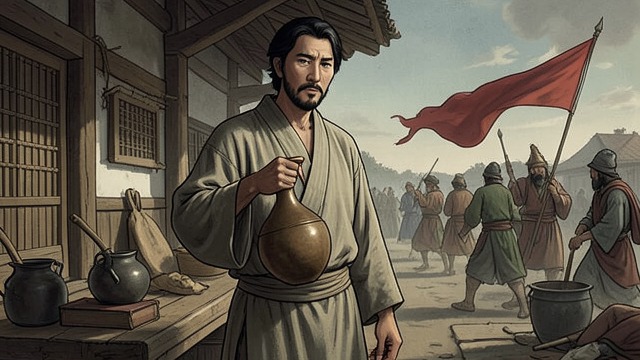
Refusing Inert Seclusion
A Second Difficult Call
Bi Xi invites Confucius while holding Zhongmou in rebellion.
Zilu reminds his teacher that a superior man should avoid a wrongdoer.
The choice repeats the conflict between political risk and public usefulness.
A Refusal to Be Wasted
Confucius answers that true integrity can withstand contact with corruption.
He compares himself to a gourd that cannot remain suspended and uneaten.
His image insists that ability should be put to use.
Leaving an Unworthy Court

The Cost of Remaining
A Court Distracted
The people of Qi send female musicians to Lu, and Ji Huan accepts them.
For three days the court does not convene.
The failure of public duty becomes a visible institutional judgment.
Departure as Protest
Confucius leaves Lu rather than treat the spectacle as harmless.
His exit turns refusal into a political act.
The loss of position does not cancel his standard for service.
Office Without Compromise
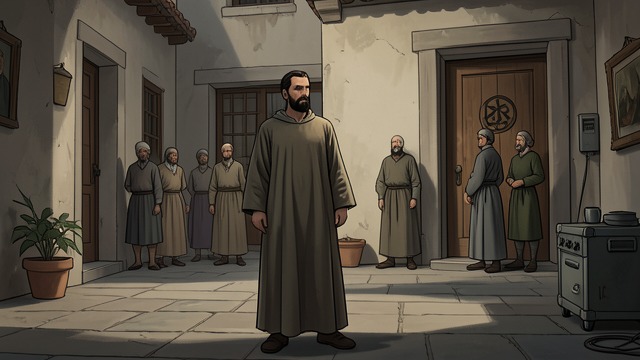
Action and Retirement
A Conditional Principle
Confucius says that when called to office he acts, and when set aside he withdraws.
He presents neither constant ambition nor permanent seclusion as the proper course.
Service depends on the circumstances of legitimate opportunity.
A Continuing Public Life
Withdrawal does not make him indifferent to human society.
He keeps teaching and preparing students for public responsibility.
His vocation survives the loss of office without pretending the loss is unimportant.
During Yang Huo's attempt to meet Confucius
When Gongshan Furao summons Confucius
When Bi Xi summons Confucius
After the musicians' gift reached Lu
During Confucius's later reflections on service
