
Zigong's Growth in Judgment
AnalectsThis thread traces Zigong's movement from skilled questioning and self-comparison toward a more sophisticated understanding of virtue and public value.
increasing Bearing strength in each event
 decreasing
Bearing strength in each eventdecreasingOne Point and Its Sequence
Reading Beyond the Answer
A Provocative Comparison
Zigong asks whether a poor person who does not flatter and a rich person who is not proud are admirable.
Confucius says they are acceptable but not as exemplary as cheerful poverty and love of propriety.
The answer raises the standard beyond mere restraint.
The Poem as Insight
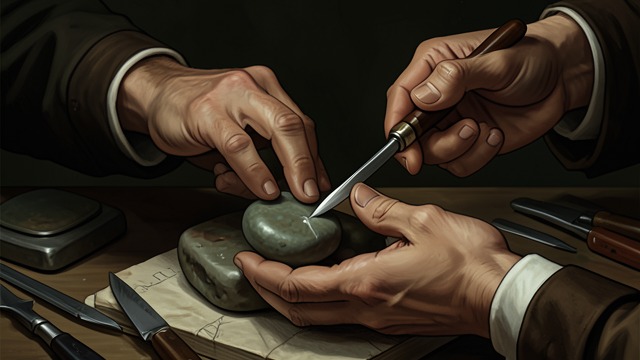
Zigong recalls the image of cutting, filing, carving, and polishing in the Book of Poetry.
Confucius praises his ability to infer what follows from one point.
Their exchange makes learning an active partnership.
Measuring Himself Against Hui

Honest Self-Assessment
A Unequal Comparison
Confucius asks Zigong whether he or Yan Hui is superior.
Zigong says Yan Hui hears one point and understands ten, while he understands two.
His answer demonstrates candor rather than self-promotion.
A Teacher's Confirmation
Confucius agrees that Zigong does not equal Yan Hui.
The comparison establishes distinct abilities without denying Zigong's own intelligence.
Humility becomes part of his education.
The Limits of Reciprocity

A Noble Rule Tested
Zigong's Formulation
Zigong says he does not wish to do to others what he would not want done to himself.
He proposes a demanding rule of reciprocal conduct.
Confucius replies that Zigong has not yet reached its full practice.
Principle Versus Achievement
The reply prevents a good formulation from becoming a claim of moral completion.
Ethical insight must be embodied over time.
Zigong's confidence is tempered without dismissing his aspiration.
Words Against Ornament

The Whole Person
A Narrow Definition
A speaker claims that a superior person needs substance but not refinement.
Zigong warns that words can outrun their speaker and insists that substance and ornament depend on one another.
He uses animal hides to show how stripping away surface changes what remains.
Discernment in Public Debate
The exchange reveals Zigong as a defender of balanced formation.
His polished speech serves a substantive argument rather than replacing it.
The student increasingly speaks with his own judgment.
Defending the Master's Scale
A Wall Beyond the Shoulder
A Comparison Refused
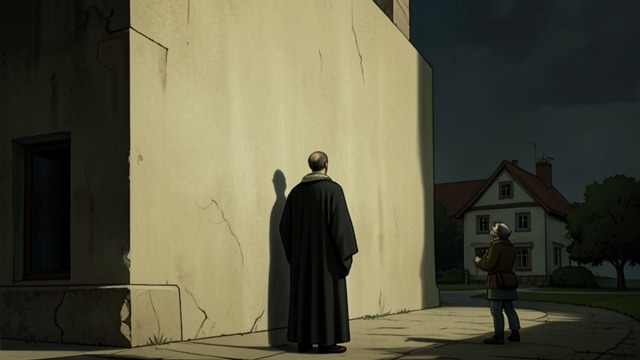
When others claim Zigong surpasses Confucius, Zigong compares his own wall with one that reaches far higher.
A passerby can see his household, but not what lies behind his master's wall without entering.
The image explains why reputation alone cannot measure learning.
Loyalty With Perspective
Zigong does not claim that Confucius is beyond criticism by simple assertion.
He says access and understanding matter to judgment.
His devotion rests on an acknowledged distance between teacher and student.
During the discussion of poverty and propriety
During the comparison with Yan Hui
During Zigong's statement about not harming others
During the exchange about substance and literary refinement
During the disputes over Confucius's reputation
