Dublin
Angela's AshesDublin is the first major stop in the McCourts’ return from America to Ireland, a city where the family’s hopes of finding work and assistance meet official refusal. It offers them neither the expected IRA support nor a settled home; their first night there depends instead on the intervention of a police guard.
A proposed refuge
After the family returns to Ireland, their relatives warn that they cannot immediately claim the dole and that they will have to manage while waiting. Grandma recommends the Free State, reasoning that Dublin or the surrounding farms might offer work. Grandpa adds a second possibility: the IRA might provide money to men who had served, and he offers to lend the bus fare to Dublin. The city thus enters the family’s plans as a practical destination, not simply a name on a map: it appears to offer employment, relief, and a way to begin again.
Arrival and the journey to Terenure
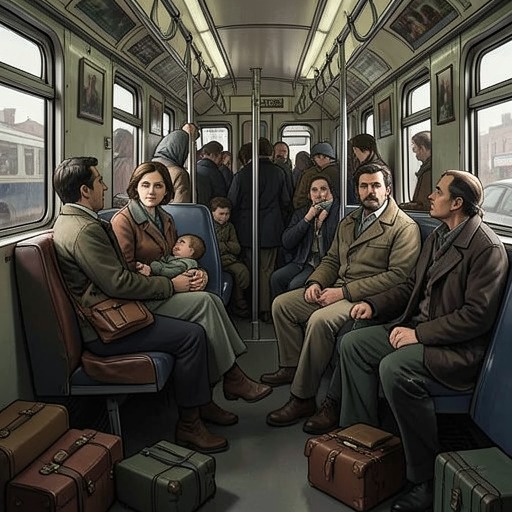
The bus brings the family into a busy urban scene of large houses, motor cars, carts, bicycles, and crowds on foot. For Malachy, the arrival also marks distance from the familiar world of Classon Avenue and New York. At the station, the family’s trunk is set down while Malachy McCourt tells Angela McCourt to wait with the children. He takes Frank with him to seek help from IRA representative Mr. Charles Heggarty in Terenure, promising that money will mean food for everyone. The journey makes the prospect of assistance concrete, but it also leaves Angela and the other children waiting at the bus station, dependent on Malachy’s return.
Refusal and immediate need
Mr. Heggarty rejects the request and orders Malachy to leave, threatening to call a guard and declaring that the IRA will not support the family. By nightfall, the search has produced no money. Frank and his father return to find Angela and the three boys asleep on a station bench. When Malachy explains that he has received nothing, Angela weeps and asks what the family will do. Their Dublin plan has failed at the point when shelter and food are urgent, turning the city from a possible source of aid into a place where they are stranded.
The guard and the barracks
A uniformed man approaches Angela, hears that the family has no money or place to stay and that the children are hungry, and offers to take them to the police barracks after his shift. He explains that Irish policemen are called guards; when Malachy uses the American word “cop,” the man affectionately calls him a clever little Yankee. The barracks can offer only a night on the floor, since the cells are occupied by men who have spent their dole money drinking. That limited shelter nevertheless provides the family with somewhere to stay when the planned appeal for assistance has failed.
A crossroads in the family’s migration
Dublin is one stage in a sequence of movements shaped by work, money, and family obligations. The family has crossed from America to Ireland, and later Malachy leaves for factory work in Coventry, England, initially sending a three-pound money order before the remittances stop. Years afterward, Frank arranges his own passage to America from Cork aboard the Irish Oak. Against those later departures, the Dublin episode is an early demonstration that a destination or a promised source of help cannot itself secure the family’s future: each move is tested by whether it yields income, shelter, or support in practice.