Frank McCourt’s First Communion
Angela's AshesFrank McCourt’s First Communion is at once a solemn Catholic rite and a day of comic reversals, in which the boy’s desire to complete a sacrament and see a James Cagney film runs up against family rules, bodily mishap, and competing interpretations of religious propriety. Frank receives the host and believes he has become an official member of the Church; after he vomits his Communion breakfast, however, his grandmother declares that he is not a proper Catholic. His mother insists that the cinema outing should still happen, and Mikey Molloy’s planned distraction gets Frank through the door. The episode makes religious observance inseparable from family life and material circumstances: devotion, embarrassment, hunger, entertainment, and improvisation occupy the same day.
The long-awaited sacrament
The night before the ceremony, Frank is too excited to sleep until dawn. His grandmother has to bang on the door to get him out of bed, and his mother and grandmother wash and prepare him before the family hurries to church. The rite is tightly bound to its appointed schedule: they arrive just in time to see the last boys leaving the altar rail, with the priest waiting at the chalice and host. Frank’s mother follows with Michael in her arms, making the family’s participation part of the scene rather than a distant backdrop.
At the altar, the priest places the wafer, understood as the body and blood of Jesus, on Frank’s tongue. It sticks to the roof of his mouth. The master’s warning not to let the host touch his teeth has made the act feel perilous, so Frank tries to move it with his tongue while the priest tells him to stop and return to his seat. The host eventually melts and he swallows it. In Frank’s account, the physical difficulty gives way to a decisive religious self-understanding: he believes he has joined the True Church and become an official sinner. The sacrament is both a communal milestone and a moment experienced through a child’s anxious attention to what his mouth must do.
Celebration and reversal
After Mass, Frank’s mother and grandmother embrace him and call the day the happiest of his life. Their tears and the grandmother’s earlier spitting on his head give the celebration an intimate, unruly family texture. Frank, however, is already focused on the Collection and the prospect of seeing James Cagney at the Lyric Cinema. His expectation of a special day therefore includes both the religious ceremony and an ordinary pleasure that matters intensely to him.
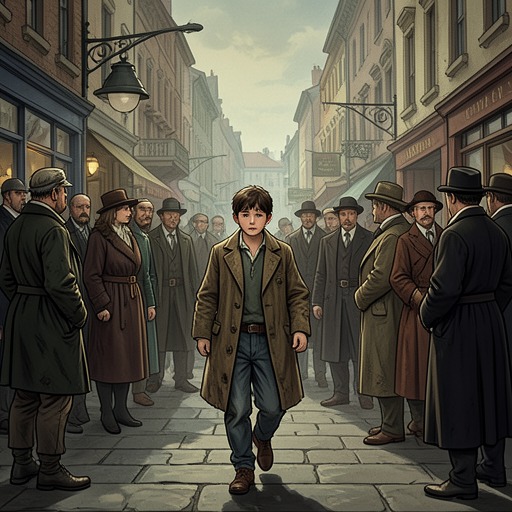
The household breakfast overturns the celebration. Frank eats the food, but it churns in his stomach and he vomits in the backyard. His grandmother treats the incident as a religious crisis, announcing that he has thrown up both the breakfast and the body and blood of Jesus. She says that God is now in her backyard and takes Frank through Limerick, telling neighbors and passers-by what has happened before pushing him into a confession box. A bodily mishap, rather than any deliberate rejection of the sacrament, becomes the basis for judging his religious standing.
The priest’s response is practical: he tells Frank’s grandmother to wash the spot with a little water and gives Frank one Hail Mary and one Our Father as penance. Outside the confessional, the grandmother asks whether the water should be holy or ordinary. When Frank reports that ordinary water will do, she denounces the priest as ignorant and says he does not want to be bothered again. The exchange shows how an official religious response is immediately filtered through household authority and local expectations. Frank’s grandmother interprets the priest’s brevity as a failure to take the matter seriously; the priest has instead treated it as a manageable mishap.
The cinema and the family’s competing judgments
Frank asks his mother whether he can still go to the Collection and see James Cagney. His grandmother refuses, arguing that he cannot be a proper Catholic after leaving God on the ground. His mother answers that he is her son and that it is his First Communion day, and insists that he will see the film. Her intervention does not undo the grandmother’s religious judgment, but it changes the practical outcome: the boy’s wish is not simply dismissed.
At the cinema, Mikey Molloy offers a way past the ticket-taker. He says he will pretend to have one of his fits, draw the attendant’s attention with a scream, and then recover once Frank has slipped inside. Mikey explains that he uses the same tactic to get his brothers into the cinema. Frank’s mother worries that helping him would make Frank sin on his Communion day; Mikey replies that any sin would be on his own soul and that he is not a proper Catholic anyway. The plan recasts Mikey’s recurring fits as the basis of a practical diversion, while the discussion turns religious responsibility into a question the children and adults answer differently.
Mikey carries out the plan, and Frank slips past the distracted ticket-taker to sit beside Question Quigley. The film is thrilling but ends sadly: James Cagney’s character is identified as a public enemy, shot, wrapped in bandages, and thrown in the door, shocking his Irish mother. This screen ending closes Frank’s First Communion day after the competing family and religious claims have already been played out. The account does not present the cinema as replacing the sacrament; rather, the boy’s day has room for both, even when the adults disagree over whether he has earned the pleasure.
Ritual, family authority, and comic reversal
The episode’s structure repeatedly places an expected sacred or celebratory meaning beside an awkward practical outcome. Frank anticipates a happy day, but his excitement keeps company with a demanding schedule, a breakfast he cannot keep down, and his grandmother’s public account of the backyard incident. The host that marks his entrance into the Church becomes the center of a dispute over what should happen after he vomits. The priest offers a modest remedy; the grandmother turns the incident into evidence that Frank has failed as a Catholic; his mother restores the promised outing by asserting her authority as his parent.
That sequence makes ritual something enacted and interpreted by a whole household, not simply administered at the altar. Frank’s religious understanding is shaped by instruction about the host, the priest’s words, his grandmother’s insistence, and his mother’s decision. The cinema plan adds another kind of everyday procedure: Mikey’s staged distraction supplies a way around an obstacle that the family cannot resolve by argument. The day’s humor arises from these shifts in authority, but the episode also preserves the seriousness with which the characters treat Communion, sin, and belonging. Frank’s first sense of membership in the Church remains set against his grandmother’s claim that he is not a proper Catholic, leaving the celebration marked by both sacrament and dispute.