Irish Oak
Angela's AshesThe Irish Oak is the vessel that carries Frank McCourt from Cork toward America, the final means of passage in a migration shaped by poverty, family obligations, and a long-held hope of escape. Its nine-day crossing, shifting orders, and slow approach to New York make the ship more than transport: it becomes the setting in which Frank leaves Ireland while measuring what that departure costs him, and in which an imagined America first takes visible form.
Passage to America
When Frank asks at O’Riordan’s Travel Agency about reaching America, air travel proves prohibitively expensive because he would first have to travel to London. The agent instead offers a place on the Irish Oak, leaving Cork in a few weeks. The advertised passage lasts nine days, costs fifty-five pounds, and includes a cabin for one of only thirteen passengers and good food. Frank can afford it. The price and small passenger count make the decision concrete: this is a paid opportunity, not a rescue or a family arrangement, and the crossing will be his alone.
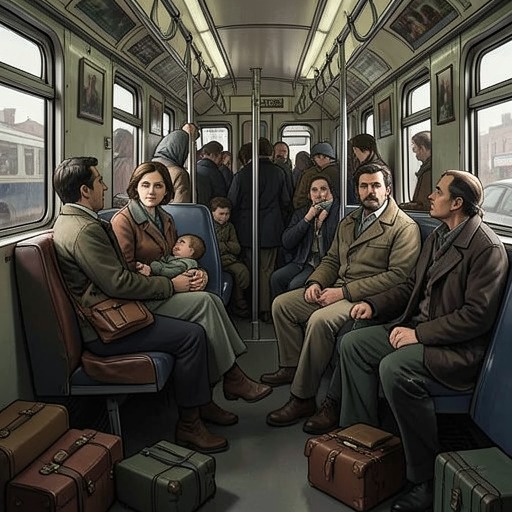
The ship’s departure is set against his family’s earlier Atlantic crossing. When the McCourts first left Manhattan, relatives had sent money, found them a steamer trunk at the St. Vincent de Paul Society, hired a van to take them to the pier, and put the family aboard before saying goodbye. On that voyage, Angela pointed out the Statue of Liberty and Ellis Island, then became seasick as the wind scattered her vomit over passengers admiring the view. The Irish Oak passage reverses the direction of that earlier journey: Frank is returning across the Atlantic to the country whose landmarks his mother had once identified as the threshold of a new life.
The family’s earlier movements also establish that migration has never been a simple passage toward security. Frank’s father leaves for England after Christmas to work in a factory in Coventry, promising, in effect, the prospect of wages and future reunion in America. After his first remittance of three pounds, no more money orders arrive. The distinction between his father’s labor migration to England and Frank’s eventual departure for America matters: the family has already experienced how a journey undertaken for work can become prolonged absence, while the expected financial support fails to materialize.
Leaving Ireland
Frank tells his mother that he will be leaving in a few weeks, and she cries. His brother Michael asks whether they will all go someday. At the family’s farewell, Uncle Pa rejects the idea that this is the end of Frank’s life in Ireland, imagining instead that he will return in a few years with a new suit, more weight, and a girl beside him. Angela is less readily comforted; she says no as relatives take her inside and give her sherry. Their different responses expose the gap between a cheerful promise of return and the immediate fact of separation.
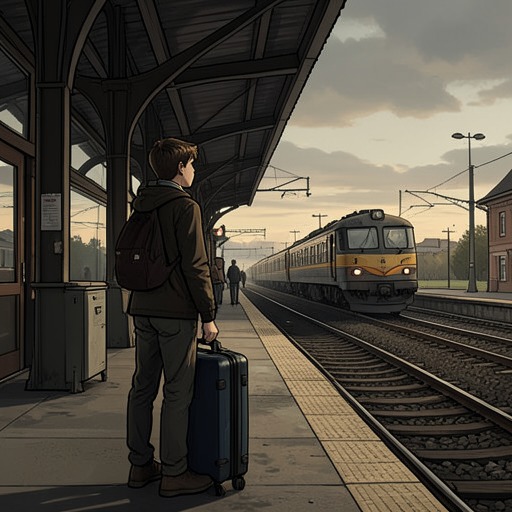
Late in the day, the Irish Oak sails from Cork, passing Kinsale and Cape Clear. By darkness, the lights at Mizen Head mark the last of Ireland Frank expects to see for a long time. The ship’s departure is at once a forward motion and a severing: the coastline falls away, but the people and places left behind remain present in his thoughts.
On deck, Frank considers whether he should have stayed, taken the post-office examination, and earned enough to help his younger brothers, Michael and Alphie. He imagines what a secure wage might have changed: proper shoes, full stomachs, and a move from the lane to a street or an avenue with gardens. He also thinks that his mother might no longer have to empty other people’s chamber pots. Once the vessel is under way, these alternatives arrive as regrets rather than practical choices. The crossing carries not just the possibility of a new life but the knowledge that remaining might also have served his family.
A changing route
The voyage’s destination repeatedly shifts, making its progress uncertain even after Ireland is out of sight. At the First Officer’s table, a priest from Limerick tells Frank that the ship’s orders have changed: rather than sail to New York, it is bound for Montreal. Three days later, the orders change again, and the passengers are told they are going to New York after all. The day before reaching New York, a further change redirects the ship to Albany, up the Hudson River.
The rerouting becomes a source of friction between the Irish vessel and its American passengers. Three Americans complain about the ship’s indecision; when Albany is announced, they protest that they do not want to travel all the way there. A man who has boarded from a tugboat tells them that the captain is in command and that there is no procedure for putting them ashore at that point. Their claim to be American citizens does not alter the immediate terms of the crossing: they remain passengers on an Irish ship, subject to its captain and its orders. The episode makes arrival less like the straightforward entry Frank has imagined and more like an uncertain process controlled by the vessel’s route and authority.
The priest counsels Frank not to take the Americans’ complaints as representative of the whole country. He understands departure from Ireland from personal experience: although he lives in Los Angeles among sun and palm trees, he still asks God for a soft, rainy day in Limerick. His presence gives Frank’s crossing a companion who recognizes the emotional persistence of home, even after years abroad. The ship’s changing course may determine where it lands, but it cannot by itself settle what leaving Ireland means.
Arrival and the imagined destination
At dawn, as the ship sails into New York, Frank feels as though he is in a film that will end with the lights coming up in the Lyric Cinema. He can identify the Statue of Liberty and Ellis Island, as well as the Empire State Building, the Chrysler Building, and the Brooklyn Bridge. The view is not simply a set of landmarks: it is the return, in a changed direction, to the same symbols his mother pointed out when the family first reached America. Once, those sights had accompanied a family arrival from Europe; now they greet one young man who has crossed alone.
Frank’s first vision of the country is lavishly idealized. He sees thousands of cars and imagines rich Americans in formal evening clothes returning home to beautiful women, while other people go to work in warm offices without a care. That picture contrasts with the hunger, inadequate housing, and family responsibilities that have shaped his life in Limerick. The perspective is openly imaginative rather than a report of what he has learned about the country: the city’s brightness supplies an image of possibility just as the voyage brings him to its shore.
Yet the Irish Oak does not bring Frank ashore in New York at once. After the ship passes Manhattan and travels beneath the George Washington Bridge, it goes by hundreds of Liberty ships, now moored and ready to rot. The captain announces that the tide will require an overnight anchorage opposite Poughkeepsie. The ship’s physical progress thus continues to defer arrival even after Frank has seen the city he expected to reach. Its route, from Cork past familiar Irish landmarks to Manhattan and then north up the Hudson, makes the threshold of America a drawn-out passage rather than a single triumphant moment.
Significance
The Irish Oak gathers together several strands of the McCourt family’s transatlantic story. The earlier voyage began with relatives arranging the family’s passage from Manhattan; Frank’s later crossing is individually financed and undertaken after years of hardship in Ireland. His father’s move to England for factory work offers a contrasting form of migration, one first associated with the hope of remittances and reunion but followed by silence and financial abandonment. Frank’s own departure is therefore neither a repetition of his parents’ journey nor a simple escape from poverty: it is a choice made while he remains conscious of the brothers and mother he leaves behind.
The vessel’s changing orders also unsettle the idea that reaching America means arriving at a predetermined destination. Frank can buy a ticket and board, but he cannot control whether the ship is headed for Montreal, New York, or Albany, and even the first sight of New York does not end the passage. At the same time, the landmarks and cityscape awaken an image of America as abundance and ease, set against his concrete memories of want. The Irish Oak holds these opposing meanings together: it transports Frank toward a hoped-for future while carrying with him regret, attachment, and uncertainty about what that future will be.