Paddy Clohessy
Angela's AshesPaddy Clohessy is Frank McCourt’s impoverished schoolmate, a boy whose vivid dreams of escape coexist with hunger, family illness, and exclusion. His story turns the schoolyard and countryside into two contrasting worlds: one where deprivation is treated as a test of character, and another where ingenuity briefly secures food and relief.
Identity and Circumstances
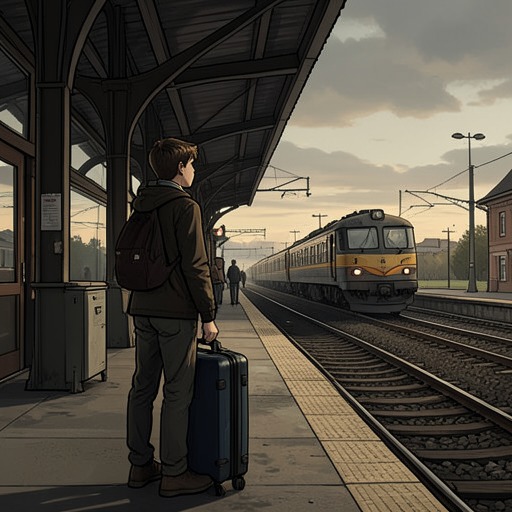
At seven, going on eight, Paddy is the biggest and oldest boy in his class. He has no shoes, wears rags shared with his six brothers and a sister, and is often bruised after fighting with siblings over clothing. His mother shaves his head to keep lice away. Paddy hates school and longs to reach fourteen so he can pass as seventeen, join the English army, and go to India, where he imagines warmth, a tent, figs, and a life with a family of his own. He pictures eventually sending for his relatives, especially his father, who is at home coughing blood from consumption. The fantasy is both an escape from immediate hardship and a plan to rescue the family from it.
School and the Sixth Commandment
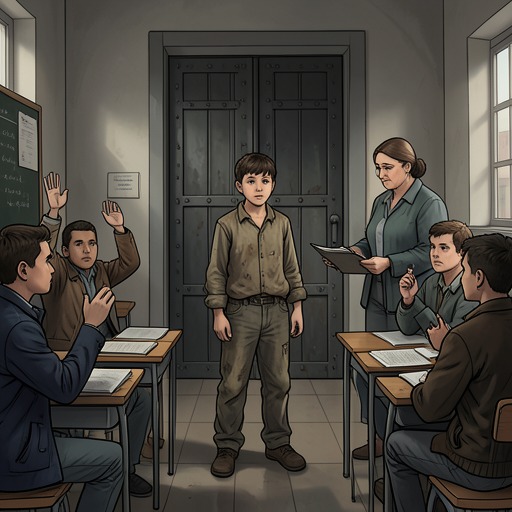
In a classroom discussion of adultery, Paddy gives the definition as impure thoughts, words, and deeds. Mr. Benson praises his knowledge of the Sixth Commandment, even as he notes that Paddy is slow to remember to say “sir” and has no shoes. The juxtaposition makes the lesson’s moral vocabulary sit uneasily beside the conditions in which the children live. Paddy’s knowledge earns the teacher’s approval, but it does not alter the poverty that marks his clothes, health, and prospects.
Hunger, Bullying, and Flight
After school, a bigger boy mocks Paddy’s shaved head. Paddy tries to stand up to him, but is knocked down; Frank also tries to intervene and is struck. Paddy walks away in tears and explains that hunger has left him unable to fight, and that this incapacity shames him. The admission gives his toughness a limit imposed not by lack of will but by deprivation. Fintan Slattery offers to take the boys to his mother for food, but Paddy refuses at first because his nose is bleeding.
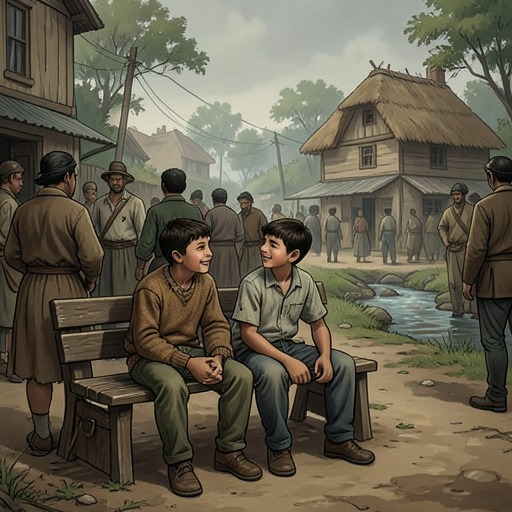
Instead, Paddy and Frank head to an orchard in Ballinacurra. A fierce dog approaches, but Paddy speaks gently to it, telling it that the boys are hungry and asking it to go home to its mother. The dog licks his face and trots away, and Paddy is delighted that he has won its trust. The boys fill their shirts with apples, eat under a hedge, drink from a stream, and then milk cows in a field. Paddy shows Frank how to draw the milk, turning their hunger into a shared meal. When a man comes after them, they escape over the wall. The episode reveals Paddy’s practical nerve and resourcefulness: he can read a threat, approach an animal without provoking it, and find food where the children’s ordinary circumstances offer little.
Family and Consequences
The excursion does not remove the dangers awaiting the boys at home or school. At the Clohessys’ house, Frank sees Paddy’s father ill and hears the household’s children complain of hunger. The setting underscores the material hardship behind Paddy’s imagined future in India and his wish to support his family. Frank, afraid to return to school after the fight, considers living on apples and milk until he can go to America; Paddy dismisses school as a sham and its masters as madmen. Their flight is a temporary alternative, not a durable escape.
Frank’s mother arrives at the Clohessys’ door with Michael and Guard Dennehy, who is responsible for school attendance. Her question about Frank’s missing shoe, and Dennehy’s joking reply, bring the truancy episode to an end. Michael tells Frank that their mother had been crying for him. The scene places Paddy’s companionship within a wider family and institutional response, while making clear that the boys’ hunger and fear have not been solved by their brief time away.
Narrative Significance
Paddy is defined by contrasts the narrative refuses to smooth over: he is physically the largest boy in class yet can be too hungry to fight; he is treated as a boy who knows religious rules while living amid severe deprivation; and he imagines a faraway future even as his family’s needs remain immediate. His encounter with the dog and the food-gathering excursion show that ingenuity can create a moment of abundance, but the return to school attendance and family hardship limits that freedom. Through Paddy, the narrative gives hunger a social and moral weight: it is not simply an individual failing or passing discomfort, but a force shaping a child’s dignity, choices, and hopes.