Toome
Angela's AshesToome, in County Antrim, is the birthplace of Malachy McCourt and the family’s first destination in Ireland after their return from New York. In the narrative, it is at once ancestral ground and a hard landing: the children encounter the countryside at dawn while hungry, and the homecoming offers kinship without security. Malachy later leaves for factory work in Coventry, making Toome a brief passage in the family’s repeated movement between Ireland, England, and America.
Birthplace and Family Origins
Malachy was born on a farm in Toome. He grew up wild, in trouble with the English, the Irish, or both, and fought with the Old IRA. After a desperate act left him a fugitive with a price on his head, he had to be spirited out of Ireland on a cargo ship from Galway. In New York, where Prohibition was in force, he first thought he had died and gone to hell for his sins; discovering speakeasies changed his response to the new country.
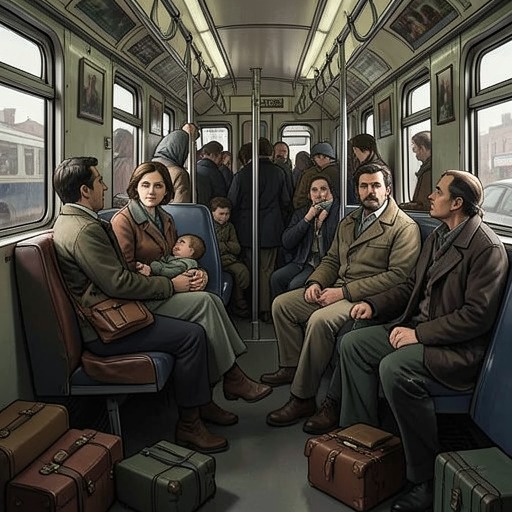
The family’s own arrival in Ireland followed another transatlantic crossing, this time from New York. After a week at sea they reached Moville in County Donegal, travelled by bus to Belfast and then to Toome, and left their steamer trunk in a shop. From there they walked two miles toward Grandpa McCourt’s house. At dawn, Malachy carried the twins while they took turns crying from hunger; Angela repeatedly stopped to rest on a stone wall. The children watched the sky change from red to blue and saw unfamiliar animals in the fields. When Malachy asked what they were, his father identified them as cows.
Arrival at the McCourt Home
On the road, a priest took the family in his motor car after hearing that they were going to the McCourts of Moneyglass. He described the family as good Catholics, mentioned that some attended Mass daily, and hoped to see the returning children there, calling them little Yankees unfamiliar with priests. The welcome thus came with an immediate reminder that the children’s American upbringing distinguished them from the local community.
At the house, Malachy stopped Angela from using the front gate. He explained that the front door was reserved for visits from the priest or for funerals, so the family went around to the kitchen entrance instead. Inside, Grandpa McCourt was drinking tea from a large mug and Grandma McCourt was frying food. These details make the homecoming concrete, but the household’s thresholds also register its customs: even arrival is governed by rules about who may enter, and how.
A Temporary Point Between Journeys
Toome did not become a lasting refuge for the family. Later, as America entered the war, Malachy agreed to go to England after Christmas because, he said, the cause must be just; he would not have gone if the Americans had not entered the conflict. He signed on through an agent for factory work in Coventry, a city said to be the most heavily bombed in England. Before leaving, he told Frank that he would have to be the man of the house. The prospect of wages also briefly opened credit for Angela at a local shop.
After returning home, Malachy again prepared to leave for Coventry. He had no money for the journey and set out toward the Dublin road to look for a lift, carrying four pieces of fried bread wrapped in newspaper in his coat pockets. Frank followed him down the lane and as far as Barrack Hill and St. Joseph’s Street, until Malachy turned and sent him home to his mother and brothers. A week later a letter reported his safe arrival; the following week brought a three-pound postal money order. The remittance raised the children’s hopes of food and cinema outings, but no further money arrived on the subsequent Saturdays. The sequence makes Toome a point of departure as much as return: family ties persist through letters and money, yet the household remains exposed to absence and want.
Narrative Significance
The place gathers several forms of movement into one family history. Malachy’s birth there precedes his flight from Ireland; years later, his family’s return from America brings them back to his ancestral region, but not to a secure home of their own. Their walk from the bus route to the house, the hunger of the twins, and the kitchen-door entry give the return a bodily and social specificity that the idea of a homeland alone cannot provide.
The contrast between America, England, and Toome is practical as well as emotional. America is first the place where Malachy finds speakeasies after his escape, then the family’s former home and a wartime ally; England becomes the destination for wages, while Toome is where the family reunites and where Malachy assumes the authority to leave again. Its significance lies in that unsettled position: a birthplace and ancestral address, but only a temporary stop in a story governed by work, family obligation, and repeated separation.