Cú Chulainn
Angela's AshesCú Chulainn is a legendary hero whose story, as told to Frank McCourt by his father, makes courage an act of taking responsibility: after Setanta accidentally kills Culain’s watchdog, he offers to guard the household and adopts the name Hound of Culain. The hero later returns in Frank’s dream and in a statue at the General Post Office, where his death is connected to the men of Easter Week. In these retellings, Cú Chulainn becomes both a figure of childhood wonder and a lens through which the family interprets Irish history and resistance to England.
The story of Setanta
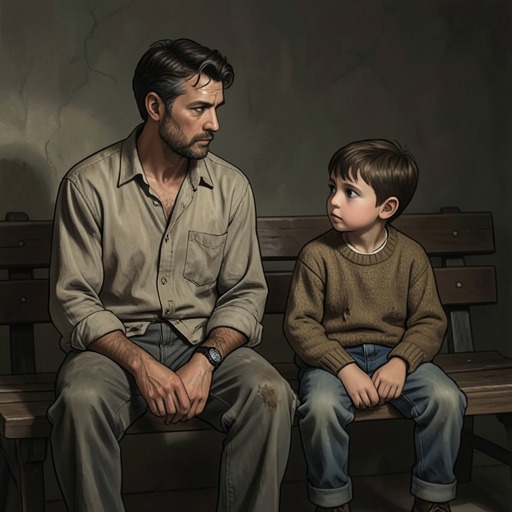
Frank asks his father to tell him the story of Cú Chulainn, initially calling the hero Coo Coo. His father makes him pronounce the name correctly before beginning, turning the telling into an intimate exchange as well as a lesson in the name and its history. The hero’s childhood name is Setanta, and the story locates his origins in Ireland, in the same broad homeland where his father grew up, County Antrim.
Setanta’s defining deed begins by accident: playing with a stick and ball, he hits the ball into the mouth of Culain’s large dog, which chokes. Culain is angry because the animal guards his home, wife, and ten children, as well as numerous pigs, hens, and sheep. Setanta answers the loss not by fleeing blame but by offering to guard the household himself with his stick and ball. He changes his name to Cú Chulainn, meaning Hound of Culain, and undertakes the protection he has promised.
The story carries that promise beyond one house. Cú Chulainn guards the surrounding regions and becomes the Hound of Ulster, a great hero. Frank’s father ranks him above Hercules and Achilles, heroes he says the Greeks boast about, and claims that Cú Chulainn could face King Arthur and his knights in a fair fight—an image sharpened by his distrust of the English. The comparison makes the tale more than an account of legendary strength: it gives the family an Irish hero who can stand against the figures of other national traditions.
The dream and the hero’s death
Cú Chulainn reappears in Frank’s dream after his father has been singing about Irish rebels Roddy McCorley and Kevin Barry. A large green bird sits on the hero’s shoulder and sings those songs; in the dream it is associated with blood. Cú Chulainn carries the gae bolga, a spear only he can throw, in one hand and a banana in the other, repeatedly offering the fruit to the bird. The incongruous banana brings the legendary warrior into Frank’s childlike, comic imagination, while the bird and its blood connect the dream to a more serious story of death and national memory.
When Frank recounts the dream the next morning, his father corrects its historical details. There were no bananas in Ireland in the old times, he says, and Cú Chulainn would not have offered one to the bird. The bird, in his account, came from England for the summer and perched on Cú Chulainn’s shoulder as the hero lay dying, propped against a stone. The men of Erin—his father explains that Erin means Ireland—were afraid to approach until they saw the bird drinking Cú Chulainn’s blood and understood that he was dead. His father draws a warning from this account, telling Frank to be wary of birds and Englishmen. The dream thus takes its imagery from a story that binds the hero’s death to an enduring suspicion of England.
The statue at the General Post Office
Later, on the family’s journey to Limerick, a driver takes Frank and his father into the General Post Office in Dublin to see the statue. The driver has already explained that the building was nearly wrecked by English guns firing from the River Liffey and that bullet holes on its front should remain as a reminder of English perfidy. He admits that he does not know who Cú Chulainn was, so the visit brings Frank’s familiar story into a public setting marked by the history of the 1916 rising.
Frank sees the statue on its pedestal and feels tears coming. The golden figure has long hair, a lowered head, and a large bird perched on its shoulder: the details of the death story made visible in a national monument. The statue’s form recalls the image his father described, but the public memorial also provokes questions. The driver wonders what the long-haired figure and the bird have to do with the men of 1916, asking how the hero belongs to their history.
Frank’s father answers by making the connection explicit: Cú Chulainn fought to the end like the men of Easter Week. As in the old story, his enemies were afraid to approach until they were sure he was dead; the bird landing on him and drinking his blood proved it. The driver responds that it is a sad day for the men of Ireland when a bird must tell them a man is dead, then urges the family to leave so they will not miss the train to Limerick. The exchange leaves the heroic analogy in place while exposing its unsettling image of a death that enemies approach only after a bird confirms it.
Narrative significance
Cú Chulainn’s appearances form a progression from oral legend, to a child’s dream, to a monument embedded in Irish political history. The first telling emphasizes a promise kept: Setanta answers an accidental loss by taking on the work of a guardian. The dream reshapes the inherited story through a child’s comic invention, but the father’s correction restores the bird’s role as a sign of the hero’s death. At the General Post Office, that same sign becomes part of a public argument about the men of 1916 and the memory of English violence against the building.
The hero is therefore both a protector from the past and a contested emblem in the present. Frank first knows Cú Chulainn through his father’s affectionate storytelling, and his tears before the statue register the force of seeing that imagined figure made real in public. Yet the driver’s skepticism prevents the monument from settling the meaning of the legend: the father sees a parallel between the hero and the fallen men of Easter Week, while the driver questions what the bird and the hero’s death can say about them. Through this shifting retelling, Cú Chulainn joins family intimacy, childhood imagination, and Irish national memory without reducing them to a single uncomplicated image.