Christmas Day
Angela's AshesChristmas Day is a recurring measure of what the McCourt family can—and cannot—make of a holiday. In their Limerick home, the day’s promise of warmth and abundance collides with hunger, unemployment, and inadequate housing; yet help from neighbors and the family’s small rituals make room for celebration. The Christmas coal-gathering episode brings those conditions together in one day, ending not in plenty but in a meal, a fire, and a story shared at bedtime.
A holiday shaped by scarcity
For Frank and his family, Christmas depends on the household’s immediate means. On one Christmas Day, there is not enough coal to cook dinner, the water is no longer boiling, and Angela’s back pain prevents her from going out to look for fuel. Malachy, Frank’s father, will not go: he considers carrying things through the streets beneath his dignity. Angela sends Frank and his brother Malachy instead, with a borrowed canvas bag, to search the Dock Road for coal or turf.
Their hunger has been eased by sausages and bread, and the weather initially allows them to walk without rain. The search itself yields only small pieces of fuel from cracks in the road and walls around the coal yards. The family’s difficulty is not simply that Christmas is poor; even the means to cook the holiday meal must be assembled through scavenging and borrowed equipment.
Pa Keating’s help
On the Dock Road, Pa Keating encounters the boys and learns why they have the bag. He takes them to South’s pub, where he obtains permission to take coal from the coal hole beneath the stairs. The fuel is a substantial improvement on the fragments from the road, but carrying it home remains difficult: a hole in the bag lets lumps fall out, and Frank drags the bag while Malachy retrieves the spilled coal.
Rain begins, and the boys cannot shelter in a doorway without leaving the coal behind. Their blackened clothes draw insults from people they pass, including children watching from a house. The contrast is pointed: nearby families sit in decorated, brightly lit rooms, while Frank and Malachy labor to secure the fuel that will let their own family cook. Pa’s intervention does not erase that divide, but it changes the immediate prospects of the day by giving them coal enough to bring home.
Home, food, and warmth
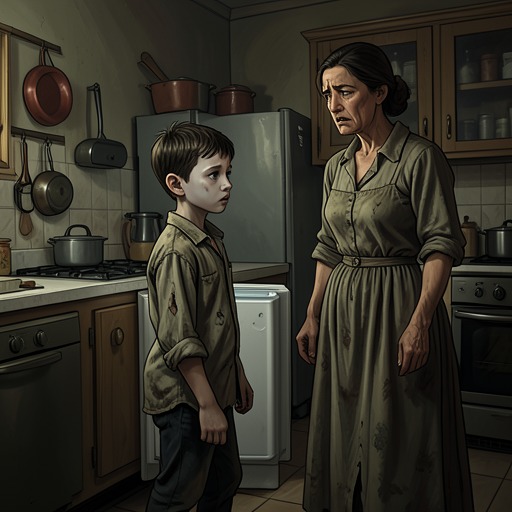
The downstairs kitchen is flooded again, with rainwater coming under the door. The boys are drenched and covered in coal dust. Their father carries the bag upstairs to the warmer part of the home, which the family calls Italy. Angela laughs at the boys’ appearance and then cries at their wetness; she washes their hands and faces and puts the pig’s head aside while they drink hot tea.
After resting beside the fire, the family eats cabbage, potatoes, and the pig’s head. When Malachy hesitates at the sight of the meal, his father serves him slices from the pig’s cheeks and calls them ham, allowing the boy to eat without looking at what they came from. The father also insists that potato skins contain nourishment and presents wasting food as a serious fault; Angela cuts short the argument and directs him back to dinner. The meal is plainly shaped by necessity, but it is still made into a Christmas dinner, followed by tea, bread, and jam so that the children have something sweet.
Storytelling and family meaning
That evening, rain continues outside while coal glows in the grate. The family’s division between the flooded downstairs and the warm upstairs room gives the day a physical boundary: deprivation remains close, but the fire makes a brief refuge possible. Frank and Malachy return to bed in damp clothes, and their father tells a story about Cú Chulainn becoming Catholic. Frank falls asleep imagining the pig in the Redemptorist church’s crib, crying alongside the Baby Jesus and Cú Chulainn because all three must grow up and die.
Christmas also frames the family’s account of how a new baby arrives. After the meal, the father says that the angel who brought Margaret and the twins has brought another brother, Michael, and that Michael was found on the seventh step of the stairs to Italy. When Malachy questions how the angel could bring a baby to a house without stairs, the father dismisses the question as an affliction. The explanation belongs to the children’s imaginative family world, just as the story of Cú Chulainn does; both are woven into an evening made possible by borrowed coal, improvised food, and the shared warmth of the fire.
Recurring measure of family life
Other Christmas references in the narrative reinforce how little the date alone guarantees. After Oliver’s burial, the father promises to collect the week’s dole and return with coal and food for a meal in the child’s honor. He does not come home as promised, and the family eats potatoes before hearing him return late, singing an Irish song. The episode places the holiday’s expectations beside the consequences of his drinking and the family’s dependence on relief money.
The Christmas coal-gathering day offers a different, though still precarious, outcome: Pa Keating helps, the boys bring fuel home, and the family eats and gathers around a fire. Set against the family’s recurring need for credit and charitable grocery dockets, these episodes show Christmas not as an escape from poverty but as a day when ordinary dependence becomes especially visible. Its limited comforts—fuel, a hot drink, food, and a story—are hard-won and shared.