Die for Ireland
Angela's AshesThe oath to die for Ireland is a recurring ritual in which Malachy McCourt wakes his sons, calls them soldiers, and demands their promise to give their lives for Irish freedom. Its mixture of patriotic song, childhood play, and domestic distress makes it more than a political slogan: it is a spectacle through which Malachy turns national struggle into a substitute for the care and money his family needs, while the boys’ obedient replies reveal how readily they are drawn into his imagined army.
The nighttime ceremony
In one early scene, Malachy returns late, singing Roddy McCorley, and calls for his troops and four warriors. Angela tells him to leave the boys alone: they have gone to bed half hungry because he has filled his belly with whiskey. Instead, he comes to the bedroom and offers each child a nickel if he promises to die for Ireland. He names Francis, Malachy, Oliver, and Eugene as the Red Branch Knights, the Fenian Men, and the IRA, summoning them into a succession of Irish heroic identities. Angela, shaking at the kitchen table, protests that he has come home without a penny and is making fools of the children as well. Malachy insists that he wants them ready for the day Ireland will be free from the center to the sea. When Angela warns him not to cross her, he pulls his cap over his face and cries for his mother and for Ireland.
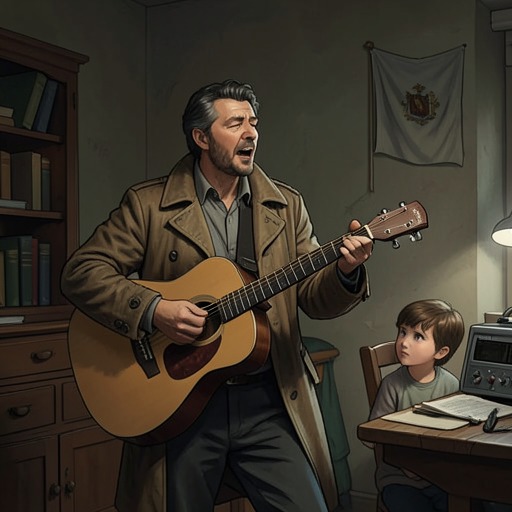
The ritual recurs in another middle-of-the-night scene after Malachy returns from looking for cigarettes. The smell of drink is on him as he gets Malachy and Francis out of bed and makes them stand at attention in the kitchen. He tells them they must promise to die for Ireland, and the boys answer that they will. Together they sing Kevin Barry, turning the demand into a performance supported by the familiar repertoire of martyrdom songs. At three in the morning, Dan MacAdorey knocks and points out that the singing has woken the whole house. Malachy explains that he is teaching the boys to die for Ireland; Dan replies that the lesson can wait until daytime. Malachy calls it urgent.
The oath is repeated in a direct question-and-answer exchange: Malachy asks whether the boys will die for Ireland, and they say they will. He then adds another promise to the ceremony, asking whether they will all meet their little sister in heaven. The children agree again. Patriotism and family bereavement thus converge in the same ritual: the boys are asked to imagine both national death and reunion with the dead child as assurances voiced by their father.
The promise and its price
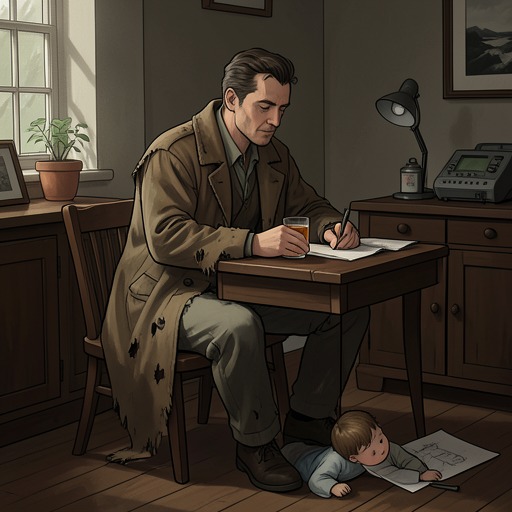
The nickel gives the oath a child’s immediate, material incentive, but the reward remains imaginary. On other nights Malachy promises the boys a nickel for ice cream if they will die for Ireland; they agree and never receive it. The contrast is stark: the father asks the children to pledge the ultimate sacrifice while withholding even a small treat, and the family’s need is not abstract. When he obtains work through the WPA, money can buy food and Angela can leave her bed to care for the twins. When he comes home smelling of drink, there is no money; Angela shouts, the twins cry, and Francis and Malachy run out to the playground. The patriotic ceremony returns on such nights, as Malachy sings sad songs about Ireland and wakes the boys to stand in their shirts and repeat the oath.
The demand expands as the children grow. Malachy once tries to make Oliver and Eugene promise too, although they are too young even to talk. Angela calls him mad and begs him to leave the children alone. The episode makes the ritual’s repetition visible as a pattern rather than an isolated burst of patriotic enthusiasm: each time, the father recruits the boys into his imagined cause, while the mother and children bear the consequences of the household’s unmet needs. The promise belongs to a future free Ireland; the hunger, unpaid obligations, and care of the twins belong to the present.
National feeling and domestic failure
Malachy’s songs and heroic references give the oath an emotional vocabulary. Roddy McCorley, Kevin Barry, the Fenian Men, and the IRA invoke remembered or imagined Irish resistance, and Malachy’s vision of freedom stretches across the country, from its center to the sea. Yet the scene offers no corresponding action toward the family’s immediate survival. The children are made to stand at attention in the kitchen or in their shirts beside their beds, while Angela complains that Malachy returns without money and the boys go hungry. His patriotism is sincere as performance, but its domestic cost is borne by those he commands.
The bitter irony is sharpened by the promised payment. A nickel for ice cream could bring the national vow down to the scale of a child’s appetite, but the nickel never materializes. Malachy’s appeal joins sacrifice to reward in words, then separates them in practice: the boys give the answer he wants, while he does not give them what he has promised. The oath therefore exposes a gulf between the grandeur of political language and the small, urgent responsibilities of feeding and caring for a family.
Meaning and recurrence
As a recurring expression, “die for Ireland” passes from a slogan into a domestic ritual, spoken in the middle of the night and reinforced by songs, military postures, and repeated questions. Its recurrence gives the children’s replies a rehearsed quality: they say they will, and the expected answer restores Malachy’s imagined order for a moment. But the scenes also preserve Angela’s resistance and the interruptions of the outside world, from her rebuke to Dan MacAdorey’s knock at three in the morning. The oath can sound heroic only while its immediate context—the whiskey, hunger, exhausted household, and absent coin—remains in view.
The ritual’s force lies in that unresolved contradiction. Malachy calls his sons warriors for Ireland, yet the narrative repeatedly shows them as children who are woken from bed, promised ice cream they never receive, and left within a family strained by poverty and drinking. Their compliance is real, but the text does not turn it into proof of political understanding; it shows how a father’s nationalist language enters childhood as command, song, and bargain. The phrase binds national martyrdom to household deprivation, making the distance between the country Malachy longs to free and the family he fails to support impossible to ignore.