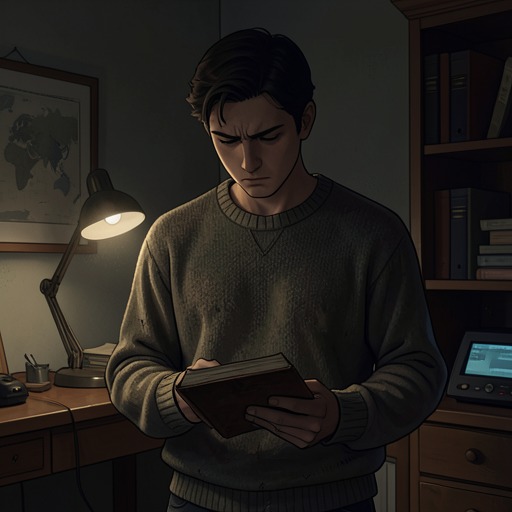
Frank McCourt’s First Confession
Angela's AshesFrank McCourt’s First Confession is the anxious, comic encounter between a child’s imagination and the rules of Catholic confession. On the day before his First Communion, Frank worries that telling the priest about the story of Cú Chulainn and Emer will disgrace him and condemn him; instead, the priest listens, prescribes familiar prayers, and tells him he has “a long way to go” before he could be considered the worst of the boys.
Setting and Preparation
The confession takes place on the day before First Communion. The master leads the boys in pairs from school to St. Joseph’s Church, warning them against even moving their lips as they march through Limerick. The severity of that instruction coexists with the boys’ eagerness to compare sins: their accounts range from looking at a sister’s naked body to stealing money and running away from home.
Frank tries to bring up the story of Cú Chulainn and Emer among the boys, but the master catches him talking and thumps him on the head. The episode thus begins with a contrast between Frank’s desire to tell a story and the school’s demand for silence and obedience. At the confession box, he worries that his interest in the tale may belong among sins of very different seriousness, including the mysterious “unforgivable sin,” whose definition the boys do not know.
Frank’s Confession
In the dark confession box, with a large crucifix above him, Frank feels the presence of the Angel on the Seventh Step as a light and voice in his head. The angel’s reassurance does not remove his fear, but helps him face the priest when the panel slides open. Frank begins with the conventional words of a first confession and admits that he lied, hit his brother, took a penny from his mother’s purse, and said a curse.
When the priest asks whether there is anything else, Frank says that he listened to a story about Cú Chulainn and Emer. The priest initially suggests that the story itself need not be sinful, noting the claim that Cú Chulainn and his king, Conor MacNessa, became Catholic near the ends of their lives. Frank clarifies that his concern is about Emer’s marriage to Cú Chulainn, and then explains the detail that troubles him. The priest reacts with difficulty, but asks who told Frank the story rather than sending him away or declaring him condemned.
Penance and Reassurance
The priest gives Frank a penance of three Hail Marys, three Our Fathers, and a special prayer for the priest himself. Frank asks directly whether his confession makes him the worst of all the boys. The priest says no: Frank has “a long way to go,” then tells him to say an Act of Contrition and reminds him that God watches him every minute.
That answer resolves the immediate uncertainty without making Frank’s fear disappear from the scene. He had imagined public disgrace and eternal punishment; the priest instead treats the confession as something that can be answered through penance and instruction. The exchange gives Frank a measure of reassurance, while preserving the childhood logic in which an unfamiliar story can seem dangerous simply because its place among the categories of sin is unclear.
Narrative Significance
The scene turns on the difference between what Frank thinks he must confess and what the priest considers a sin. His ordinary admissions sit beside his anxiety about a story, revealing how religious teaching, school discipline, and children’s talk jointly shape his sense of wrongdoing. The boys’ competitive accounts make confession partly a subject of peer comparison, but Frank’s own worry is more private: he fears that a story he cannot confidently classify may have put him beyond forgiveness.
The episode also places Frank’s imagination inside, rather than outside, religious authority. The priest does not simply condemn the pagan hero or dismiss the child’s concern; he answers by invoking the tale’s later Catholic framing, assigning prayers, and offering reassurance. The result is a small but decisive movement from dread toward provisional calm, just before the First Communion that follows the next day.