Grandma Sheehan
Angela's AshesGrandma Sheehan, Angela McCourt’s mother and the children’s grandmother, is both a source of essential material support and a blunt critic of the family’s dependence on her. Her help makes survival possible after the McCourts return to Ireland, but it comes with sharp limits: she can find them a place to stay and help them get settled, yet insists that Malachy must work or seek relief rather than leave the family’s needs to her indefinitely.
Identity and first encounter
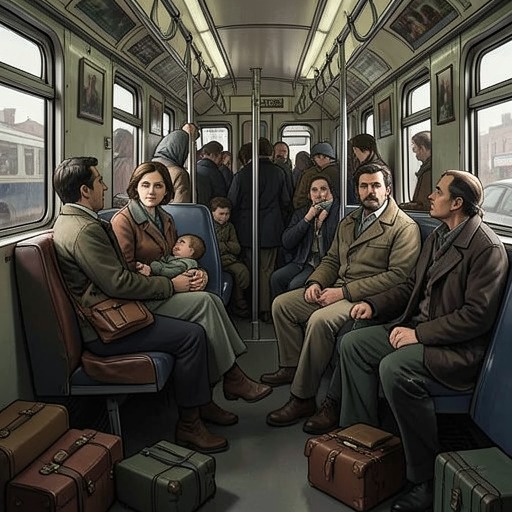
When the family arrives in Limerick, Grandma Sheehan is waiting at the railway station after the sergeant’s wife has sent her a telegram. The narrator remembers her white hair, black shawl, sour eyes, and lack of a smile. She acknowledges Malachy, Angela’s husband, but looks away rather than welcoming him. Her first actions are practical: she hires two boys at the station to carry the trunk and leads the family through the streets, correcting the boys when they laugh and warning them not to damage it.
Her manner is severe, but she is not a distant figure who merely judges the family. She is already at the center of its arrangements and responds to immediate needs. When Angela pauses on the walk to catch her breath, Grandma rebukes her for smoking, connecting the habit to the respiratory illness she sees around Limerick. The journey introduces a recurring pattern: practical assistance and family care arrive in the same scene as criticism and impatience.
Shelter and material assistance
The night the family first reaches her house, the crowded household cannot comfortably accommodate them. Grandma’s daughter Aggie is already living there with her son Pat after a conflict with her husband, Pa Keating. Grandma explains that this is why there is no room for the McCourts. When Aggie objects to sharing her small room with Angela for one night, Grandma tells her to stop complaining and reminds her that she can return to her husband if she dislikes the arrangement. She spreads coats and rags on the back-room floor for the children and Angela, while Malachy sleeps on a chair in the kitchen and tends to the twins during the night.
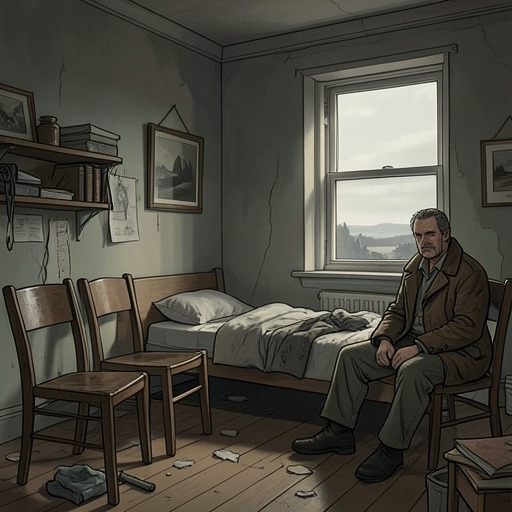
The next day, Grandma and Angela find a furnished room on Windmill Street. Grandma pays ten shillings for two weeks’ rent and gives Angela food money, a kettle, cooking utensils, knives and spoons, jam jars to use as mugs, a blanket, and a pillow. The room has a fireplace, a table, three chairs, and a bed large enough for the family to sleep together. The assistance is specific and substantial, but Grandma describes it as the limit of what she can afford. She tells Angela that Malachy must get a job, sign on for unemployment relief, or seek charity from the St. Vincent de Paul Society. Her help is therefore paired with a demand that the family seek support beyond her household.
Her assistance also reaches the family through other forms of credit and relief. When Angela approaches the Italian grocery on Classon Avenue, saying Malachy is late and asking whether she may take a few necessities to pay for later, the shopkeeper agrees because she has paid her bill eventually before. The episode shows the broader network of support on which the family depends; Grandma’s role is central, but not exclusive. Later, when Angela applies for assistance, the family receives grocery and coal dockets, with the explicit condition that visitors will inspect the household and review its need. These arrangements underline how survival depends on borrowed goods, charitable aid, and repeated scrutiny as well as on kinship.
Care, conflict, and family limits
Grandma’s care does not make her indulgent. When she arrives at the door asking where Angela and Malachy have gone with the sick Oliver, she is trying to find the parents and understand the emergency. Her response to the family’s troubles is often impatient and dismissive, but she remains involved in what happens to her daughter and grandchildren. The novel repeatedly places her concern beside the frustration produced by the family’s poverty and Malachy’s drinking.
After Oliver’s death, Malachy goes to the Labour Exchange to collect the week’s dole, promising to return with coal and food. He does not come home as expected and returns much later, singing. Grandma’s place in this sequence is part of the family’s wider effort to manage the practical consequences of bereavement and unreliable income: the household has to depend on the relief payment for necessities, and a promised celebration of Oliver’s life gives way to another episode of Malachy’s drinking. The episode helps explain why Grandma’s insistence that he find work or claim relief is not an abstract judgment but a response to recurring failures of provision.
Years later, she remains a forceful presence in the family’s crises. When Angela is hospitalized with pneumonia, Grandma accompanies the children as they go from Roden Lane to Aggie’s flat on Windmill Street. She criticizes Frank for pushing the pram and says she has had enough of the family’s troubles: the cost of bringing them back from America, funerals for the children who died, the food and assistance she has provided when Malachy drank wages or relief, and Angela’s continuing dependence while Malachy works in England. She refuses to enter Aggie’s flat and walks away. This refusal marks a real limit to her capacity to help, not the disappearance of the history of help that preceded it.
Advice, judgment, and later appearances
Grandma also offers advice, though it reflects the household’s circumstances and beliefs as much as medical knowledge. When Frank develops a nosebleed and becomes ill after his Confirmation, she attributes the bleeding to the change from age nine to ten and suggests that he has too much blood. When his eye trouble worsens, she warns him not to touch the sore or put water near it, blaming his reading outdoors in bad weather. Her explanations show her trying to interpret illness with the means available to her, while also revealing how folk remedies and reprimands accompany the children’s encounters with sickness.
Her presence extends beyond the home. She contributes to the family’s migration story: after Angela’s sisters arrange the passage back to Ireland, Grandma is among the relatives whose assistance makes the return possible, and later she is the person summoned to meet the family in Limerick. The family’s movements between America, Ireland, and England repeatedly create practical demands on relatives, credit-givers, and charitable institutions. Grandma’s role is one of the most consequential kinship links in that network, even as her willingness to help is strained by repetition.
The narrative later recalls Grandma in connection with Frank’s plans to leave Ireland. When he asks his travel agent about reaching America, the available passage is by ship from Cork, not by air without first going to London. Her earlier role in the family’s return gives the later departure an added contrast: migration has already brought the family back to the place where she lives, and Frank’s own decision to leave is made against a background of poverty, family obligation, and the limits of what relatives can provide.
Narrative significance
Grandma Sheehan is defined by a tension between obligation and exhaustion. She repeatedly turns kinship into concrete assistance—finding beds and rooms, paying rent, lending domestic goods, and helping arrange the family’s movements—yet refuses to pretend that such help can be unlimited. Her bluntness can wound or shame, but the scenes also show the material pressures behind it: overcrowding, inadequate income, illness, bereavement, and Malachy’s failure to provide consistently.
Through Grandma, the family’s survival appears not as a single act of charity but as a fragile economy of relatives, shop credit, public relief, and borrowed necessities. Her assistance keeps the children housed and fed at crucial moments; her complaints expose the accumulating cost of that dependence. The contrast prevents her from becoming either a simple benefactor or a simple antagonist. She is a family member who helps, judges, and finally reaches a limit, while the McCourts’ need continues beyond it.