Limerick
Angela's AshesLimerick is the setting in which the McCourt family’s return to Ireland becomes a daily negotiation with poverty, weather, housing, and work. The city is not merely a backdrop: its damp climate and inadequate sanitation enter the family home, while its relief offices, schools, shops, churches, and streets define the limits of what the family can do. Across the years narrated, Limerick is at once a place of deprivation and a community whose institutions and people sustain the family, however precariously.
Climate and the Shape of the City
Rain from the Atlantic is described as moving up the River Shannon and settling over Limerick. From October through April, dampness clings to walls and clothes, while the city’s wet conditions are associated with persistent respiratory illness. The account makes weather a material presence: it affects health, household routines, and the possibility of keeping a home dry, rather than serving simply as scenery.
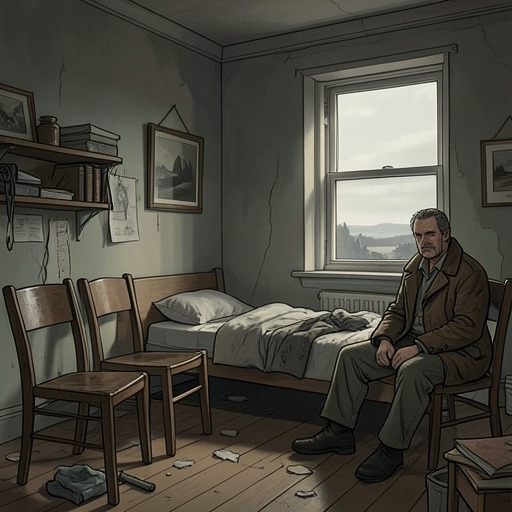
The family’s experience of the weather is most severe at their house on Roden Lane, above Barrack Hill. The house is one of six on its side of the lane, and shares its cramped surroundings with a shed, a stable, and a communal lavatory. When heavy rain floods the lane, water enters beneath the door; the kitchen floor pools with water, and the family moves its furniture upstairs. They call the upper rooms “Italy” and the lower rooms “Ireland,” turning an improvised response to flooding into a household geography. They return downstairs before Easter, when the weather is warmer and the kitchen is no longer a lake.
The shared lavatory exposes the infrastructure behind the family’s domestic hardship. It serves eleven families, and buckets are emptied close to the McCourts’ door. In warmer weather, the family contends with flies and rats as well as the continuing odor. The stable beside the lavatory houses Finn the Horse, whose poorly maintained surroundings add to the problem. The children try to keep rats away, and the family learns to shut its door when someone approaches with a bucket. When the father takes the complaint to the Town Hall, he is told that the family can move, but that the city will not build more lavatories in houses expected to be demolished after the war. The exchange makes the family’s exposure a civic problem as well as a private one: the most vulnerable residents are left to endure conditions officials regard as temporary.
Return and Settlement
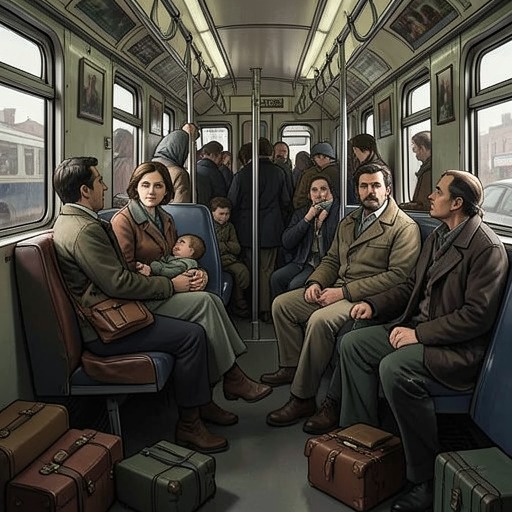
After leaving New York, the family travels through Moville and Belfast, then goes on to Toome in County Antrim. From there, it makes its way to Limerick, where Grandma meets them at the railway station. The return is not a homecoming into comfort. Grandma is unsmiling toward Angela and her husband, and the family follows hired boys carrying its trunk through the city. The boys’ shaved heads are explained as a measure against lice, an early sign of how poverty and illness shape even the family’s first impressions of the place.
The family eventually settles on Roden Lane. Through the St. Vincent de Paul Society, Angela receives a docket for secondhand furniture: a table, two chairs, and two beds. The family hauls the furniture across Limerick on the twins’ pram, whose one unreliable wheel pulls in a different direction. At first, the house feels spacious to the children because they can walk between rooms and up and down the stairs. That sense of having gained something is immediately qualified when a neighbor explains that the lavatory outside is for the entire lane, not the family alone. The contrast between the pleasure of having rooms and the reality of shared, inadequate facilities recurs in the family’s life in the city.
Work, Relief, and Daily Survival
Limerick’s relief institutions are part of the family’s ordinary routine. Angela goes to the St. Vincent de Paul Society for furniture and food, and later seeks help at the Dispensary, where poor residents apply for medical care and public assistance. The Dispensary’s queues put applicants’ needs on public display: officials decide whether a person is sufficiently desperate for assistance or sufficiently ill to see a doctor. The family’s dependence on these institutions is not a passing episode but a recurring condition of life in the city.
Work offers only intermittent relief. When the father gets a job at a cement factory outside Limerick, Angela is glad that she may stop asking for clothes and boots and can repay debts at a local shop and to her mother. The commute requires him to leave by six in the morning and walk three miles each way; she packs tea, a sandwich, and a hard-boiled egg for the journey. The job changes the household’s immediate prospects, but it does not establish lasting security. At another point, the narrator returns from a fourteen-week hospital stay to find his father out of work again, despite having believed that the family would have wages and enough food and shoes.
The city’s unemployed men gather around the routines of the Labour Exchange, where they sign for the dole, and spend the rest of the day discussing current affairs, reading newspapers, or placing small bets. This public life contrasts with the women’s domestic labor: women stand and talk while men sit, and the men are described as worn out by their daily walks to seek relief. The narrator’s account links unemployment not only to lost income but also to the social rhythms and gendered expectations of the city.
Family Life in the City
Limerick is where the father’s drinking repeatedly collides with the family’s need for money. On dole-payment Thursdays, a promised single drink can consume the money, after which he comes home singing and wakes the children to rehearse songs and pledge that they will die for Ireland. The children know the patriotic songs, but they also hope that a coin left after the drinking might buy them toffee. The scene joins political language to household deprivation: the father’s declarations of sacrifice coexist with the practical consequences of his lost wages.
The children’s view of their surroundings is shaped by the same scarcity. During a February frost, the narrator runs through Limerick and looks into illuminated kitchens, where families sit down to breakfast with bread, butter, jam, eggs, and rashers. At home, his mother is ill and asking for lemonade, and there is no bread to spare. He takes two bottles from a delivery outside South’s pub. The contrast between those well-provisioned homes and his own hunger makes the city’s class divisions visible in neighboring windows, while his theft records the immediate pressure of caring for a sick mother and hungry brothers.
When the father leaves for factory work in Coventry, he tells the narrator to take care of his mother and brothers. A letter arrives saying he has reached England safely, followed a week later by a money order for three pounds. The family imagines fish and chips, dessert, and trips to the cinema; then the payments stop. The change turns the city’s familiar dependence on relief and credit into an acute family crisis. Limerick remains the place where the children wait for money from elsewhere and where their mother must again seek help.
Meaning and Departure
Limerick’s physical and civic conditions accumulate rather than resolve. Rain brings flooding; inadequate sanitation aggravates the household’s surroundings; unstable work fails to guarantee food; and official responses leave poor families with few alternatives. The family’s move upstairs during the flood briefly makes the house warmer, but it cannot remove the larger insecurity. The city’s repeated cycles of relief, work, illness, and renewed need give deprivation a structure, not merely a series of isolated misfortunes.
At the same time, Limerick is the place where the narrator first imagines himself as capable of moving beyond that structure. After delivering coal for John Hannon, he sees his soot-blackened reflection in a shop window and thinks of himself as a man with a shilling in his pocket. He imagines working full-time, taking over the coal deliveries, and sparing his mother the need to beg. Years later, while considering his own departure, he arranges passage from Cork to America aboard the Irish Oak for fifty-five pounds. The contrast is significant: Limerick is where the family’s hardship takes its most concrete form, but it also supplies the work, streets, and experiences from which the narrator’s wish for another life develops. The city remains tied to family obligation even as departure becomes possible.