Roden Lane
Angela's AshesRoden Lane is the Limerick home to which the McCourt family moves from Hartstonge Street, seeking distance from grief only to encounter another form of hardship. The lane’s crowded houses, communal privy, adjacent stable, flooding, and infestations shape the family’s daily life. Its defining contrast is between the modest freedom of having rooms and stairs of their own and the severe limits imposed by poor housing and inadequate sanitation.
Setting and the McCourts’ Move
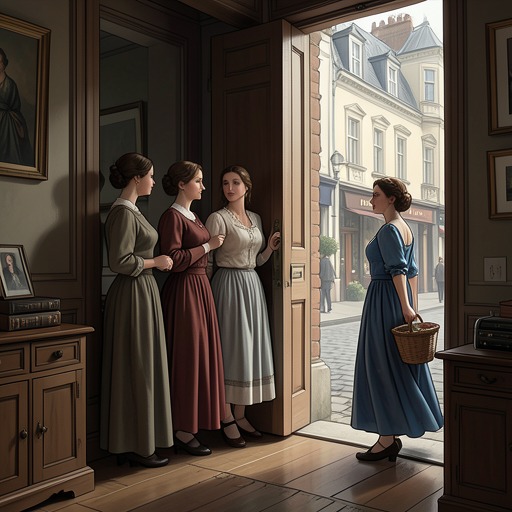
Roden Lane lies on Barrack Hill. Six small houses stand on one side of the lane and a seventh opposite; each is described as two storeys, with two rooms above and two below. The McCourts’ home is the last of the six. A small shed, a privy, and a stable stand beside its door. The move takes the family away from their previous room on Hartstonge Street, where Angela could not bear to keep seeing reminders of the dead children, and brings them nearer the school the children attend.
The house is initially experienced as an improvement. The family can walk from room to room and climb the stairs, and the children feel rich simply because they can go up and down as they please. The family has two beds, a sideboard with a mirror, a table, and two chairs, all hauled across Limerick on the pram once used for the twins. One wheel is defective and pulls in a different direction, making the day-long move harder. The furniture comes through a relief society docket; Angela worries that someone may have died in the secondhand beds, especially from consumption, but has little choice about accepting them.
That first sense of possession is sharply qualified by the privy. An old man empties his bucket there and explains that it belongs to the whole lane, not to the McCourts. Eleven families use it. The family’s apparent private amenity is therefore a shared facility immediately outside the kitchen, and the daily passage of buckets makes the house’s boundary porous to the lane’s sanitation problems.
Flooding, Odors, and Infestations
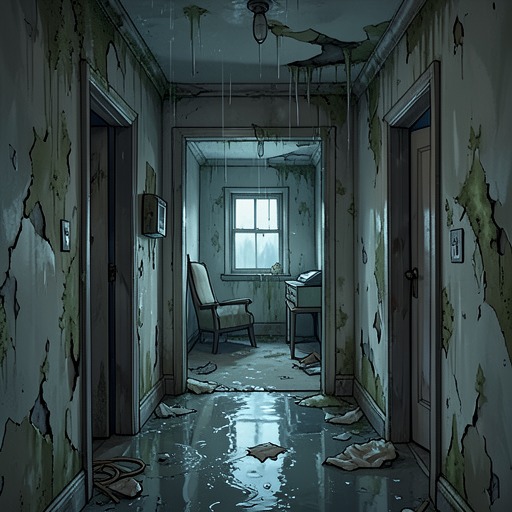
The limits of the house become especially clear during heavy rain. Two weeks before Christmas, the children return from school to find the kitchen empty of its table, chairs, and trunk. Their parents have moved the furniture upstairs after rain poured beneath the door and flooded the ground floor. Rags placed to block the water became soaked, while the waste from the privy worsened the conditions. The family stays upstairs through the winter, hoping to return below when the walls and floor dry in spring. The father calls the upstairs rooms Italy, turning a necessary retreat into a temporary holiday elsewhere; the Pope’s image remains downstairs, as Angela does not want it looking at her from the wall beside the bed.
The household’s exposure continues beyond the flood. In winter, overflow seeps under the door; in warm weather, flies and bluebottles gather around the privy, and rats are drawn by the waste and the stable next door. The stable holds Finn the Horse, loved by the children, but its poor upkeep adds to the conditions affecting the house. The children and their dog Lucky chase rats, while rats that escape can enter the coal hole beneath the stairs. Even when a fire allows the family to pour hot water into the hole and drive them out, the animals remain a recurring threat inside the home.
Flies and fleas extend the problem through the day and night. Flies move between the privy, stable, and kitchen; fleas torment the family indoors. The children learn to warn the household when a neighbor approaches with a bucket, so someone can shut the door. In warm weather, they may have to do this repeatedly, and they distinguish households by the cooking smells that accompany their waste. The routine of watching the lane and closing the door shows how sanitation dictates the family’s use of its own home.
Complaints and the Limits of Relief
The father eventually takes Frank to the Town Hall to complain about the privy. When an official says the family can move, the father answers that they cannot afford to do so and argues that the lane needs more lavatories. The official refuses responsibility, pointing to the condition of houses expected to be demolished after the war. The exchange makes the family’s predicament explicit: the danger is recognized, but the proposed remedy is relocation beyond their means, while public improvement is dismissed as unnecessary.
The family also turns to charitable assistance for basic needs. After the move, Angela seeks furniture through the St. Vincent de Paul Society; at Christmas, she queues again hoping for a goose or ham and receives grocery and butcher’s dockets instead. These episodes place the lane’s deprivation within a wider dependence on relief: the McCourts can make a home there, but furnishing it and providing a festive meal depend on charitable provision.
Change and Narrative Significance
Roden Lane offers the McCourts a house with stairs and several rooms, yet that apparent gain does not secure privacy, safety, or control over the space. Floodwater drives them upstairs; the shared privy, stable, rats, and insects repeatedly intrude on domestic life. The lane’s infrastructure turns environmental hardship into a continuous burden rather than a single crisis, affecting where the family can sit, sleep, cook, and play.
The setting also marks the instability of the family’s housing. The children return to the lane after Frank’s long hospital stay, but the home still bears the conditions that made illness and deprivation part of ordinary life. Later, when Angela struggles to meet the rent, the family burns boards removed from the upstairs wall to boil water and keep warm. After she leaves to seek help, Frank pulls at a supporting beam; the ceiling groans and plaster, slates, and rain fall onto her bed. Roden Lane thus links the family’s cramped refuge to the threat of losing it: the house gives them temporary shelter, but its deterioration and their poverty make that shelter precarious.