Substandard housing and sanitation
Angela's AshesSubstandard housing and sanitation form a persistent condition of the McCourts’ life in Limerick, shaping where they can sleep, how they seek aid, and how much of daily life is spent managing water, waste, and disease. Their home offers shelter, but a shared privy, recurrent flooding, and inadequate public response make that shelter precarious; poverty forces the family to improvise rather than escape the conditions.
The house and its shared facilities
The family’s home on Roden Lane is one of six houses on one side of the lane, with a single house opposite. It is a two-up, two-down dwelling, with two rooms on each floor. Beside the McCourts’ door stand a small shed serving as a lavatory and a stable. The apparent privacy of a lavatory beside their own entrance proves misleading: it is shared by eleven families, and residents carry buckets past the house to use it. The distinction between a family’s home and the lane’s common facilities is therefore repeatedly breached.
The McCourts begin furnishing the house with help from the St. Vincent de Paul Society, which provides a docket for a table, two chairs, and two beds. The family must collect the second-hand furniture themselves, hauling it across Limerick on the pram once used for the twins. One wheel is defective, making the journey difficult, but the furniture lets them occupy and arrange their new rooms. Their pleasure in being able to move between rooms and climb the stairs contrasts with the limits of the home: an old man uses the supposed household lavatory and explains that it belongs to the whole lane. The family has gained a house, not control over its sanitation.
Flooding and improvised domestic space
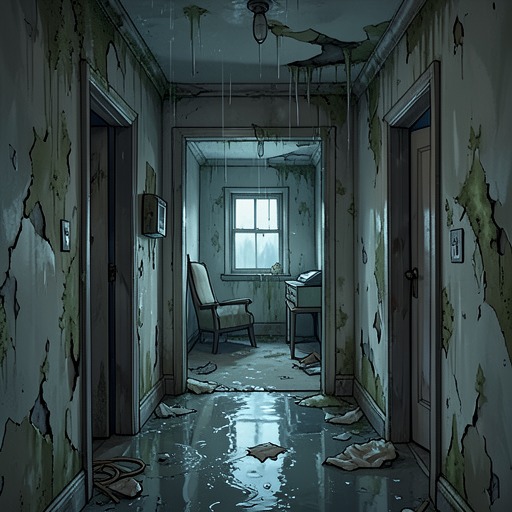
Rainwater repeatedly enters beneath the front door and floods the kitchen. During one heavy spell, the furniture is moved upstairs and a fire is kept burning there, while the downstairs rooms remain wet. The family names the upper floor Italy, turning an emergency arrangement into a domestic geography: upstairs is comparatively warm and dry; downstairs is exposed to water and the foul conditions associated with the shared lavatory. Their move is temporary in intention, but the narration returns to the same division between a livable upper room and a flooded kitchen.
That arrangement remains visible during the family’s Christmas preparations. The downstairs is again flooded, but the children have already been soaked while gathering coal, and their father carries the coal upstairs. Their mother laughs at their blackened appearance, then cries as she washes them, before giving them hot tea. In the upstairs room, the fire makes it possible to rest and prepare the meal even as the lower floor remains unusable. The episode shows how warmth, fuel, food, and shelter depend on labor and improvisation within a house that cannot keep the weather out.
Sanitation, illness, and daily precautions
The shared privy brings its own recurring burden. In winter, waste and water overflow and seep beneath the McCourts’ door; in warmer weather, flies and bluebottles gather around the privy and stable, while rats enter the house. The stable beside the lavatory houses Finn the Horse, and inadequate care of the stable compounds the conditions around the family’s home. The children chase rats with their dog Lucky and use whatever means are available to drive them out of the coal hole and house. These efforts address individual intrusions, but they cannot remove the source of the infestation.
The family develops routines to reduce contact with the shared facilities. When someone approaches with a bucket, the children call a warning and those inside close the door. In warm weather, this happens repeatedly; the family also plays outside and away from the privy as much as possible. Their precautions distinguish the threats they can manage from the one they cannot: they can chase rats or shut a door, but they cannot prevent neighbors from using the lane’s only lavatory. The home’s boundaries are thus continually negotiated against shared infrastructure.
The family’s circumstances are made particularly plain during a visit from representatives of the St. Vincent de Paul Society. Asked about the shed by the door, Frank explains that it is the lavatory for the whole lane. The visitors later step through the flooded kitchen and ask the parents about their living arrangements, the privy, income, work, and household circumstances as they assess whether the family deserves assistance. The inspection turns the home’s material conditions into evidence in a charitable claim, while leaving the family to live with those conditions after the visitors depart.
Complaint, assistance, and the limits of remedy
The father eventually takes Frank to the Town Hall to complain about the privy. He argues that it endangers the family and that the lane needs more lavatories. The official’s answer is that they can move; when the father says they cannot afford to do so, the official says there is nothing he can do. The exchange makes the family’s lack of choice explicit: the proposed remedy is relocation, but poverty prevents it, and the city declines to provide better facilities. The official also points to the houses’ expected demolition after the war, treating their poor condition as a reason not to improve them.
Charitable assistance can ease immediate want without resolving the environmental hardship. At one point the family receives a week’s grocery docket and a separate coal docket, subject to review of its need. On another occasion, the Society’s representatives direct the mother to apply for boots for the boys at Ozanam House, even though she says illness makes it difficult for her to stand in a queue. The family’s accounts of the flooded kitchen and shared privy help make its need legible to visitors, but assistance remains conditional and piecemeal. The household must keep adapting while its underlying housing and sanitation remain unchanged.
Meaning in the narrative
The home’s repeated movement between flood, damp, cold, and makeshift warmth gives poor housing a structural role in the narrative. Water enters the kitchen; waste and pests cross the threshold; the family shifts its furniture and routines in response. What might appear to be isolated domestic misfortunes becomes a sustained pattern, shaped by shared infrastructure and by the family’s inability to afford another dwelling. The father’s complaint names the public dimension of the problem, while the official refusal to act turns a private hardship into evidence of unequal access to basic services.
The contrast between the family’s resourcefulness and the persistence of the conditions is central. The children haul coal, guard the door, and chase rats; their parents seek dockets, move furniture, and use the upstairs rooms as shelter. These actions matter to survival, but none supplies a private lavatory, prevents flooding, or secures a sounder home. Substandard housing and sanitation therefore describe not simply the physical state of one dwelling, but the everyday pressure through which poverty restricts health, comfort, and choice.