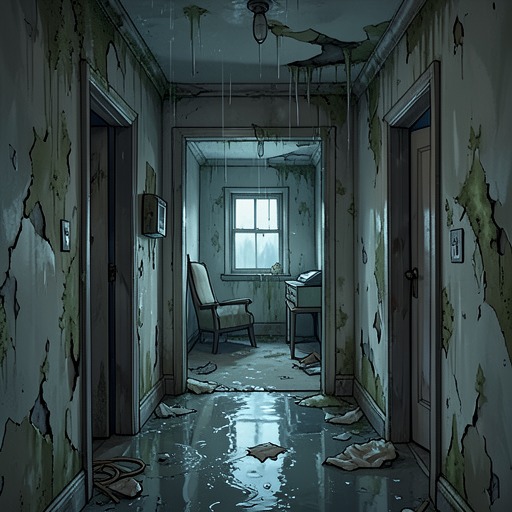
Upstairs “Italy” and downstairs “Ireland”
Angela's AshesThe upstairs “Italy” and downstairs “Ireland” are the McCourt family’s names for the two levels of their waterlogged home, a private geography that makes poverty’s physical conditions visible. The kitchen below becomes a lake when rain pushes under the door; the upstairs room, when a fire is lit, can be dry and warm. “Italy” is refuge by contrast, not an escape from the house’s damp or the family’s dependence on it.
The House Divided by Water
The division between the levels is practical as well as imaginative. In one Christmas scene, the downstairs kitchen is flooded again, but the family is already drenched from gathering coal, so they can wade through the water. Their father carries the coal upstairs, and their mother pauses the meal of cabbage, potatoes, and pig’s head to give the children hot tea. The fire there makes the room dry and warm enough for the boys to doze before dinner. The contrast is concrete: water below, heat above; labor and discomfort continue, but a fire can temporarily change what the upstairs room feels like.
The names “Ireland” and “Italy” give this domestic contrast a child’s scale and a child’s logic. They distinguish spaces by what happens in them, rather than by any formal boundary: the kitchen is the flooded level, while the upstairs room becomes the place where the family can warm themselves and sleep. The names do not imply that the family has left its circumstances behind. The coal has to be dragged home, wet clothes remain wet, and the meal still depends on the fire and the pot. Shelter is real, but conditional.
The Seventh Step and the Child’s Map
The staircase between the levels also becomes a subject of Frank’s attempts to make sense of the adults’ stories. When his mother is in the hospital with the pain in her back and the new baby, Michael, she brings him along so she can make sure he is healthy after being left on the seventh step by an angel. Frank cannot reconcile the angel story with the baby’s illness, and the adults rebuke his questions. The house’s stairs, and the specific step named in the family explanation for a new child, give the child’s imagination something physical to investigate.
Frank wants to know which step is the seventh because there are nine steps and it is unclear whether to count from the bottom or the top. His father answers that angels come down from above, not up from kitchens like theirs, which are lakes from October through April. Frank therefore counts from the top to find the seventh step. The exchange joins the household’s damp reality to its supernatural explanation: a child measures the stair, while his father locates the angel above the flooded kitchen. The family’s spatial language is at once playful and shaped by the conditions of the home.
Seasonal Reversals
The arrangement changes with the season. Before Easter, the family moves back downstairs to “Ireland.” Easter is better than Christmas because the air is warmer, the walls no longer drip with damp, and the kitchen is no longer a lake. If they rise early, a brief slant of sunlight may enter through its window. The move back downstairs is not a rejection of “Italy”; it registers that the kitchen, made nearly uninhabitable by winter rain, becomes usable again when the weather improves.
Later, when Frank’s mother has trouble climbing the stairs, she moves her bed to the kitchen. She jokes that she will return upstairs to “Sorrento” when the walls are damp and rain runs under the door. The remembered name for the upstairs refuge becomes part of how she speaks about moving through the home: her bed is now downstairs, where the children can stay near her, while the damp upstairs remains a possible destination when conditions change. The family’s geography is repeatedly revised by rain, warmth, illness, and the practical demands of caring for one another.
A Domestic Geography of Hardship
The contrast between upstairs and downstairs compresses the larger material conditions of the McCourt home into a recurring image. The flooded kitchen is not an isolated mishap: Frank describes it as a lake from October until April, and the family moves between floors as the weather and their circumstances require. The room called “Italy” offers warmth only when there is coal and a fire. The names lend the house a child’s imaginative doubleness, but they do not soften the facts of damp walls, water under the door, wet clothing, and the need to make a meal despite them.
The house’s vertical arrangement also gives the narrative a way to set adult explanations beside a child’s literal attention. Frank asks what an affliction means, questions the angel’s role in the baby’s birth, and counts the steps for himself. His father’s distinction between angels descending from above and the family’s lake-like kitchen makes the supernatural claim coexist with domestic reality rather than resolve it. “Italy” and “Ireland” similarly transform an ordinary division of floors into a memorable pattern: one level is briefly warm and dry, the other exposed to recurring water, and both belong to the same precarious home.