Killing the Changes
AnimalsKilling the Changes is the developing novel Laura Joyce presents as her writing project, and its changing name exposes a tension at the heart of her ambition: she wants a mysterious, complex book about what she regards as the simplest subject, love. First called Bacon, the novel acquires its newer title through an epiphany Laura says came while she was alone on a plane. Marty Grane later questions whether the title is right and suggests Yeats instead, leaving the work’s naming unresolved in the available scenes.
Identity and Development
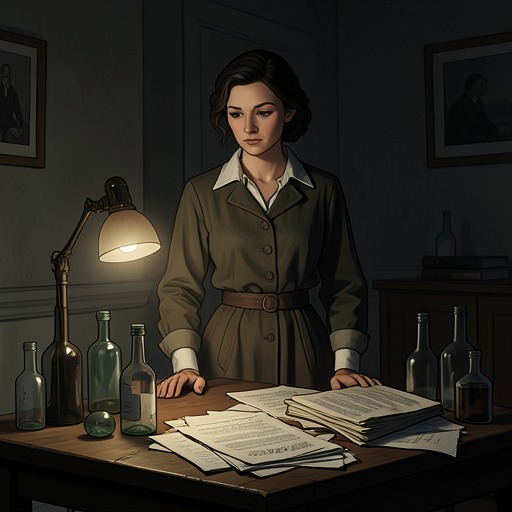
Laura identifies Killing the Changes as a novel in progress, not a completed or published book. When Marty asks how the novel is going, she pretends not to hear and walks past him carrying wine. As she sets the bottles down, she catches the edge of the table and spills some of a man’s pint. She apologizes and chastises herself for what she sees as conspicuous social effort, an awkward encounter that places the still-private writing project beside her discomfort with ordinary social gestures.
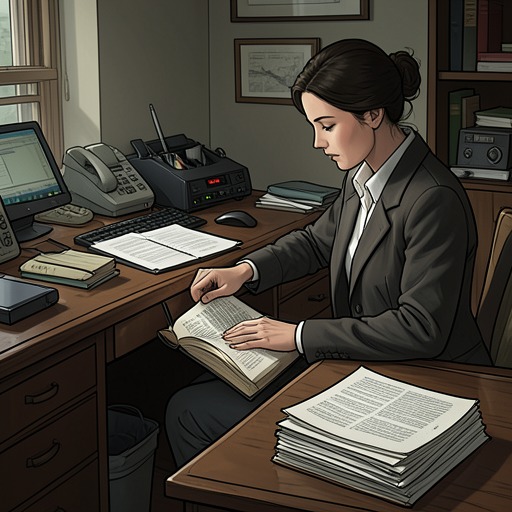
The novel’s existence is also tested in a separate exchange with Maud, who asks whether Laura is still writing stories. Laura answers uncertainly that she is, in a qualified sense. Maud says she has searched for Laura online but found little. This conversation establishes neither that Laura has stopped writing nor that she has published anything; instead, it shows the gap between her ongoing literary ambition and the limited public trace Maud can find.
From Bacon to Killing the Changes
At a gathering where Marty introduces Laura as a writer, Liz asks whether she has had anything published. Laura says she is working on a novel. Asked for its title, she explains that it had been called Bacon, but that now seems too glib. She traces the new possibility to a strange epiphany on a plane, where she was by herself, and says Killing the Changes feels more mysterious. The account makes the title a record of revision: not evidence that the manuscript is finished, but a name Laura is trying out to bring its presentation closer to her aims.
Her description sets mystery and complexity against simplicity. Laura wants the book to seem mysterious and complex, yet says it is about the simplest thing: love. That contrast gives the title discussion its central tension. The work’s subject, as Laura describes it, is emotionally fundamental, while its intended form and presentation resist sounding obvious or glib. Her earlier title, Bacon, is rejected for precisely that quality; the replacement is meant to promise greater depth without changing the simple subject she identifies.
Sharing the Work and Testing the Title
Laura’s relation to the novel moves between reticence and display. In one encounter, she avoids Marty’s question about how it is going. Later, she announces that she is going to read the beginning of her novel to the people around her, and Nick raises his glass in response. The scene supports a shift toward willingness to expose the work, though it does not establish that she completes the reading or how the others respond to the writing itself.
Marty returns to the question of the title, asking Laura to remind him what it is. When she names Killing the Changes, he says it is not right. His judgment does not settle the matter: the exchange records an outside challenge, not a confirmed replacement. He proposes using Yeats for the title because Yeats is Laura’s favourite poet; when she asks how he knows, Marty presents himself as a fellow hardline Romantic. The suggestion connects the naming of the novel to a literary affinity between them, but the evidence does not show Laura adopting it.
Literary Ambition and Limits of the Record
Killing the Changes is significant in these scenes less as a known finished text than as a project Laura repeatedly has to name and claim. She can be evasive when asked about it, uncertain when Maud asks whether she is still writing, and ready to identify herself as a novelist when introduced to Liz. The title gives that aspiration a more definite public form, while Marty’s question and alternative keep it open to revision.
The available account supplies no further plot, manuscript passage, publication history, or final title decision. It therefore presents the novel through Laura’s statements about its subject and desired effect, and through the small social encounters in which she speaks—or avoids speaking—about it. What remains clear is the distinction she draws between the simplicity of love and the complexity she wants the book to convey.