New Year
AnimalsNew Year is a hinge between intention and commitment in the novel. On New Year’s Eve, Laura Joyce and Jim become engaged after a conversation about the future; on New Year’s Day, they face the emotional weight of that decision. The holiday also sits within a wider pattern of characters measuring intimacy and parenthood against age and time.
The engagement on New Year’s Eve
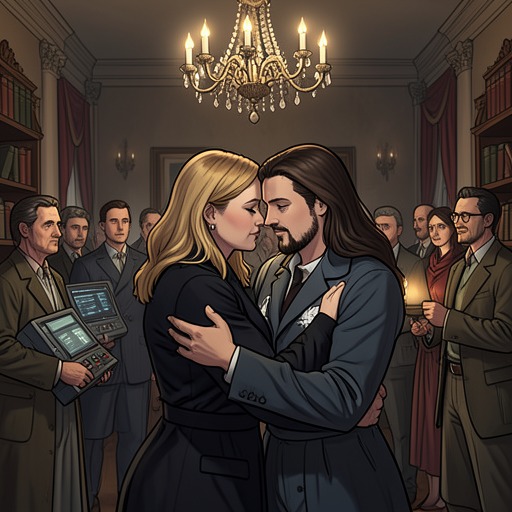
After a party at Tyler’s, Laura and Jim leave early. Tyler has been starting to make a fuss, but the departure goes unnoticed when someone puts on “Buffalo Stance.” At Tyler’s home, Laura and Jim sit on the lounge rug and drink a bottle of port left by his parents. They are both so drunk that neither can remember who asked the other to marry them.
The uncertainty about who proposed is presented as a minor detail beside their shared decision. They have been discussing what they want from the future and agree that being together for ever is the essential thing. Marriage, which had seemed like an abstract word, suddenly feels excessive and dramatic; their engagement is therefore less a formal plan than an impulsive expression of a commitment they already recognize.
New Year’s Day and the weight of a decision
The next morning, Laura and Jim turn toward each other with the wary feeling that something important has happened and that they must find out whether it is all right. The shift from the drunken intimacy of the previous night to this uncertainty gives the holiday its particular significance: the engagement is real, but its meaning has not yet settled into certainty.
That hesitation echoes Laura’s earlier difficulty imagining marriage in concrete terms. She had used the phrase as an abstraction, without knowing what marriage would mean in practice. When the idea becomes tangible, she pictures it as a huge, heavy, expensive Fifties American fridge appearing at the foot of the bed. New Year’s Eve makes the commitment in a moment of closeness; the morning after reveals its intimidating material weight.
Age, friendship, and parenthood
The holiday’s role as a marker of life stages resonates with other moments when characters consider age and family. When Jean becomes pregnant at twenty-eight, Tyler—her very close friend, and a year older—initially reacts as if she has lost Jean for a decade. The response makes pregnancy feel not only like a personal change but also a possible interruption to their friendship.
Later, Laura asks Tyler whether she worries that she is getting too old to have a baby. Tyler says she has at least fifteen years before she needs to panic, while resisting the idea that parenthood should be sold as an exclusive event. In another conversation, a woman says Neil thinks they should wait before having another child, but she wants one before she turns thirty-five and feels the pressure of a biological window. These exchanges place the New Year engagement within a broader landscape of competing timelines: the desire to remain together, the pressure of marriage, and the perceived limits around having children.
Narrative significance
New Year is not simply a festive backdrop. Its two adjacent dates organize a small but decisive emotional turn: a proposal made in intoxicated certainty is followed by sober apprehension. The contrast keeps the engagement from reading as an uncomplicated romantic resolution. Instead, the holiday marks the moment when a future once spoken of abstractly begins to demand a decision, while the surrounding discussions of pregnancy and age show how differently that future can be experienced.