
Coin, Luck, and the Stranger
AuerhausA four-pfennig coin passes between two poor men as a private wager on luck and a small act of care.
increasing Bearing strength in each event
 decreasing
Bearing strength in each eventdecreasingThe Berlin Coin

The Berlin Coin
A Family Gift
Höppner collects coins given by relatives and learns history and chemistry through their dates, metals, and wear. He prefers circulated coins to pristine ones because use gives them a past.
A Private Charm
He keeps one four-pfennig coin minted in Berlin, carrying it as a talisman for saving and for the city he imagines escaping to.
A Man Beneath the Bridge
A Man Beneath the Bridge
A Hidden Dwelling
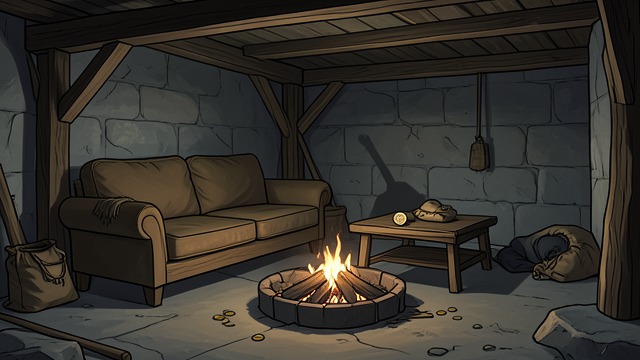
Höppner finds an improvised shelter beneath a road bridge, with a sofa, fire remains, clothes, and a bag of coins. The place belongs to someone living beyond the visible routines of the village.
Recognition
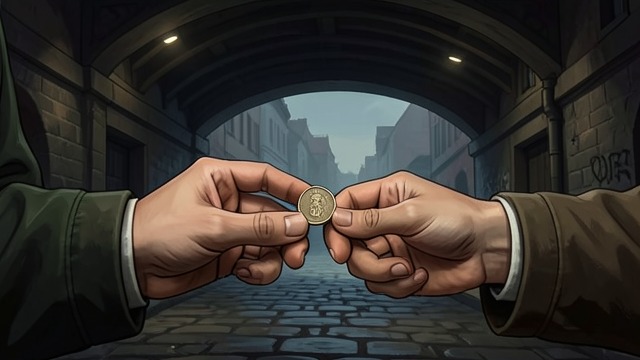
Among the money he discovers another four-pfennig piece from the same year and Berlin mint. The coincidence turns an anonymous shelter into a personal encounter, even though its occupant is absent.
The Exchange
The Exchange
A Calculation of Luck
Höppner reasons that two talismans might protect against almost all misfortune, then recognizes that the stranger may need luck more urgently than he does. His arithmetic gives superstition a comic appearance of scientific proof.
An Anonymous Gift
He swaps the coins, leaving his own charm for the unseen resident. The gesture is small and unannounced, a way of offering care without demanding contact or gratitude.
A Changed Meaning

A Changed Meaning
The Return
Höppner returns toward Auerhaus and notices the orchard trees blooming. The landscape’s renewal contrasts with the dark shelter and the person he has not met.
Luck Shared
The coin is no longer only a private charm for Berlin and thrift. By giving it away, Höppner turns his belief in luck into a modest act of solidarity.
A Keepsake Without Proof

A Keepsake Without Proof
The Limits of Magic
The coin exchange cannot be shown to protect the stranger, Frieder, or Höppner from harm. Its significance lies in the decision to give rather than in supernatural results.
Memory’s Small Evidence
The remembered coin preserves one moment when the narrator recognized another person’s need. It becomes a quiet counterweight to the book’s larger events of loss and helplessness.
during the narrator’s childhood collection
spring, after the New Year
moments after finding the coin
as Höppner walks back to Auerhaus
in the narrator’s later recollections
