
The Meaning of Being Present
AuerhausThe phrase about being fully present evolves from a crisis sensation into a fragile measure of happiness and memory.
increasing Bearing strength in each event
 decreasing
Bearing strength in each eventdecreasingFrieder’s Attempt

Frieder’s Attempt
Sudden Certainty
Frieder says that after swallowing the pills he felt completely present, confident, and at peace. The feeling came not despite the decision to die but through having accepted that his future was over.
A Dangerous Clarity
He describes the sensation without claiming it was happiness in an ordinary sense. The explanation unsettles Höppner because a moment that felt good was tied to surrendering every future possibility.
The Narrator on the Snow

The Narrator on the Snow
Borrowed Calm
On the snowy slope, Höppner drinks vodka and experiences a similar sense that everything is good. The similarity makes Frieder’s account feel less remote and more like a possibility within the narrator himself.
A Broken Assumption
Höppner had believed he could study suicide from the outside. His own near-freezing episode reveals how a person’s feelings can shift without producing a stable explanation of what they want.
The Tree in the Dark
The Tree in the Dark
A Moment of Action
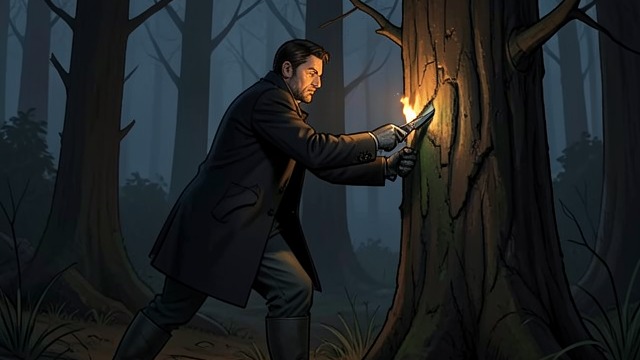
Frieder cuts down the village Christmas tree during the blackout and laughs that he has done it. The act gives him an intense feeling of presence, as his father later records from his diary.
Meaning Beyond Destruction
The tree episode is neither an uncomplicated triumph nor merely a criminal act. For Frieder, it marks a moment of agency in a life often shaped by illness, family expectation, and institutional control.
A Father Reads the Diary

A Father Reads the Diary
A Quiet Disclosure
Frieder’s father tells the gathered villagers what Frieder wrote about Auerhaus and the Christmas tree. His account makes the private diary part of a shared farewell.
A Difficult Truth
The father does not celebrate the act or dismiss its religious implications. He lets Frieder’s own description stand beside the community’s judgment, preserving the contradiction rather than resolving it.
The Phrase After Death
The Phrase After Death
A Recurrent Measure
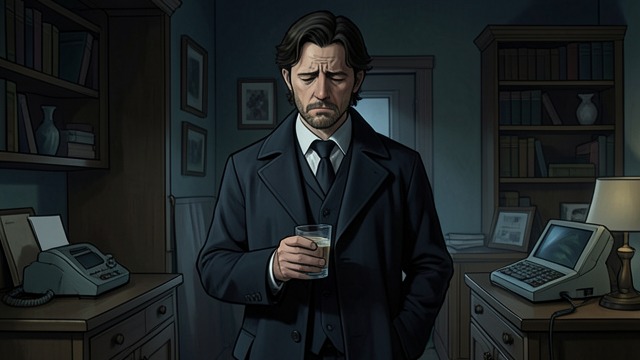
The narrator returns to the phrase about being fully present when thinking about Frieder’s happiness, risk, and choices. It names an experience without proving that the experience can last.
Memory Without a Cure
The phrase cannot explain Frieder’s death or turn it into a lesson with a clean conclusion. It remains a remembered moment of intensity beside grief, not a guarantee that presence defeats despair.
the first time Frieder explains his attempt
during Höppner’s winter crisis
Christmas Eve, after Frieder fells the tree
after Frieder’s funeral
in the narrator’s later telling
