
The Limits of Rescue
AuerhausThe novel distinguishes companionship and emergency intervention from the impossible demand to control another person’s will to live.
increasing Bearing strength in each event
 decreasing
Bearing strength in each eventdecreasingThe First Survival
The First Survival
A Cause Is Sought
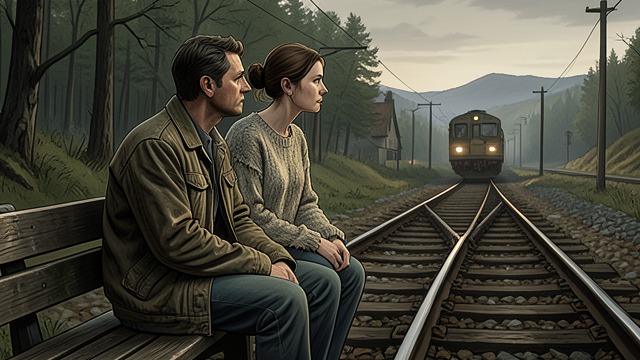
Höppner wants to understand why Frieder took the pills, but Frieder does not have a clear answer. The questions become more difficult when ordinary reasons such as love or family fail to explain the act.
Care Without Certainty
The narrator learns that survival does not provide access to a complete account of another person’s mind. Friendship begins to mean staying present without pretending to know what will prevent a future crisis.
Watching the Railway
Watching the Railway
Fear of an Impulse
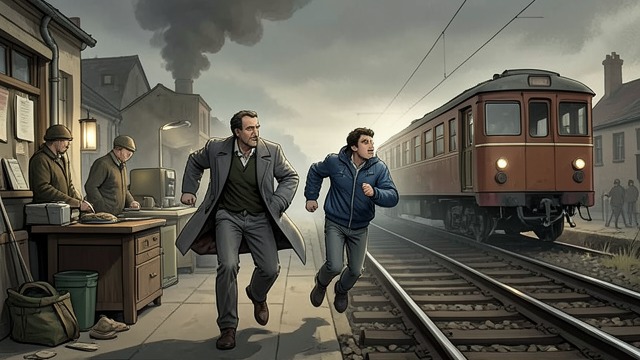
When Frieder heads toward the tracks, Höppner imagines that one movement could make him responsible for a death. He tries to stop his friend while the train approaches.
A Spoken Need
Frieder stops at the bridge and says he wants to see something other than patients and depression. The crisis resolves through communication and accompaniment, not through the narrator overpowering him.
Permission to Rescue
Permission to Rescue
A Direct Question
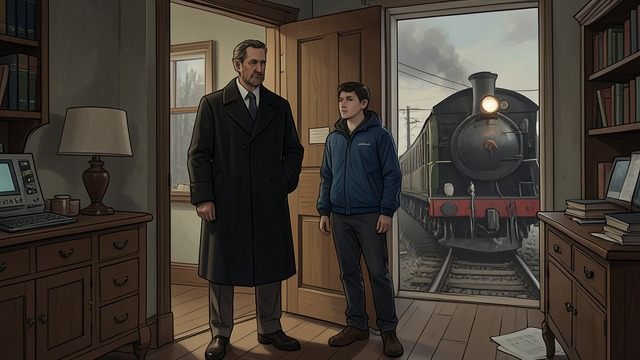
Höppner asks whether he should save Frieder if he is in immediate danger. Frieder says he may do so, because Frieder wants the choice of death to remain his own.
Ethical Tension
The answer gives the narrator a limited permission but no reliable rule for future emergencies. It frames care as a negotiation between intervention and respect for autonomy, with no painless resolution.
The Gun at the Traffic Light

The Gun at the Traffic Light
A Threat Disguised as Play
Frieder aims a fake gun at a police officer while secretly hoping to provoke a lethal response. His friends believe they are playing until real shots are fired.
Rescue Becomes Complicated
The incident exposes how an attempt to die can be hidden inside behavior that looks like a joke. Höppner’s later anger insists that Frieder’s private crisis has consequences for everyone placed in danger.
Words After the Loss

Words After the Loss
No Retrospective Certainty
The survivors wonder whether Frieder’s final death was deliberate, accidental, or connected to his earlier reasoning. His good mood before dying does not settle the question.
The Work of Remembering
Höppner recalls long conversations and the difference Auerhaus made, even though neither stopped the death. The novel makes remembrance a form of care, not a claim that the survivors could have controlled the outcome.
after Frieder wakes in hospital
during Frieder’s first outing
during a conversation on the snowy hill
winter, during the police pursuit
after Frieder’s death
