
The Language of Depression
AuerhausThe narrator moves from crude assumptions about depression toward a more nuanced recognition of its effects and the limits of what friends can know.
increasing Bearing strength in each event
 decreasing
Bearing strength in each eventdecreasingA Definition from Home

A Definition from Home
Explaining Depression
Höppner’s mother describes depression as a state in which a person can no longer act or carry one thought into the next. The narrator imagines a bicycle whose pedal mechanism is broken.
A Partial Understanding
The metaphor gives him a way to picture stalled thought, but it does not explain Frieder’s inner life. Knowing a definition is not the same as knowing why a particular person wants to stop living.
The Ward’s Patients
The Ward’s Patients
Fear of the Institution
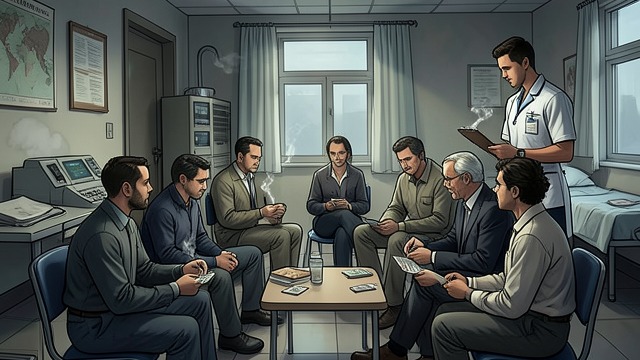
Höppner enters the psychiatric ward expecting danger and asks himself why patients do not simply run away. A nurse tells him that they are not more crazy than the people outside, though the staff hold the keys.
An Unfamiliar Reality
He sees patients smoking, playing cards, and repeating actions. The visit replaces abstract stigma with particular people, but the narrator still observes from the anxious position of a visitor.
The Longest Silence
The Longest Silence
A House Without Conversation
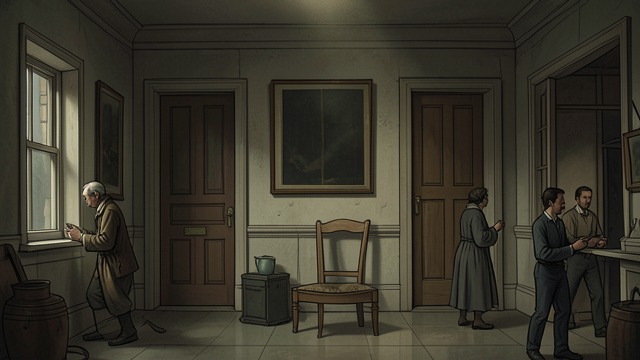
After the risky police confrontation, the residents spend days absorbed in separate activities. Vera studies, Frieder cooks, and Höppner searches for Harry and then retreats to the hayloft.
Distress Without a Label
The narrator finds the house sometimes worse than his family home because nobody speaks. He begins to recognize that communal living can contain isolation as well as companionship.
Medication and Agency
Medication and Agency
A Concern Raised
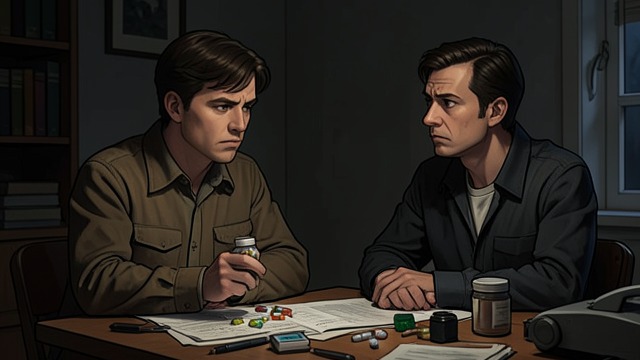
Höppner worries that Frieder’s changing mood depends on medication doses, so that wellness is measured by whether he attracts attention. Pauline challenges his assumption that life without medication would escape chemistry.
A Wider Account
Her point unsettles the narrator: moods arise through the body whether treated or not. The conversation complicates the division between sane and ill, without dismissing the real vulnerabilities medication is meant to address.
Understanding After Loss

Understanding After Loss
A Question Fades
The narrator remembers how repeated conversations once made the reason for Frieder’s first attempt seem less important. He found no final answer, and eventually the question itself receded.
What Cannot Be Known
Frieder’s later death brings the question back in another form, without making it answerable. The novel treats understanding not as a key that unlocks another person but as an ongoing, incomplete act of attention.
before the shared household forms
during Höppner’s first hospital visit
during the household’s later winter
during the New Year gathering
after Frieder’s final death
