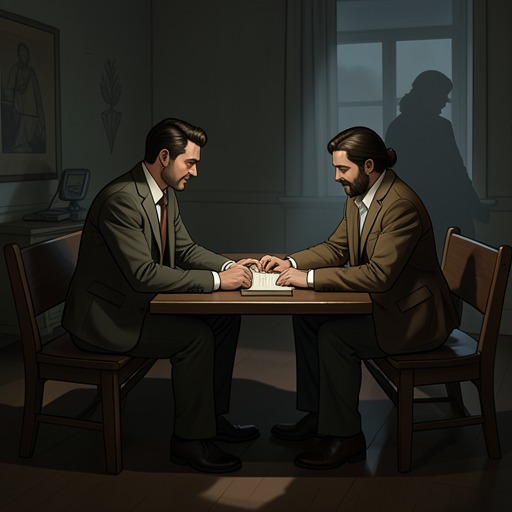
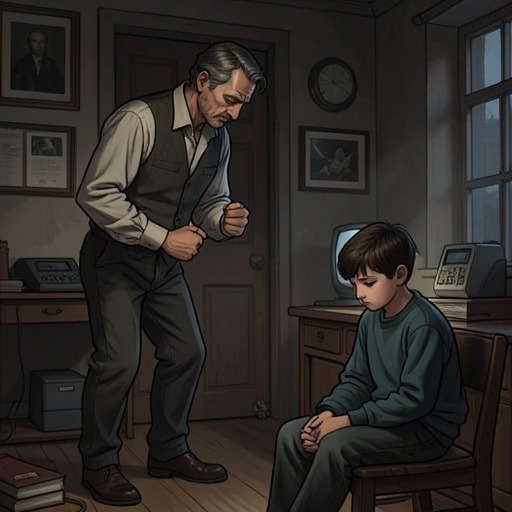
Lincoln's Grief over Kelly's Death
BeautifulLincoln's grief over Kelly's death is expressed less through a steady account of his feelings than through absences, sharp accusations, and moments when his composure gives way. As Kelly's brother, he mourns her within the same household and family that Ava Spirini, Kelly's closest friend, still longs to belong to. Their painful conflict makes grief both intensely personal and difficult to share: each knows the loss from a different relationship, and neither can make the other feel it in exactly the same way.
Bereavement in the Aftermath
In the months after Kelly dies, Lincoln's grief is visible partly through his withdrawal. Ava notices when he is not at school, a change she says she never used to register. Her visits to the family home are also constrained. She believes Tina has become hostile toward her after the funeral, and Ava's father suggests that seeing Ava may remind Tina of Kelly. Ava now comes only when Tina is away, though the familiar house remains a place where she feels less unsettled. The home holds the family’s daily life and Ava’s memories of Kelly, but it is also a place where loss has altered who can comfortably be present.
For Ava, being with Lincoln can briefly soften the force of everything else. She describes their flirting as a way to feel something other than misery, while also recognizing the painful contradiction: this closeness would not have developed if Kelly were alive. A later night out with Lincoln becomes another instance of what Ava calls grief-driven decision-making. Its aftermath leaves her embarrassed and relieved that they did not make a further choice she feared regretting. The episode offers context for their intimacy, but it does not establish that Lincoln experiences the closeness as she does. Their shared bereavement draws them together without making their motives or feelings identical.
Guilt, Anger, and Competing Claims
The conflict becomes explicit when Ava tries to talk with Lincoln about whether Kelly would be angry with them. Lincoln first insists that he does not care what Kelly would think. Then, in the same conversation, he admits that he hopes she would be furious with him. The reversal exposes a grief bound up with guilt: he imagines Kelly's anger as a response to his own failure, rather than a feeling he can dismiss. The conversation does not establish what he believes he could have done differently; it shows the force of his wish to be judged by the sister he has lost.
Lincoln turns that guilt outward as well, telling Ava that Kelly trusted and loved her but accusing her of having let Kelly die. Ava is stunned and challenges the idea that Kelly's death was her fault. When Lincoln insists that Ava cannot know what he feels because Kelly was his sister, Ava answers that Kelly was hers too. The exchange is not a simple contest over who loved Kelly more. It is a rupture between sibling grief and the grief of a best friend, with each relationship carrying a claim the other cannot fully occupy. Lincoln's accusation makes his pain hurtful to Ava; Ava's assertion of equal closeness, in turn, does not erase the distinct loss of a sibling.
The argument also brings their own choices into the open. Ava says that she allowed their intimacy even though she did not want it in the way it seemed to imply, and blames herself as well as Lincoln. In the middle of that distress, she says how much she misses Kelly and how constant the pain feels. Their closeness has not made grief easier to name; instead, the strain around it has become part of their relationship. The scene shows bereavement spilling into blame, shame, and a need to decide what their connection means.
A Break in the Conflict
Lincoln eventually holds Ava as she cries, and she does not at first want his touch. When he says that he misses Kelly too, the admission changes the encounter: for a moment, his guardedness gives way to a direct acknowledgment of their shared loss. He also recognizes that Kelly would have hated seeing them fight. Their reconciliation in that moment does not settle the disagreement or make their intimacy uncomplicated. It lets each see the other's grief without requiring either to surrender the particular bond they had with Kelly.
The brief openness does not last uninterrupted. Ava says that at times she feels Kelly is still around, and Lincoln answers by insisting on the reality of her death. He then admits that he does not think he will ever get over it and begins to cry. Ava holds him as his grief overwhelms him. The change from accusation to mutual comfort is not a resolution in which grief disappears; rather, Lincoln is able to stop directing all of its force at Ava and let her witness it.
Tina enters and takes Lincoln's weight from Ava, sitting with him as he sobs in her lap. She comforts him, and Lincoln's father kneels beside them. Ava recognizes Tina's grief and feels that Tina recognizes hers in return. The family’s response gives Lincoln support from within his immediate household, while Ava remains a witness who is also bereaved. The scene briefly brings the different relationships around Kelly into the same room without making them interchangeable.
A Continuing Bond
By the time of the gathering marking one year since Kelly's death, Lincoln and Ava have not returned to an uncomplicated friendship. He embraces her so tightly that her feet lift from the ground; the gesture feels awkward, familiar, and changed all at once. They have spoken little in the preceding months, but occasionally he sends her a joke and she replies. Ava describes their connection as something between friendship and family. She does not regret what happened between them, though she is not proud of it either. That qualified account reflects a bond shaped by both affection and painful circumstances, rather than a neat reconciliation.
The anniversary gathering itself makes room for stories about Kelly, laughter, and tears. Remembering her is not presented as proof that Lincoln or Ava has moved beyond the loss. Ava continues therapy with Nola and uses the image of feelings held in a box to understand how grief can remain present without overwhelming every moment. Her reflections distinguish moving forward from moving on: Kelly's death will continue to shape her, but she believes she must keep living. This account belongs to Ava, not to Lincoln; it does not supply a later explanation of his inner life. It does, however, place their continued connection within a shared remembrance of Kelly.
Narrative Role
Lincoln's grief is revealed through contrast: he can claim indifference and then hope Kelly is angry with him; he can accuse Ava and then let her hold him while he cries. These reversals make grief legible as a changing pressure rather than a single, settled response. His anger does not cancel his love, and comfort does not undo the hurt he has caused. The narrative also keeps the difference between his position as Kelly's brother and Ava's position as her best friend in view. Their relationships to Kelly overlap in love and memory, but neither loss can be reduced to the other.
The later anniversary scene resists an ending based on forgetting or a clean return to the past. Lincoln and Ava remain in intermittent contact, and their embrace carries the awkwardness as well as the familiarity of what they have been through. His grief is not given a final cure or a complete retrospective account. Instead, the surviving connection between him and Ava, and their participation in remembering Kelly, show how loss continues to shape relationships even as daily life moves on.