Event 1
Kelly Waititi’s death
[Kelly Waititi’s death](entity:event-recall-event-kelly-waititi-s-death-6448d9a3b116) by suicide is first presented through [Ava Spirini](entity:character-recall-character-ava-spirini-a8e1e7b099a4)’s memory of learning the news, not through an account of [Kelly](entity:character-recall-character-kelly-1803105a4412)’s final moments. The distinction shapes the event’s force: Ava can remember the exact arrival of the announcement, but not make sense of the loss it announces. In the months that follow, the death remains a measure of time and a pressure on ordinary life, returning in her school difficulties, her closeness with [Lincoln](entity:character-recall-character-lincoln-2a030b7cc671), and her changing understanding of grief.
## The Call and the Announcement
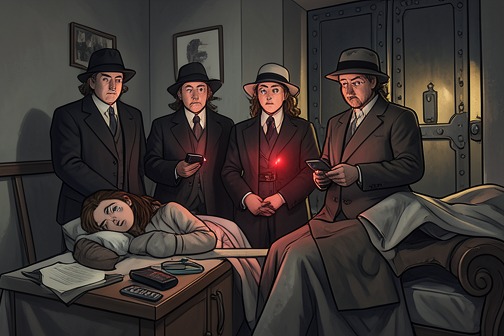
Ava recalls that Kelly and Lincoln’s father called her father’s home phone at 5:37 a.m. The house phone woke her, and she checked the time immediately. Seven minutes later, her father came into her room. His eyes were filling with tears, and before he spoke Ava knew that something was wrong. She assumed that one of her grandparents might have died; the delay before the news seemed to stretch around that expectation.
Her father began to tell her what had happened, saying Kelly’s name before completing the sentence with the news that she had died. Ava remembers the announcement as the instant her life up to that point was overturned. She could not move or properly take in what her father was saying. The recollection presents the news in fragments, with the blunt fact of [Kelly’s death](entity:event-recall-event-kelly-s-death-2d54d4dc78e1) cutting through the confusion. It gives the reader the event’s immediate human shape: a parent delivering devastating news to a daughter who has just woken, and a best friend abruptly absent.
## What Ava Can and Cannot Know
The novel identifies Kelly’s death as suicide, but Ava’s account does not claim access to Kelly’s final thoughts. Later, Ava turns the unanswered question over repeatedly, wondering whether Kelly had wanted to die or had wanted only for her pain to stop. She tries to find new information and to imagine how overwhelming that pain must have been. These are Ava’s efforts to understand, not confirmed explanations of Kelly’s state of mind. The distinction matters: grief drives Ava to search for certainty, while the narrative leaves the private circumstances of Kelly’s death unresolved.
That uncertainty also shapes Ava’s sense of the time afterward. At one point she says that six months have passed and insists that this is no time at all; she fears she will feel the same way for the rest of her life. In another recollection, she counts thirty-one Sundays since Kelly died. The count turns a calendar into a record of recurring loss: Sunday does not simply follow Sunday but repeatedly recalls the distance from the morning she received the news.
## [Grief](entity:state-recall-state-grief-8f5be11e2213) in Ordinary Life
Ava’s return to school shows how the death continues to affect daily routines. She has been back full-time for only a month, after several weeks attending part-time, and says she would not have returned if the decision were hers. Pressure over Year 11 work and her father’s dwindling ability to make excuses for her help bring her back, but attendance does not restore her concentration. Recent weeks blur together as she struggles to pay attention or avoids school. Other people’s comparisons between Kelly’s death and the deaths of their own relatives or pets leave Ava feeling that they do not understand the particular loss of her best friend.
The distance between school’s ordinary demands and Ava’s grief is stark: quadratic equations seem pointless while her body aches with numb sadness. She also feels that people are angry with her, and with Kelly, as though they resent both the death and Ava’s inability to recover on their timetable. The novel gives no indication that this pressure resolves the grief. Instead, the contrast shows how a loss can remain overwhelming even as institutions and other people expect everyday life to resume.
Kelly’s absence also changes Ava’s relationship with Lincoln. Ava recognizes that being with him makes other troubles recede for a while, or at least lets her feel something other than misery. She compares that temporary relief with how she felt when Kelly was alive, while acknowledging that her closeness with Lincoln would never have happened in the same way had Kelly survived. Later, Ava looks back on sleeping with Lincoln as a poor choice. Her account links their intimacy to the altered emotional world after the death without treating it as a replacement for Kelly or as a way of resolving the loss.
## Remembering Without a Timetable
A year after Kelly’s death, Ava recalls gathering with Kelly’s family beneath the rotunda at the park to tell stories about her. They laugh about the things Kelly used to do and cry; the gathering celebrates Kelly’s life. The scene marks a change in how remembrance can feel, but it does not suggest that the sadness has disappeared. Ava later describes sadness, hurt, anger, confusion, grief, and love as feelings that are all still present. Sometimes, she says, they are contained in the box she has learned to use as an image for grief; at other times, they simply do not outweigh everything else in her.
Ava continues fortnightly therapy with [Nola](entity:character-recall-character-nola-184866dca546), who reminds her that there is no single right or wrong way to feel, even though choices made under the force of those feelings can cause trouble. This later perspective sits beside Ava’s earlier fear that she will feel devastated forever, rather than proving that the fear was foolish or that grief follows a fixed schedule. Kelly’s death remains the event that reorganizes Ava’s sense of time and her relationships, while the novel’s movement from the remembered phone call to the anniversary gathering makes room for both continuing pain and moments of connection.
Event 2
Kelly Waititi’s funeral
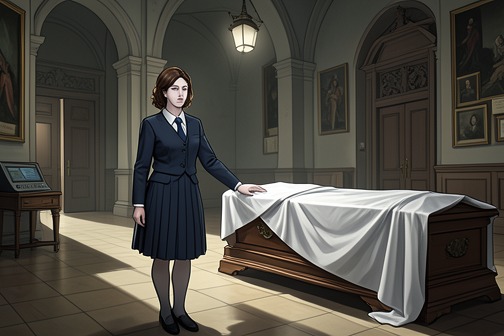
[Kelly Waititi’s funeral](entity:event-recall-event-kelly-waititi-s-funeral-39964dd0aba6) gives public form to a loss that [Ava Spirini](entity:character-recall-character-ava-spirini-a8e1e7b099a4) cannot yet comprehend. The family holds a two-day vigil at home before a third-day service, gathering relatives and visitors around [Kelly](entity:character-recall-character-kelly-1803105a4412) and observing Māori funeral traditions as fully as they can away from New Zealand. For Ava, the farewell is not a clean passage from grief to acceptance: it is a sequence of difficult acts of presence, ending with the departure of the hearse and the knowledge that she will not see her friend again.
## Arrangements and the Home Vigil
Kelly’s family makes the home the centre of the first two days. They establish a marae in the lounge room, where Kelly’s open coffin remains, and visitors come to see her. The family ensures that she is never left alone. The actual service is moved from the house to a large church hall because so many people are expected. The funeral is described as traditional Māori, though limited by the fact that the family is not in New Zealand.
Ava is the only schoolchild who goes to the house. She is frightened of seeing Kelly in the coffin and uncertain whether she can manage the visit, while also fearing that her distress might add to the family’s pain. Her father accompanies her. He sits beside Kelly’s father near the coffin, and the two men cry; Ava sees her father kiss Kelly’s forehead. [Tina](entity:character-recall-character-tina-19081254867c) then gestures Ava over and puts an arm around her as Ava sits beside her friend. The scene places Ava’s private attachment within a room full of family grief, without asking her to find words for what she feels.
The vigil lasts through a second night. Kelly’s family sit together, play guitar, cry, and talk to her. Ava finds it difficult to speak in the company of so many people, so her farewell is made in quieter moments: she holds Kelly’s hand and tries to make sense of the fact that her friend is gone. She spends the second night in the room with the family, but does not sleep; she lies awake or holds [Lincoln](entity:character-recall-character-lincoln-2a030b7cc671)’s hand. The ritual of keeping Kelly company thus becomes, for Ava, an ordeal of remaining close to a reality she cannot yet absorb.
## The Third-Day Ceremony
At sunrise on the third day, Kelly’s aunties sing and people say prayers before the coffin is closed. Ava remembers Tina embracing it and expressing grief that Ava cannot forget. The family then watches as the coffin is placed in the car. When the hearse leaves, Ava’s legs give way and her father holds her up. The departure marks the funeral’s decisive change: Kelly is no longer present for the family to visit, sit beside, or speak to. For Ava, that finality is bound to the knowledge that she will never see her friend again.
The ceremony does not end the gathering of mourners. Many students from school attend the service, including girls Ava remembers as having disliked Kelly. Seeing them cry angers her, and she wants to challenge their presence, but she does not. Instead, she stays beside her father, feeling detached and saying little. The difference between the small home vigil and the crowded service underscores how widely [Kelly’s death](entity:event-recall-event-kelly-s-death-2d54d4dc78e1) is witnessed, while Ava’s response remains intensely personal and difficult to share.
## Faye Donaldson and Kelly’s Affection
Faye Donaldson attends at least the service portion of the funeral. She approaches Ava to express her sorrow, looking down as she speaks. Ava answers by reminding her that Kelly had thought she was beautiful. The remark refers back to a moment Ava had witnessed before Kelly’s death, when Kelly approached Faye, told her what she thought of her, and kissed her. At the funeral, Ava’s words carry that earlier kindness into the farewell: she confirms to Faye that Kelly’s affection was sincere.
Faye takes a shaky breath, squeezes Ava’s hand, nods, and walks away. Their brief exchange is one of the few conversations Ava has at the service. It gives Faye a direct connection to Kelly’s memory and lets Ava bear witness to something Kelly had done, rather than attempting a broader explanation of the loss. The gesture is small beside the scale of the funeral, but it makes a private moment of tenderness part of the public remembrance.
## What the Farewell Leaves Behind
The funeral is a pivotal memory in Ava’s account of the six months after Kelly’s death, but it does not resolve her grief. She later describes time as slowed and life as still marked by the moment she learned Kelly had died. She counts the Sundays since that morning and says that each one begins with the weight of the loss. These later reflections place the funeral within an ongoing pattern of remembrance: the ceremonies provide a communal way to accompany Kelly, while Ava’s grief continues after the visitors disperse and the coffin has left.
Ava’s recollection also resists the idea that attendance or ritual can make bereavement orderly. At the house, she struggles to speak; at the service, she holds back her anger toward mourners she believes did not value Kelly; with Faye, she finds one precise thing worth saying. The funeral therefore gathers distinct forms of grief without making them identical. Its lasting significance lies both in the farewell itself and in the relationships it preserves in memory: a father supporting his daughter, Tina holding Ava close, Lincoln beside her through the night, and Kelly’s words about Faye carried forward by Ava.
Event 3
Ava interrupts Kelly’s memorial assembly
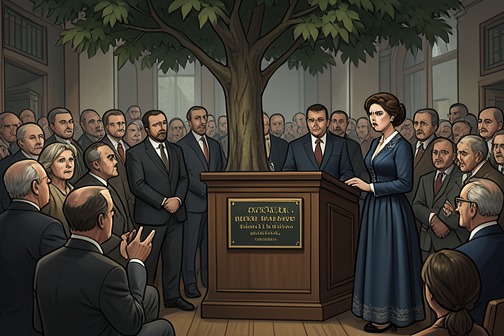
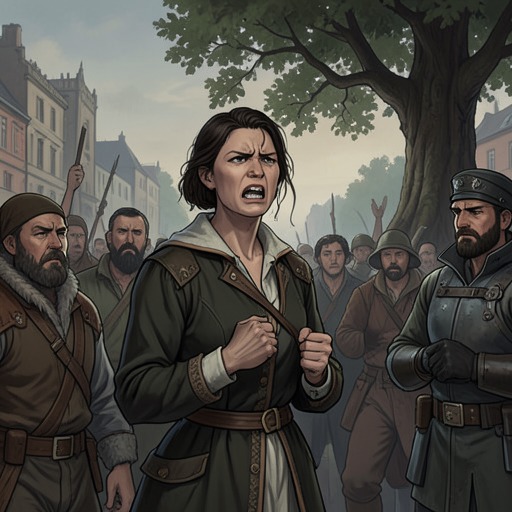
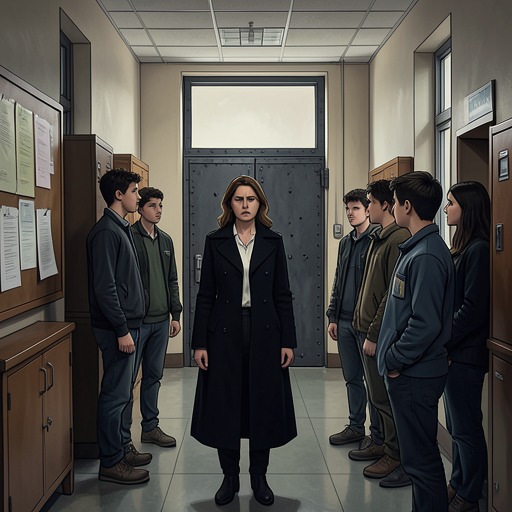
Ava interrupts [MacGreggor State College](entity:location-recall-location-macgreggor-state-col-e8595189d6e4)’s memorial assembly because its tribute to [Kelly Waititi](entity:character-recall-character-kelly-waititi-a0ec233f6fca) seems to preserve the appearance of remembrance while leaving out the person and the circumstances she cannot forget. Six months after [Kelly’s death](entity:event-recall-event-kelly-s-death-2d54d4dc78e1), the school offers a tree and a plaque; Ava answers by insisting that [Kelly](entity:character-recall-character-kelly-1803105a4412) be named and that the ceremony face the truth of her death. The outburst breaks the assembly’s public decorum, but it also makes visible the distance between an institution’s consoling language and one friend’s continuing grief.
## Background and Stakes
[Mrs Bryan](entity:character-recall-character-mrs-bryan-fc8f88f83de7) presents the gathering as an occasion for the school community to support one of its members after a fall, describing the newly planted tree as a reminder of that solidarity. In the assembly’s framing, the tree and plaque stand for collective care. Ava hears a different message: the speech has not named Kelly, and the reference to a fall softens what happened. The gap between the official account and her knowledge of her best friend is the immediate source of the confrontation.
By this point, Ava has been back at school full-time for only a month, following several weeks of part-time attendance. She has been struggling to concentrate, sometimes avoiding classes, and resenting comparisons between Kelly’s death and other people’s losses. She feels that classmates and teachers expect her to recover on their timetable, although only six months have passed. Against this background, the assembly brings private bereavement into a room of roughly seven hundred students and gives Ava a public occasion to challenge the school’s account.
The protest is also a sharp reversal of Ava’s intention for that day. She had resolved to keep a low profile and written [Be beige](entity:expression-recall-expression-be-beige-9cf7e75dfdd3) on the back of her hand as a reminder. Instead, the school’s memorial language proves impossible for her to sit through quietly. The difference between the plan and the outburst captures the pressure building beneath her effort to appear unobtrusive: silence might help her blend in, but, in this moment, it would also leave the omission unchallenged.
## The Interruption
As Mrs Bryan continues speaking, Ava suddenly rises and shouts that Kelly did not simply fall: she died. She then challenges the choice of a tree, explaining that Kelly hated nature. Her objection is not only to the memorial object but to the way the ceremony has made it stand in for Kelly. Ava is angry at what the school says and, more emphatically, at what it leaves unsaid. The plaque, the concrete beside it, and the delayed planting seem to her like evidence of an achievement the school can display without having to speak plainly about the girl being commemorated.
Ava calls on the school to say Kelly’s name. The demand turns an absence into the center of the event: the memorial is ostensibly for Kelly, yet the assembly has not named her in the remarks Ava has heard. Around Ava, students whisper and giggle while Mrs Bryan tries to calm the room. Ava makes her way over the row toward the aisle, aware that the crowd is watching. Once she reaches the center of the auditorium, she freezes, looks at Mrs Bryan, and begins laughing. The laughter does not settle the scene; it registers the loss of control she has been trying to maintain, as she recognizes how strange she may look and continues regardless.
She then challenges the choir’s choice of [The Climb](entity:expression-recall-expression-the-climb-0cbcd9edc3b5), the Miley Cyrus song selected for the tribute. To Ava, a song about overcoming hardship is not a neutral expression of sympathy: performed in Kelly’s memory, it makes the assembly’s consoling tone feel especially false. The speech, the tree, and the song therefore become connected parts of a ceremony Ava experiences as a distortion, each offering a manageable symbol where she wants an honest acknowledgment of Kelly.
## Public Confrontation and Departure
The auditorium responds to Ava’s criticism with laughter and cheers. She raises both middle fingers toward Mrs Bryan, turns, and walks out through the large double doors, which slam behind her. The exit ends the assembly’s immediate confrontation but does not reconcile Ava with its tribute. Instead, it leaves the room’s reaction—part amusement, part spectacle—hanging beside the seriousness of what she has tried to say.
The scene also makes Ava’s protest costly in social terms. Students have already stared at her, whispered, and laughed; her outburst draws the entire assembly’s attention rather than allowing her to become inconspicuous. Her attempt to defend Kelly’s memory is consequently inseparable from the exposure of her own grief. The crowd sees a disruption; Ava sees herself reacting to a ceremony that treats a death as a lesson in communal solidarity without saying the name that gives that lesson its meaning.
## Aftermath and Significance
After leaving, Ava recalls that she had hoped to be quiet and unobtrusive, then recognizes that the shouting has made her just as conspicuous as she had feared. She also places the assembly within the longer difficulty of returning to school: work feels pointless against the numb sadness she carries, and time seems to have slowed since Kelly died. The outburst is not presented as a resolution of that grief. It is one moment in it, when accumulated anger at euphemism and pressure to appear recovered breaks through her effort at self-control.
Later reflections sharpen the contrast between public memorial and private remembrance. Ava recalls counting thirty-one Sundays since Kelly’s death and continues to question the details of Kelly’s final night, as well as what a last afternoon together might have meant. At another point she remembers Kelly drawing a love heart on her mirror and wonders whether it expressed a farewell. These memories do not make the assembly’s tree meaningless in itself; they show why a general symbol cannot contain the particular person Ava is trying to remember. Her insistence on naming Kelly is part of an enduring bond, not a claim that grief can be settled by one public ceremony.
The episode also anticipates Ava’s later distinction between moving on and moving forward. She comes to believe that Kelly’s death will continue to shape her, while also deciding that she must keep living rather than let pain end her life. Seen against that later understanding, the assembly captures an earlier, raw form of the same commitment: Ava refuses a version of remembrance that asks the bereaved to accept comfort without truth. Her protest does not repair the loss, but it makes the omission impossible to mistake for remembrance complete.
Event 4
Ava punches Trevor Lane and is expelled
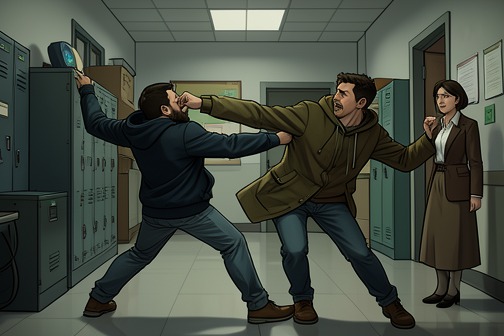
[Ava punches Trevor Lane and is expelled](entity:event-recall-event-ava-punches-trevor-lane-68d2a82b2150) after he makes a cruel remark about [Kelly’s death](entity:event-recall-event-kelly-s-death-2d54d4dc78e1). The incident brings private grief into direct conflict with school discipline: Ava accepts responsibility for the assault, but rejects the meeting’s attempt to separate her punishment from the insult that provoked her. The school’s decision removes her from [MacGreggor State College](entity:location-recall-location-macgreggor-state-col-e8595189d6e4) and points her toward [TAPs](entity:location-recall-location-taps-dbf4fd369aaa), while her father challenges the school’s handling of Kelly’s death and its support for Ava.
## The confrontation
Before the disciplinary meeting, Ava has already been pulled away from Trevor and taken to the office. She tells [Mrs Bryan](entity:character-recall-character-mrs-bryan-fc8f88f83de7) that Trevor had been speaking about her and [Kelly](entity:character-recall-character-kelly-1803105a4412), and that he said he was glad Kelly had died. When Mrs Bryan asks Ava to explain what happened, Ava describes the remark that immediately preceded the attack: Trevor wished that Ava, rather than Kelly, had died, and made a degrading comparison between them. The cruelty is directed at Ava through the loss of her friend, turning the meeting’s question of what happened into a confrontation over whether the provocation will be acknowledged.
Ava does not present the assault as accidental. She says she hit Trevor on purpose, calls his conduct vile, refuses to apologize, and says she would do it again. Her account makes the act an explicit choice made in anger, rather than a blow she cannot remember or control. At the same time, the scene does not reduce the conflict to Ava’s anger alone: her explanation links the violence to Trevor’s words about Kelly, while her insistence on responsibility refuses the school an easy account in which the cause of the incident can simply be set aside.
## The disciplinary decision
Mrs Bryan asks Ava to recount the day across her desk, with [Ava’s father](entity:character-recall-character-ava-a94c6f251d95) beside her. When Ava says that Trevor insulted her, Mrs Bryan asks whom he meant; Ava’s pointed response shows how plainly the remark implicated Kelly. Ava’s father steadies her by touching her shoulder, but Mrs Bryan tries to qualify the account before Ava has finished making it. Ava objects to what she sees as a recurring tendency to treat serious things as if they were insignificant. The meeting therefore carries two disputes at once: whether Ava committed the assault, which she admits, and whether the school will take seriously the circumstances surrounding it.
Mrs Bryan says MacGreggor State College has a zero-tolerance policy for physical violence. Ava challenges the apparent imbalance between that rule and the school’s response to Trevor, asking what will happen to him. Mrs Bryan says the school will take action specific to his behaviour, but the evidence does not establish what action follows. She does, however, tell Ava that the school needs to expel her. The decision is delivered as a consequence of the assault and Ava’s record that year; Ava’s father reacts with alarm, while Ava falls silent.
## Referral and family response
Mrs Bryan acknowledges that Ava has experienced trauma, but also says the school must support other students and can no longer support Ava effectively. She proposes another institution and explains that she has contacted [Rahila Saeed](entity:character-recall-character-rahila-saeed-a213383648bd) at TAPs, who is willing to meet with the family. For Ava, the referral is startling. She understands TAPs as [The Alternative Program](entity:organization-recall-organization-the-alternative-a2e3666d0045) and associates it with students she does not think of as people like herself. That immediate rejection makes the move feel not simply like a change of school, but like a label attached to her after a public breakdown.
Mrs Bryan presents the program as better suited to Ava’s needs at that time, especially to help her complete Year 11, after which she could reconsider her options. She slides a red-and-yellow pamphlet across the desk and points out that Rahila Saeed’s number is on the back. Ava’s father says they will consider it, then criticizes the school’s handling of Kelly’s death and its pastoral care, saying he will contact the Department of Education. His challenge gives the meeting a second institutional consequence: the school has judged Ava’s conduct, but her father disputes whether it has adequately supported her after the loss.
## Aftermath and significance
The decision about TAPs is made by Ava’s father after the family gets home. Ava has no say in whether she will attend a meeting there. She tells him she is not like the students she associates with the program; he tells her she has no option, while also acknowledging that the school may be unable to support her and that TAPs could be a better fit for now. He objects to Mrs Bryan’s competence rather than echoing Ava’s insult, keeping his criticism focused on the school’s response.
Ava experiences the expulsion as another reversal in a period when much has already changed: Kelly is gone, relations with Kelly’s parents are difficult, and Ava is uncertain about where she stands with [Lincoln](entity:character-recall-character-lincoln-2a030b7cc671). She feels she has disappointed her father, Kelly, and herself. Her expectation that the day could not become worse gives way to the realization that it could. The meeting thus does not resolve her grief or vindicate the assault; it leaves her facing the consequences while making visible the limits of the institution that has expelled her. Her father’s objection and the referral to TAPs point in different directions, but both mark the end of her place at the school as it had been.
Event 5
Ava begins at TAPs
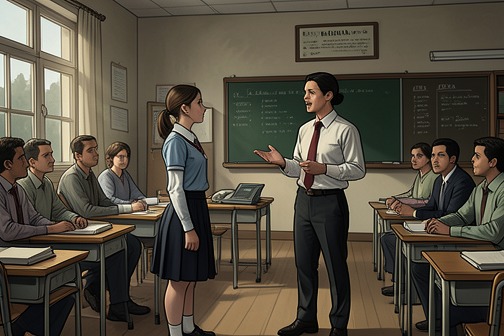
[Ava Spirini](entity:character-recall-character-ava-spirini-a8e1e7b099a4)’s first days at [TAPs](entity:location-recall-location-taps-dbf4fd369aaa), [The Alternative Program](entity:organization-recall-organization-the-alternative-a2e3666d0045), mark a change not simply of school but of how her distress is received. Expelled after punching [Trevor Lane](entity:character-recall-character-trevor-lane-6b4c0bee842d) for insulting [Kelly](entity:character-recall-character-kelly-1803105a4412), she arrives expecting the new school to confirm her own contempt for it. Instead, a teacher’s quiet intervention and classmates’ matter-of-fact acceptance unsettle her assumptions: at TAPs, she can say she is unhappy without becoming a spectacle.
## Background and Referral
At [MacGreggor State College](entity:location-recall-location-macgreggor-state-col-e8595189d6e4), Ava’s grief has collided with the school’s rules and expectations. In a meeting with [Mrs Bryan](entity:character-recall-character-mrs-bryan-fc8f88f83de7), Ava and [Ava’s father](entity:character-recall-character-ava-a94c6f251d95) are told that staff and students are concerned for her, but support is tied to behaving according to school rules and not disrupting an assembly. Mrs Bryan recommends counselling; Ava rejects the suggestion, connecting it to Kelly and insisting that she is upset and intended her outburst to show it. The meeting leaves her feeling that the school is passing responsibility elsewhere rather than understanding what has happened.
The practical response is a shortened timetable, but Mrs Bryan also warns that Ava may have missed enough school to repeat. Ava’s father does not know the extent of her absences: she has been skipping school and going to work instead. That history makes the transfer a consequence of more than one incident. After Ava punches Trevor Lane, Mrs Bryan tells the family that the school will expel her, recognizes that Ava has experienced trauma, and says the institution can no longer support her. She recommends TAPs as a better fit for Ava’s immediate needs and Year 11, handing Ava’s father a bright red-and-yellow pamphlet with contact information for [Rahila Saeed](entity:character-recall-character-rahila-saeed-a213383648bd).
Ava’s first response is shaped by the stigma she already associates with alternative education. She imagines TAPs as a place for teenage mothers, bullying victims, students marked as strange, and young people with anger issues—the last category turning back on her when she recalls why she has been sent there. Her transfer thus begins with a double judgment: the former school classifies her behaviour as grounds for removal, while Ava has absorbed dismissive ideas about the students who attend TAPs.
## First Arrival
On her first day, three boys watch Ava through the glass of a door leading to a courtyard. One has a mohawk; he nods and smiles, and the others laugh and pat him on the back. Feeling exposed in denim shorts, Ava rolls her eyes and gives them the finger. Their laughter makes the encounter feel, at first, like confirmation that she will be watched and judged in her new school.
Rahila Saeed, TAPs’ head teacher, interrupts that dynamic. She greets Ava, looks through the glass, and quickly signals for the boys to leave. Then she turns her attention back to Ava, touches the corner of the bright blue headscarf resting on her shoulders, and touches Ava’s arm as she reassures her. The gesture and calm manner contrast with Ava’s earlier experience of adults discussing her conduct and needs as a problem to manage. Ava remembers that their meeting the previous week had already made her feel better about the move: Rahila had spoken to her, not about her, and had asked what she wanted and what her goals might be.
The school’s practical differences also matter to Ava. She will not have to wear a uniform; there are only forty students; the days are shortened; extracurricular programs are available; and students call teachers by their first names. When Ava says she has no goals, Rahila suggests that making some is a goal in itself. Ava agrees to try, and she notices her father’s body relax. The transfer therefore offers a modest but concrete beginning: not a completed plan for Ava’s future, but a conversation in which she is asked to help define one.
## A Classroom Without a Spectacle
By lunchtime, Ava has begun to understand how TAPs works. In English, [Minda](entity:character-recall-character-minda-661aca2b2c2f) argues with Allan, who has apparently provoked her without reading the chapter under discussion. Their exchange is lively rather than hushed: Jason, Ava’s new English teacher, urges the class to explore why Minda thinks Allan is prejudiced, while also reminding her about her language. The lesson turns from their disagreement to the judgments people make about one another.
The group is small—ten students—and Jason asks each person to name a basis on which others judge them. Students mention clothes, piercings, hair colour, and music. Minda describes how people judge her for having a child at fifteen. Rae explains that people assume she is unhealthy because she is fat, then counters that assumption by mentioning how much she can bench-press, to the group’s impressed laughter. The exercise gives Ava a set of specific examples of how people are reduced to visible traits or circumstances before she has to speak for herself.
Ava says that people think she is happy because she is funny. When Minda asks if she is, Ava answers no. The bluntness surprises Ava herself, but it does not stop the lesson or prompt a joke. Minda smiles in recognition, and the others simply nod. Jason continues teaching as though Ava’s answer needs neither interrogation nor a special intervention. For Ava, that ordinary response is the turning point: she realizes that her classmates have their own difficulties and are not making her grief the sole subject of the room. The relief feels almost like sunlight through a window; she even finds herself happy, a feeling she regards with surprise.
## Friendship and a Different Kind of Belonging
Two days later, Ava stays after school and spends the afternoon with Minda and Rae. She learns that they are dating, and goes with them to Minda’s home, a small brick duplex shared by Minda, her grandmother, and her one-year-old son, Maddox. As Ava hands the child a plastic train, Minda asks whether it is strange for Ava that she has a child. Ava says it is not, adding that having a child would be strange for her because she can barely look after herself at that point.
Ava’s account of Minda is notably admiring. She sees her as confident and smart, someone who tells people when they are being inappropriate or racist and asks good questions without being rude. Minda has effectively adopted Ava into the student group from the first English lesson, introducing her to others and explaining how things work. The friendship develops through practical welcome rather than a promise to solve Ava’s grief: Minda includes her, makes space for candid talk, and brings her into the ordinary life of her home.
Beginning at TAPs consequently reverses Ava’s expectations without erasing the reasons she arrives. Its students are not the caricatures she had imagined, and Ava herself is not reduced to her expulsion or anger. The school’s small classes, relaxed arrangements, and candid conversations give her a place where unhappiness can be admitted without becoming an exception that interrupts everyone else. Her first steps toward belonging are modest—trying to name a goal, staying after class, visiting a friend—but they offer a contrast to the institutional rejection that preceded them.
Event 6
Ava and Lincoln’s confrontation over Kelly
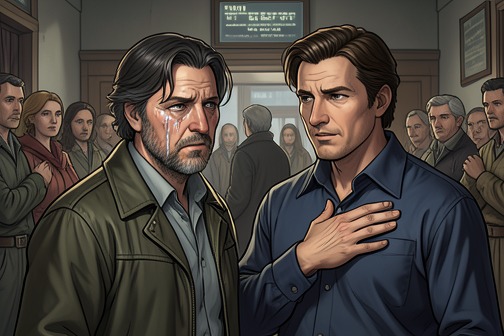
[Ava and Lincoln’s confrontation over Kelly](entity:event-recall-event-ava-and-lincoln-s-confr-f6abc45cac4c) brings their buried grief into the open after they have been intimate, exposing how anger, guilt, longing, and attachment have become knotted together. The argument moves from a question about what [Kelly](entity:character-recall-character-kelly-1803105a4412) might think to a direct accusation that Ava failed her, then ends not in resolution but in shared mourning, as [Lincoln](entity:character-recall-character-lincoln-2a030b7cc671), Ava, and their families confront the loss together.
## Context and Stakes
By the time the confrontation takes place, Kelly has been dead for six months. Ava experiences that interval not as a passage toward recovery but as a measure of how little time has elapsed: school feels slower, and she believes others are impatient with her for not getting over the loss. She rejects comparisons between [Kelly’s death](entity:event-recall-event-kelly-s-death-2d54d4dc78e1) and the deaths of relatives or pets, insisting to herself that Kelly was her best friend and that the pain cannot be reduced to someone else’s experience. That isolation helps explain why the scene is so volatile: the argument gives voice to feelings the surrounding world has not made easier to speak.
Ava and Lincoln have also begun turning toward each other in ways that complicate their grief. Being with him can briefly make the rest of Ava’s life matter less, or let her feel something other than misery. She recognizes the contradiction: that comfort would not have taken this form if Kelly were alive. After an earlier night of drinking, kissing, and arguing, Ava had been relieved that they did not have sex in the park; later, however, they do become intimate. She repeatedly finds that the experience feels good while it is happening but is followed by guilt, regret, and sadness. The confrontation begins in the aftermath of that pattern, with Ava wanting to talk about Kelly and Lincoln initially keeping his attention on his phone.
## From Avoidance to Accusation
Ava asks whether Kelly would be angry with them. The question breaks their usual silence about her and reveals what Ava is seeking: not simply an answer, but a sign that Lincoln is also troubled by what has happened between them. He first claims not to care what Kelly would think. When Ava challenges that response, he says he hopes Kelly would be furious with him. His anger is directed both toward the dead and toward himself; he imagines Kelly’s judgment as something he might deserve. Ava remembers hating it when Kelly was angry with her, and Lincoln reassures her that Kelly was never angry with her before turning the conversation back to blame.
Lincoln tells Ava that Kelly trusted and loved her, then accuses her of having let Kelly die. Ava reacts as though the words strike at the center of her own guilt and asks whether he believes the death was her fault. Lincoln immediately retreats from the accusation, saying he did not mean it, but Ava refuses to let the exchange pass as though its force has disappeared. His words give shape to a fear that grief had left unspoken; his attempt to withdraw them cannot undo the harm.
The argument then sharpens around who has the right to claim the loss. Lincoln invokes Kelly as his sister, while Ava insists that Kelly was hers too and that she knows how he feels. Their competing claims do not cancel each other: they reveal two relationships to the same person, each marked by love and bereavement. Lincoln answers with a bitter reference to Ava and himself having already been together. Ava pushes him, and he pushes her back, escalating their verbal conflict into a physical one. The scene does not frame this clash as a solution to their grief. It makes visible how pain that has been displaced into intimacy and resentment can turn against the people seeking comfort in one another.
## A Shared Break in the Argument
After the escalation, Ava rejects Lincoln’s attempt to touch her and accuses him of not caring about her. In the same outpouring, she condemns both of them: she blames herself for agreeing to what happened between them, says she should have told him no, and insists that he should have known better than to continue. Her confession makes clear that the intimacy has become bound up with self-punishment as well as desire. She explains that she misses Kelly constantly and that the pain is what she has been trying to live with, not something the encounter could settle.
Lincoln holds Ava as she cries, and she eventually stops trying to pull away and sobs against him. He admits that he misses Kelly too and believes she would hate what is happening between them. For a moment, Ava recognizes his openness as a brief chance to reach him. The shift is fragile: they move from accusation to mutual recognition without agreeing about everything or repairing the harm between them. Ava says that she sometimes feels Kelly is still around; Lincoln answers that Kelly is dead. The bluntness closes the moment of shared openness, but it also names the fact both have been struggling to absorb.
Lincoln then collapses into grief. He says he does not think he will ever get over Kelly’s death, buries his head in Ava’s lap, and cries. Ava holds him as his sobbing intensifies. Their roles briefly change: the confrontation had made each treat the other as an adversary, but now Ava supports Lincoln through the same pain she has been trying to express. The scene offers neither a cure nor a neat reconciliation. Its change is smaller and more immediate: for a short time, neither has to pretend that the other is untouched by the loss.
## Family Support and Aftermath
[Tina](entity:character-recall-character-tina-19081254867c) enters Lincoln’s room and finds him crying with Ava. She takes his weight from Ava and lets him sob against her, stroking his head and reassuring him. Lincoln’s father kneels beside them and places a hand on Lincoln. Tina meets Ava’s eyes, and the silent recognition between the two girls suggests that each can see the other’s grief. Their arrival widens the scene beyond the troubled intimacy between Ava and Lincoln: mourning is shared by the family around Kelly, even when no one can make it orderly or painless.
Ava cannot remember being taken to the lounge room or falling asleep on the couch. She wakes when her father strokes her hair and offers to carry her to the car, as he once did when she was about six. His practical tenderness briefly makes her smile, a response she finds strange but does not reject. The quiet offer contrasts with the accusation and physical struggle in Lincoln’s room: care here does not demand that Ava explain or resolve her feelings.
In the larger account of Ava’s bereavement, the confrontation helps establish that moments of relief and intimacy do not mean Kelly has been forgotten. Ava later describes her feelings as still present, even when they are no longer larger than everything else in her. The argument is a concentrated instance of that movement: grief swells into blame, then changes shape into crying, care, and exhaustion. It does not restore Kelly or settle Ava and Lincoln’s relationship. Instead, it shows the costs of trying to use each other to escape pain, and the possibility of recognizing their common loss once that escape fails.
Event 7
Gideon shares his self-harm history with Ava
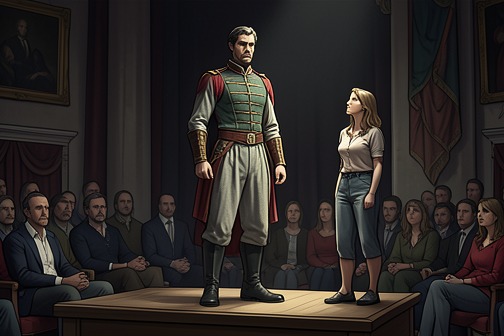
[Gideon shares his self-harm history with Ava](entity:event-recall-event-gideon-shares-his-self-220cb2960ed6) through a movement from performance to private conversation. Onstage, Head of State gives poetic form to distress he had struggled to explain, including his fear, his mother’s discovery of his scars, and his longing for care. Later, in [Gideon](entity:character-recall-character-gideon-33d9f6e05f5d)’s bedroom, he describes how the behaviour began and how his family helped him seek support. His disclosure changes the terms of their relationship: Ava receives his honesty with care, then begins telling him about [Kelly](entity:character-recall-character-kelly-1803105a4412), her dead best friend.
## The performance and its audience
After reading Ava’s page, Gideon folds it and makes his way along a path lined with people toward the stage. [Andy](entity:character-recall-character-andy-1d26f3c164d3) and [Norma](entity:character-recall-character-norma-f3343aa460f2) sit at the front, encouraging him as he passes. Ava is watching too. She is visibly nervous, but Gideon knows this because she has told him several times that evening, not because he can suddenly read her feelings. The event therefore begins with an intimacy already in place: even among a crowd, he is attentive to what Ava has shared with him.
At the microphone, Gideon introduces the piece as Head of State, catches Ava’s eye, and closes his eyes before beginning. The title and setting put a private history into a public form. The poem speaks of the surprise and pain surrounding the discovery of his scars, and of the difficulty of asking his mother for help. Its central image turns his mother’s loving response into a source of protection and care. The performance does not present distress as something resolved by a single declaration; it makes audible the need he had found hard to put into ordinary words.
The room’s reaction is part of the scene’s meaning. Ava watches closely, and the poem holds the audience’s attention as Gideon performs it. What might have remained hidden in his history is now spoken before other people, but the piece is directed toward someone specific as well: Ava, whose presence matters to him. The performance brings public expression and private address together, allowing poetry to carry what conversation alone had not yet reached.
## From poem to personal history
Afterward, Ava remains in Gideon’s bedroom for hours as they talk and listen to music. The room is orderly, with books and papers arranged on a desk, a record player, and records stored in square plastic crates. That quiet domestic setting contrasts with the stage: the poem has been heard by a crowd, but its personal context emerges here, slowly, between the two of them.
Gideon rolls up his sleeves and lets Ava see the old scars covering his arms. She is startled by how extensive they are and asks how old he was when the behaviour began. He tells her it started five years earlier. The scars are visible evidence of a history that the poem has introduced but cannot, by itself, explain. Ava asks questions, and Gideon answers; when she asks to see his arms again, he exhales and rolls his sleeves back up. Their exchange makes disclosure a matter of choice and response rather than a revelation imposed on him.
He describes a family holiday to the Barrier Reef, where he stayed in long sleeves rather than joining in the summer activities. [Susan](entity:character-recall-character-susan-518263a3d20e), one of his mothers, saw his arms after he had showered. Gideon thinks she had already suspected something was wrong because he had kept his sleeves on throughout the trip. He recalls that she described walking in on him as an accident. Ava recognizes that phrasing from the poem and repeats its implication back to him: the discovery may have been called accidental, but the distress itself had not appeared without warning. Her recognition connects the performed text to the experience behind it.
## What the behaviour meant, and how he sought help
Gideon says that he had not self-harmed for a long time. When Ava asks why he began, he explains that everything had felt too large and beyond his control. Self-inflicted physical pain, by contrast, was something he could see and watch heal. He also makes clear that his purpose was not to die: he had needed to feel something other than fear. The distinction matters. His account does not reduce his experience to a single motive or make the scars a substitute for the words he could not initially say; it gives Ava a more precise understanding of what he had been enduring.
The path toward help began when Susan discovered the scars. Gideon says that he and Susan sat together in the bathroom and talked for a long time. His mothers searched for information, and he spoke with several people until he found someone he liked. That person was [Robbie](entity:character-recall-character-robbie-493d25ac2d4f), his therapist. Gideon also credits Robbie with introducing him to poetry. The connection makes poetry more than a performance skill: it is part of how Gideon found a means of expression after a period when he could not tell his mother what he needed.
Ava learns that the history began years earlier, that Susan’s discovery led to conversation and help-seeking, and that poetry is tied to that support. She also sees old scars rather than new cuts, while Gideon tells her the behaviour has not happened for a long time. These details establish both the seriousness of the past and the fact that the scene is not a sudden account of an ongoing act. His disclosure is retrospective, but it remains emotionally present in the room.
## Reciprocal trust and grief
Ava feels grateful that Gideon is telling her this; she has not encountered such candour before. The trust is reciprocal, though the disclosures are not identical. Gideon has explained his history, and he does not demand that Ava immediately explain hers. He says he had assumed she would tell him if she wanted to, and offers to ask about it if that is what she would prefer. His restraint gives her control over whether the conversation turns toward Kelly.
Then Gideon asks how Ava is doing, questioning the routine in which people answer that they are fine or okay without saying much. Ava initially gives the familiar response, then admits that she does not really know how she feels. After a long silence, she starts at the beginning: Kelly was her best friend. She tells Gideon that Kelly’s grief feels too large to fit into a box. Gideon accepts the image rather than trying to correct or solve it. His own account of needing help has made room for Ava to speak, while her willingness to listen has made it possible for him to tell more of his story.
This exchange makes the event significant beyond the revelation of Gideon’s past. The poem does not cure either character or erase what they have experienced. Instead, it provides a shared language for approaching pain without pretending it is simple. Later, at graduation, Gideon performs Ava’s poem about Kelly before a large audience. That later act echoes the intimacy established here: poetry first helps Gideon communicate his own history to Ava, and eventually allows him to carry her words into public view. In the bedroom, however, the essential change is quieter. Gideon is no longer only the person whose scars Ava has noticed; he has told her what they mean, and she has begun to entrust him with her own grief.
Event 8
Ava and Gideon begin exchanging letters
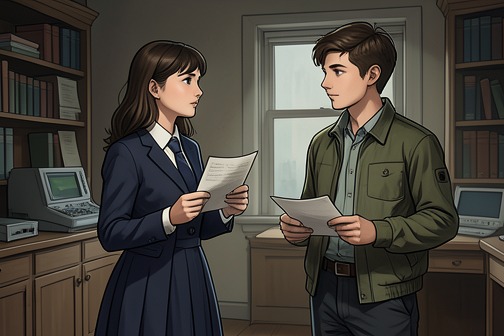
[Ava and Gideon begin exchanging letters](entity:event-recall-event-ava-and-gideon-begin-ex-c823fc6b4fc0) after [Gideon](entity:character-recall-character-gideon-33d9f6e05f5d) sends Ava a mint-green envelope containing his first real letter. What starts as an awkward invitation becomes a reciprocal, carefully bounded way for them to be candid with one another: Gideon risks showing the person behind his shyness, while Ava answers with jokes, questions, and a more direct account of how she sees the world. The correspondence gives their developing friendship a form that is both intimate and low-pressure, built from small disclosures rather than demands for immediate explanation.
## Background and First Letter
The first letter arrives at a moment when Ava feels that several parts of her life have come undone. She has been expelled, and her father has decided she will meet with [TAPs](entity:location-recall-location-taps-dbf4fd369aaa); she has no say in that decision and is already disappointed in herself over what has happened. Against this backdrop, her father hands her a mint-green envelope. Inside are two pages of Gideon’s neat handwriting. The object is modest, but its arrival interrupts a day in which Ava has been bracing for things to get worse.
Gideon begins by admitting that he has never written anyone an actual letter before. He is unsure how long a letter should be or what important thing he might have to say, but settles on telling Ava that he is glad they met. Instead of presenting himself as effortlessly confident, he supplies ordinary details: he is seventeen, in Year 12, has a sister and two mothers, writes poems, likes guacamole, and dislikes bananas. His explanation of the dislike turns into a comic riff on their texture and a possible metaphor for people, then into a numbered list of things he finds weird.
The list extends his self-portrait. Gideon includes snakes, which he finds strange because they can swim without arms, people who put an r sound in ask, and people who can write letters without lists. He briefly admits that his claim about lists is a deliberate attempt to seem cooler, then tells Ava that she is naturally and effortlessly cool. The praise is mixed with self-mockery and uncertainty about letter etiquette, making the letter feel less like a polished performance than an effort to keep talking despite not knowing the rules.
## Ava’s Reply and the Exchange of Jokes
Gideon asks Ava to write back if she wants to. Ava rereads his letter, finds it funny, smart, and dorky, and is surprised that he has actually sent it and disclosed real details about himself. She decides to reply partly because she does not want him to think she does not want his friendship. Her first response keeps the playful tone: she calls him an idiot for calling her weird, then wonders whether that makes them even. She also explains that her father has rules about appropriate language and asks Gideon to tell her more about having no phone or internet and not acting normal.
Ava’s reply is itself an act of improvisation. Writing late because she cannot sleep, she worries about her handwriting and whether letters are merely an excuse to rant. She signs off affectionately and asks Gideon to write again. Then she explains that she hand-delivered the letter because she did not know where to buy a stamp. Looking up his address on her phone led her to realize she could have used the phone to find a post office; the small practical problem opens, in her telling, into an existential crisis about technology and her place in the world. Her self-deprecation answers Gideon’s own rather than simply reassuring him.
Gideon’s reaction is immediate and physical in its buoyancy: he describes happiness as a quick, squishy feeling, and is pleased that Ava has mocked him back. He had written four drafts of his first letter and could recite it by the time he sent it; he suspects Ava’s reply is a single, unrevised original. That difference delights him. He had feared that the letter might make things awkward at work, but her answer tells him that it has landed well and that she wants another. His relief carries a further uncertainty: he feels he must learn how to proceed without turning the next letter into another object of obsessive revision.
## A Deliberate Practice of Writing
Gideon turns that uncertainty into a practical rule. Remembering [Ria](entity:character-recall-character-ria-53e40a8d38c1)’s writing-class insistence that students should not apologize for existing or for what they have to say, he sets a kitchen timer for thirty minutes. Whatever he writes in that interval must go into an envelope. He plans to address and stamp it, give it to his mother to post, and tell her not to return it if he later asks. When the timer rings, he signs the letter, folds and seals it without reading it back, and hands it over with that instruction. He scarcely sleeps, imagining possible disasters, but does not ask for the letter back. The correspondence therefore begins to work not only as communication with Ava but also as a small exercise in acting before anxiety can take over.
The next mint envelope brings five stamps tumbling to the floor as Ava opens it on the porch. Gideon uses his letter to clarify that he dislikes bananas, not all fruit, and describes using the same thirty-minute timer and no-revision limit. He admits that he thinks about nearly everything and says that [Robbie](entity:character-recall-character-robbie-493d25ac2d4f) has been urging him to be bolder. His postscript asks what a post office is, turning Ava’s delivery mishap into a continuing joke between them. The letter’s honesty is not separate from its humor: Gideon can reveal his self-conscious habits while still making the exchange light enough to continue.
Ava likes receiving his letters and recalls that, at work, Gideon talks to her without flirting or placing expectations on their time together. Their conversations about customers and his references to books and films she has not encountered feel light and fun to her. The contrast matters: she describes being around him as free of the history and anticipation that complicate other interactions. She decides to answer immediately, takes out her notebook, sets the oven timer, and writes a long reply at the kitchen bench, surprised by how much she tells him.
## Mutual Disclosure and Narrative Significance
In a subsequent letter, Ava agrees to the thirty-minute limit and to not reading the result back, though she confesses that she looked up the word foible before writing. She challenges Gideon’s interest in being normal: in her view, people have different troubles but often try to convince one another that they are ordinary. She says she would rather people be honest about being unhappy, unwell, or happy than maintain that performance. She also contrasts her former optimism with what has changed after difficult events, describing how learning that the world can be awful makes it hard to return to believing that everything happens for a reason. She closes by telling Gideon to be happy, then admits in a postscript that she wrote well beyond the timer. The rule has become a shared experiment, not a rigid test either has to pass.
After several days without a reply, Gideon worries that Ava may not write again. On returning home following a conversation with Robbie about Robbie’s future move, he finds Ava’s letter on his bed and feels relieved. Her correspondence has become something he actively anticipates, even as each letter exposes how readily he imagines it going wrong. Across the exchange, the envelopes, stamps, timers, and revisions—or the decision not to revise—give shape to a friendship whose participants are still learning how to speak plainly. The letters do not erase the uncertainty or distress in their lives; they make room for candor, humor, and a continuing connection without requiring either person to pretend to be fine.
Event 9
Kelly’s death
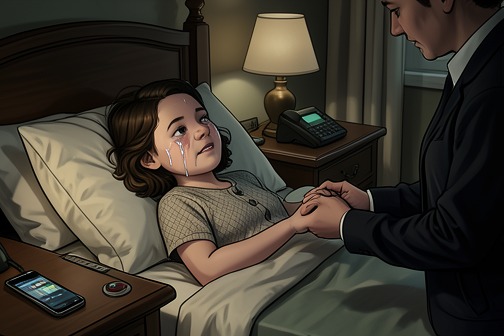
[Kelly Waititi’s death](entity:event-recall-event-kelly-waititi-s-death-6448d9a3b116) is the defining loss in [Ava Spirini](entity:character-recall-character-ava-spirini-a8e1e7b099a4)’s story: it ruptures Ava’s sense of time, recurs in memories and choices, and leaves her searching for what [Kelly](entity:character-recall-character-kelly-1803105a4412) intended. The narrative gives the event through Ava’s recollections and later interpretations, distinguishing the circumstances she remembers from the questions she cannot settle.
## The news and its immediate rupture
Ava recalls being woken by a call to the family house phone at 5:37 in the morning from Kelly and [Lincoln](entity:character-recall-character-lincoln-2a030b7cc671)’s father. Seven minutes later, [Ava’s father](entity:character-recall-character-ava-a94c6f251d95) came into her room, crying. Ava initially feared that something had happened to her grandparents; when he told her that Kelly had died, she experienced the news as a break in everything that had preceded it. She could not move or properly take in his words. The narration renders the shock as a collapse of ordinary comprehension, rather than as a moment Ava can readily explain.
The loss also alters Ava’s sense of time. Six months later, she feels that life is moving more slowly and that time itself stopped with Kelly. She resents other people’s impatience with her grief: to Ava, six months is no measure of the duration of losing her best friend. She expects the sadness might last for the rest of her life, a fear that makes the death feel not only like a past event but an ongoing condition.
## The last afternoon, remembered differently
Ava returns to an afternoon with Kelly when they looked at a photograph and talked together. Kelly then erased a drawing from Ava’s mirror and carefully replaced it with a heart. Kelly had often drawn or written on the mirror, and the afternoon seemed ordinary to Ava at the time. Only after [Kelly’s death](entity:event-recall-event-kelly-s-death-2d54d4dc78e1) does Ava wonder whether the gesture carried a meaning she failed to recognize, or whether Kelly was trying to leave her with the knowledge that she was loved and remembered. The recollection offers no proof of a farewell: its force comes from the distance between the ordinary scene Ava experienced and the significance she later fears it may have held.
That uncertainty is central to Ava’s reconstruction of the death. She remembers that Kelly’s mother picked her up, that Kelly ate dinner with her family and said goodnight as usual, and that Kelly later drank a large amount of vodka in her room. Kelly left no note. Ava understands that Kelly vomited while asleep and choked. She then turns over possibilities she cannot verify: whether Kelly changed her mind, or whether she did not want to die but was too impaired to respond. The account establishes the fatal circumstances without resolving Kelly’s intention.
## [Grief](entity:state-recall-state-grief-8f5be11e2213), recurrence, and the search for meaning
Ava counts the Sundays since Kelly died and knows the number has reached thirty-one. The counting makes the loss recur within the calendar: Sunday after Sunday begins, for Ava, with the same absence. Her later thoughts return to the details of Kelly’s final days in an effort to discover new information and understand the scale of the pain Kelly may have been experiencing. That search remains an attempt to interpret, not a claim that Ava can know exactly what Kelly felt.
Kelly’s death also shadows Ava’s relationship with Lincoln. Ava recognizes that being with him can briefly make school, her father’s reaction, and the rest of her troubles recede; it lets her feel something other than misery, in a way that recalls how she felt when Kelly was alive. Yet Ava also understands the contradiction: the intimacy with Lincoln would not have happened if Kelly were still living. In this way, the death continues to shape Ava’s choices, connecting moments of comfort to the loss that made them possible.
## Continuing the bond while moving forward
Later, Ava can acknowledge that sadness, hurt, anger, confusion, grief, and love remain present, even when they do not overwhelm her. Her ongoing fortnightly therapy with [Nola](entity:character-recall-character-nola-184866dca546) supports an understanding of grief that does not require a single correct way to feel. Ava does not describe healing as forgetting Kelly or leaving the relationship behind. She sees Kelly’s death as something that will continue to define her, while insisting that it need not prevent her from moving forward.
Ava comes to believe that Kelly wanted to end her pain rather than her life. This is Ava’s interpretation of an intention the circumstances cannot conclusively reveal, but it becomes consequential: Ava decides that her own pain must not end her life and that she should live for both of them. The event therefore remains unresolved in one respect—Ava cannot know what Kelly wanted in her final moments—while its meaning changes in another. Remembering Kelly becomes part of Ava’s reason to keep living, rather than an obligation to stop feeling the loss.
Event 10
Gideon’s family moves after he is bullied at school
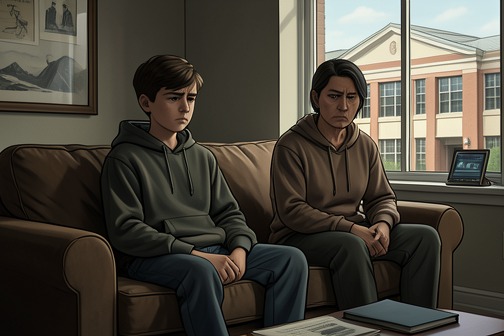
[Gideon](entity:character-recall-character-gideon-33d9f6e05f5d)’s account of the bullying that led his family to move reveals the private history behind that relocation and shows how repeated school harassment crossed into his home life. Told to [Ava Spirini](entity:character-recall-character-ava-spirini-a8e1e7b099a4) as he explains that the move happened because he was not okay, the story traces an escalation from everyday insults to public humiliation, a family confrontation with the school community, and a violent incident involving [Annie](entity:character-recall-character-annie-a433aee3d6b7).
## The disclosure and its frame
The event reaches the reader as Gideon’s recollection during a conversation with Ava Spirini, not as a scene narrated in the moment it occurred. After Ava says she does not feel like herself, Gideon decides that fairness requires him to share his own secret. He begins with the fact that his family moved because of him, then explains that he had not been okay. The remembered events therefore arrive as the answer to a present question of trust: Gideon is not simply supplying an explanation for a change of home, but disclosing the experience he says he has kept inside.
The conversation gives the disclosure a visible response. Ava listens, puts a hand on Gideon’s knee when he describes the online abuse, and later covers her mouth as he recounts the graffiti and Annie’s response. She tries to process what he has told her; Gideon’s account ends with his recognition that he keeps a lot of things in. The remembered bullying and the present act of telling are thus connected: the move is a past consequence, while recounting its cause makes a previously held-in experience available to another person.
## Harassment in accumulating forms
Gideon describes being picked on throughout school for several aspects of his life: his height, the fact that his mothers were gay, and his sister’s intelligence. He characterizes the early incidents as small things, but stresses that they happened repeatedly. The description makes duration central. None of those examples alone is presented as the whole cause of the move; their significance lies in the relentless accumulation Gideon remembers.
In Year 7, the harassment took a more personal form when Gideon wrote a story about a sad moon during an eclipse. Other students found it, copied it, and posted the copies around the school. Something he had written became material for public ridicule: the story was no longer private, and its circulation made the mockery visible across the school. Gideon first describes this as one of many stupid incidents, but his later account shows how the pattern developed beyond the school grounds.
The students then made a website called we hate Gideon dot com. It was filled with hateful material, and they secretly photographed him at school and posted comments. The website brought the harassment together in a persistent online form, while the secret photographs made Gideon himself an object of surveillance and commentary. When Gideon tells Ava this, her hand remains on his knee. Her response registers the cruelty of what he has disclosed without changing the sequence or scale of events he describes.
## From school dispute to family crisis
Gideon’s parents became furious and challenged the school. They identified a single group of students as responsible, but the students’ parents defended what had happened as fun. That defense intensified the conflict rather than resolving it: Gideon says his parents became even angrier, and that the school handled the situation very badly. The account places the bullying within a wider failure of adults and institutions to treat it as serious harm. The other parents’ characterization of it as amusement stands in sharp contrast to the cumulative effects Gideon has described.
The conflict then reached the family’s property. One night, someone spray-painted a homophobic slur on the garage. Gideon pauses while telling this part because Ava has covered her mouth, and the pause marks the moment when the school-based abuse becomes an attack on the household itself. His account presents the graffiti as the incident immediately preceding Annie’s retaliation: the next day, she took a baseball bat to school and attacked one of the students.
Gideon says Annie was so angry that she knocked out the student’s tooth. The student’s parents wanted to sue. The family then moved. The move follows a chain of distinct pressures: the prolonged bullying, the online campaign, the graffiti at home, Annie’s assault, and the threat of legal action. Gideon does not describe the relocation as a simple escape or identify any further resolution with the school; he states it as the outcome of this worsening situation.
## Consequences and significance
The disclosure recasts the family’s move as the consequence of sustained hostility rather than an unexplained change in circumstance. It also clarifies why Gideon frames the event as something caused by his own inability to cope, even though the incidents he recounts were inflicted by other students and compounded by their parents’ defense and the school’s poor handling. His opening formulation turns blame inward; the details that follow locate the source of the crisis in a hostile environment and its escalation.
Annie’s attack is both a response to that environment and another crisis for the family: after the assault, the other student’s parents threatened to sue, and the move followed. Gideon can now say that the attack seems funny to him, but that retrospective remark does not erase the tooth knocked out or the threat that came afterward. In telling the story to Ava Spirini, he holds together the small, repeated humiliations and the dramatic incidents that made them impossible to contain. The account makes the move legible while exposing the long accumulation that preceded it.
Event 11
Ava and Gideon share secrets with each other
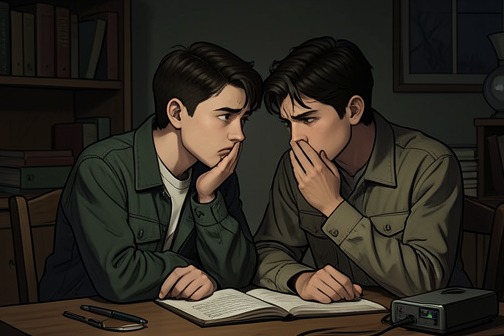
[Ava and Gideon share secrets with each other](entity:event-recall-event-ava-gideon-d26d8bdc1684) in a carefully negotiated conversation that changes their closeness from quiet understanding into explicit trust. Ava discloses that [Lincoln](entity:character-recall-character-lincoln-2a030b7cc671) caused the bruise on her cheek, and [Gideon](entity:character-recall-character-gideon-33d9f6e05f5d) reveals that his family moved because the bullying he endured at school became overwhelming. Their exchange also brings into view Ava’s complicated feelings about her mother and Gideon’s current struggle with anxiety and depression. The scene’s decisive movement is not toward a solution but toward being believed, staying present, and allowing another person to know what has been hidden.
## Conditions for Disclosure
The conversation takes place within a relationship already marked by grief and growing intimacy. Both have reasons to approach painful subjects carefully: Ava is carrying the loss of [Kelly Waititi](entity:character-recall-character-kelly-waititi-a0ec233f6fca), while Gideon has his own history of distress. Their exchange does not begin as an interrogation. They establish that non-verbal communication is acceptable, and they make the disclosure feel reciprocal by agreeing to take turns. That arrangement gives each person room to speak without making silence or hesitation a failure.
Ava’s first admission is that she does not think she loves her mother. Gideon has time to respond, but Ava covers his mouth before he can, turning the moment into a brief, playful interruption. The gesture does not erase the seriousness of what she has said; it shows that the terms of the conversation still belong to her. She decides when to continue and when to move on. The alternation between playfulness and painful material lets the disclosures emerge without making the scene a formal confession in which every statement has to be explained immediately.
## Ava Names What Happened
Ava next tells Gideon that he has misunderstood the bruise she once had on her cheek: she was not clumsy, and [Lincoln Waititi](entity:character-recall-character-lincoln-waititi-68d3b5dfedc5) caused it. The disclosure revises what Gideon thought he knew about both the mark and Ava’s continued connection with Lincoln. Her statement is particularly difficult for Gideon because she still talks to him, while Gideon sees Lincoln as someone who behaves aggressively and is admired by other students. His anger rises quickly, and he has to pull Ava’s hands away from his mouth before he can respond. The scene registers the strain between wanting to protect her and hearing that she has kept this from him.
Ava’s revelation also changes the meaning of her earlier silence. She has carried the knowledge privately rather than using the conversation to ask Gideon to intervene or decide what she should do. Her disclosure gives him access to a fact she has chosen to share; it does not make him the authority over her response to Lincoln. The exchange therefore exposes both the gravity of what she tells him and the limits of what he can do with it. His anger is real, but listening has to come before any attempt to act on her behalf.
## Gideon Explains the Move
Gideon answers Ava’s disclosure with one of his own: his family moved because he was not okay. He describes being picked on throughout school for being tall, for having two mothers, and for having a sister who was smart. In Year 7, classmates found a story he had written about a sad moon during an eclipse, copied it, and posted it around the school. He presents each incident as small in isolation, but emphasizes that the small cruelties accumulated through repetition.
He then names the escalation that makes the reason for the move unmistakable: students created a website devoted to hating him, filled it with abuse, and posted secretly taken photographs of him with hostile comments. Ava responds with sympathy and places her hand on his knee, leaving it there. Her reaction is not advice or an effort to argue the experience away. It is a physical sign that she is listening and remains beside him after learning what his family’s move had concealed.
Gideon also tells her that he is in a dark period and taking medication. He describes his anxiety as part of his experience, not as a complete account of who he is; when he falters over whether it is simply his brain, Ava links the feeling to what she understands of [Kelly](entity:character-recall-character-kelly-1803105a4412)’s mind. The comparison does not claim that their experiences are identical. It gives them a point of recognition while leaving room for the differences between them. Gideon’s disclosure makes clear that the history of bullying is not only a closed chapter: he is still managing distress in the present.
## Witnessing Without Repair
After the disclosures, Ava tells Gideon that she thinks he is amazing. He closes his eyes, and a tear gives way to sustained sobbing. He turns away and cries into a pillow; Ava moves close, puts an arm beneath his, and holds him. Gideon eventually takes her hand and draws it toward his chest, intertwining their fingers. Neither tries to convert the moment into an explanation. The physical exchange answers what the disclosures have made vulnerable: he can be seen in distress without being abandoned or pressed to stop.
The conversation’s idea of support becomes explicit when Gideon tells Ava that she can be there with him. His answer sets a limit as well as an invitation: she cannot undo what happened, but her presence matters. This is consistent with the earlier exchange, where the value lies in hearing one another rather than supplying quick advice. The scene moves from withheld information, through anger and painful recognition, into shared vulnerability. Its change is relational: each now knows something consequential about the other, and neither has to carry that knowledge alone.
## Place in the Wider Story
The confidences sit within a wider pattern in which grief and recovery do not proceed in a straight line. Ava has described school after [Kelly’s death](entity:event-recall-event-kelly-s-death-2d54d4dc78e1) as unbearably slow and has doubted that she will ever feel differently. Elsewhere, she recognizes that being with Lincoln can briefly make the rest of life matter less, while also knowing that the comfort is complicated by Kelly’s absence. These disclosures do not resolve her grief or make the past manageable. Instead, they create a relationship in which difficult truths can be spoken alongside affection and uncertainty.
Gideon’s later reflections on therapy reinforce the importance of this kind of response. When he speaks with [Robbie](entity:character-recall-character-robbie-493d25ac2d4f) about the aftermath of a frightening episode, Robbie asks him to identify the good as well as the painful. Gideon describes writing letters, while his account of his mental health acknowledges that medication and support have helped without promising that difficult moments have disappeared. [Nola](entity:character-recall-character-nola-184866dca546) likewise tells Ava that grief has no typical path and that its course cannot be scheduled. Read alongside those moments, the mutual disclosures model a modest form of care: another person may listen, believe, and remain present, even when neither can make the grief or the underlying history vanish.
Event 12
Ava and Gideon’s first kiss

[Ava Spirini and Gideon](entity:relation-recall-relation-ava-spirini-and-gide-84fea351726a)’s first kiss is a turning point in their growing intimacy: an impulsive act of affection that makes their mutual feelings visible, but does not immediately settle what either of them will do with them. The kiss follows a conversation about grief and a shared joke about poetry. It ends abruptly when [Gideon](entity:character-recall-character-gideon-33d9f6e05f5d)’s mothers arrive, leaving Ava to wonder whether his withdrawal signals embarrassment or regret. A small arrangement of Skittles, discovered after he has gone, gives the scene its clearest answer: Gideon had feelings for her, even when he could not express them face to face.
## [Grief](entity:state-recall-state-grief-8f5be11e2213) and the Need for Connection
The kiss takes place against the continuing loss of [Kelly Waititi](entity:character-recall-character-kelly-waititi-a0ec233f6fca), not outside it. Six months after [Kelly’s death](entity:event-recall-event-kelly-s-death-2d54d4dc78e1), Ava feels that time has slowed and worries that her sadness may last for the rest of her life. Her grief is not an abstract backdrop: it shapes what closeness means and makes moments of relief difficult to separate from thoughts of the person who is gone.
Ava has already recognized that being with [Lincoln Waititi](entity:character-recall-character-lincoln-waititi-68d3b5dfedc5) can briefly make the rest of her troubles recede. She also knows that this attraction is bound up with [Kelly](entity:character-recall-character-kelly-1803105a4412)’s absence: she thinks the connection would never have unfolded in the same way if Kelly were alive. That does not make the feelings simple or interchangeable. Rather, it shows how the relationships left behind by a death can change, while the absent person remains part of the meaning of what happens next.
Immediately before the kiss, Ava is upset about [Lincoln](entity:character-recall-character-lincoln-2a030b7cc671) and angry that he seems to expect her to resume their intimacy without addressing what has happened between them. She tells Gideon that she wishes he could have known Kelly, and that she wishes he had known her before Kelly died. She describes the loss as having taken part of herself with it. Gideon answers not by trying to solve the grief, but by holding her while she cries. That quiet acceptance creates the emotional space in which their later playfulness can emerge.
## From Comfort to a First Kiss
Gideon offers a way of imagining grief as weight that may become easier to carry, even though it does not disappear. As he speaks, he makes an A out of Skittles on the carpet. The gesture is modest and playful, but it gives their conversation a physical focus: grief has been named as something lasting, while the candy turns the moment toward the possibility of connection.
Ava jokes about writing a poem. Gideon answers with a deliberately bad rhyme that calls her pretty sometimes, then briefly holds her gaze before looking down. The exchange lets attraction surface without requiring either of them to make a serious declaration. Ava responds by beginning a question about what Japanese people do with good friends, then kisses him. The narration presents the kiss as one she has wanted intensely; Gideon kisses her back, and she experiences it as the best kiss she has had.
That mutual response is the scene’s decisive change. Until then, their closeness has appeared through consolation, humor and shared poetry; the kiss makes the romantic possibility explicit through action rather than discussion. Yet it does not erase the uncertainty each has shown around intimacy. The moment brings them closer, but its interruption prevents it from becoming an easy, settled declaration of a relationship.
## The Interruption and the Skittles Message
A car horn sounds, and Gideon recognizes that his mothers have arrived. His face flushes; he gets up, leaves without explaining himself, and goes out to the car. The abruptness unsettles Ava. She considers whether he may have been embarrassed or may not have wanted the kiss, but she also distinguishes it from other unwelcome kisses she has experienced: this one did not feel unwanted. Her uncertainty is real because Gideon’s departure supplies no spoken reassurance.
After he is gone, Ava notices the Skittles on the carpet. The arrangement reads G 4 A, turning the earlier playful gesture into an indirect declaration of Gideon’s feelings. The object matters because it answers what his silence in the car moment could not: he had expressed affection, but in a form Ava only understands once he is absent. The scene therefore moves between evidence and doubt—his returned kiss and the candy point toward mutual feeling, while his exit leaves her temporarily unable to know what the moment means to him.
The narrative also lets the reader see Gideon’s immediate self-reproach. He replays the kiss as something wonderful, then berates himself for walking away from the person he likes. His thoughts recast the departure not as rejection but as a response he regrets. This information changes the weight of the interruption without making the encounter magically uncomplicated: Ava has not heard his explanation, and his private feelings do not automatically resolve her uncertainty.
## Significance in the Larger Arc
The kiss brings affection and grief into the same scene rather than treating happiness as proof that loss has ended. Ava has recently described how being happy with Gideon can abruptly remind her of Kelly, who would have wanted every detail and laughed with her about it. The possibility of new happiness therefore arrives with an ache: Ava can want closeness and still feel the absence of the friend with whom she would have shared it.
Later, Ava describes her feelings as still present—sadness, hurt, anger, confusion, grief and love—but not necessarily larger than all the other parts of her. That later perspective helps locate the kiss in a continuing process, not as a cure for bereavement or a clean break from the past. Its significance lies in the small but consequential shift it makes possible: after offering comfort and sharing an awkward joke, Ava and Gideon act on an attraction that had been communicated only indirectly. The candy message preserves the tenderness of that change, while the sudden departure preserves its uncertainty.
Event 13
Lincoln’s drunken visit on Kelly’s birthday
[Lincoln’s drunken visit on Kelly’s birthday](entity:event-recall-event-kelly-lincoln-de8580d539f6) turns a day [Ava Spirini](entity:character-recall-character-ava-spirini-a8e1e7b099a4) had hoped to endure quietly into a confrontation over grief, boundaries, and the past. [Lincoln](entity:character-recall-character-lincoln-2a030b7cc671) arrives while Ava is with [Gideon](entity:character-recall-character-gideon-33d9f6e05f5d), having gone weeks without speaking to her, and treats the visit as an occasion to restore their closeness. Ava refuses. Her anger is complicated by recognition that she and Lincoln are grieving the same person, and the encounter leaves her more conscious of how happiness with Gideon can coexist with the pain of missing [Kelly Waititi](entity:character-recall-character-kelly-waititi-a0ec233f6fca).
## Context and Circumstances
The scene begins with Ava spending time with Gideon rather than facing [Kelly’s birthday](entity:time-recall-time-kelly-s-birthday-7b409b4da844) alone. She had initially planned to sleep through the day and wait for it to pass, but decided that if she was going to feel bad, she would rather be with Gideon. Their ordinary, lighthearted afternoon matters: they are laughing at a film when Lincoln appears, and Gideon had prepared snacks and movies that avoided subjects likely to lead back to death, suicide, or best friends. The visit therefore interrupts a deliberately gentle refuge, not a gathering intended to include Lincoln.
Lincoln arrives before midday with a can of rum and Coke. He is unsteady and holds onto the doorframe. Ava has not spoken to him for weeks, and she understands the silence as following an earlier incident between them, though the scene does not spell out that incident. His sudden appearance, combined with his intoxication, makes his expectation of an easy reunion feel especially disconnected from the strain between them. He says he wants to see Ava; she asks why, and he assumes she knows. His answer does not address the weeks of silence or what has changed between them.
## The Visit and Confrontation
Lincoln says he thought they could spend time together, then steps past Ava into the house. She tells him to go home and tries to close the door, but he pushes it back open. The exchange turns on this refusal to accept her first answer: Lincoln acts as though being physically present is enough to restore their former familiarity, while Ava insists that he cannot simply return and expect everything to be normal.
When Ava reminds him that it is Kelly’s birthday, Lincoln presents his visit as a way to celebrate. He takes Ava’s face in his hands and kisses her; she pushes him away and repeats that she does not want to celebrate the birthday with him. The scene establishes her boundary through action as well as words. Lincoln leaves the porch, throws his can onto the road, and shouts at her before she shuts the door. The attempted intimacy has not repaired their relationship; it has made the distance between them impossible to ignore.
## [Grief](entity:state-recall-state-grief-8f5be11e2213), Anger, and Attachment
After Lincoln leaves, Ava tells Gideon that she is angry because Lincoln has not spoken to her in weeks since the earlier incident, yet seems to expect that she will let him in and resume their physical closeness as if nothing happened. She describes him as someone who gets drunk and behaves badly, but then immediately complicates that judgment: he is not simply a jerk, she says; they feel the same way. Her response refuses an easy division between blame and sympathy. She objects to his conduct while recognizing their shared bereavement.
That recognition reaches beyond the immediate dispute. Ava tells Gideon that she wishes he could have known [Kelly](entity:character-recall-character-kelly-1803105a4412) properly and known Ava as she was before Kelly died. She feels that some part of herself died too, and her grief becomes difficult to keep separate from the anger that brought it to the surface. Gideon does not try to solve the conflict or correct her account. He holds her while she cries and lets her speak without turning her grief into an argument about what she should feel.
## Consequences and Significance
The visit also exposes the contrast between Ava’s two attachments. Earlier, being with Lincoln could make the rest of her life feel less painful, even though she understood that their closeness would not have unfolded in the same way if Kelly were alive. On this birthday, that comfort cannot erase the unresolved history between them. Lincoln’s assumption that they can return to intimacy meets Ava’s clear refusal; their shared grief does not make his approach welcome or undo the weeks of silence.
At the same time, the afternoon with Gideon shows that a moment of happiness does not mean Ava has left Kelly behind. After Lincoln departs, Ava thinks of the stories and ordinary details she would have wanted to tell Kelly, imagining how eagerly her friend would have listened. The thought makes her pull away from Gideon and feel afraid, even while his presence has helped her through the day. The event’s emotional turn is therefore not from grief to comfort, but from an interrupted refuge to a more explicit recognition that anger, love, longing, and new happiness can occupy the same moment. Lincoln’s visit leaves the relationship unresolved; Ava’s rejection sets a boundary, while her admission of their shared pain preserves the complicated bond between them.
Event 14
Ava and Gideon’s formal confrontation and breakup

[Ava and Gideon’s formal confrontation and breakup](entity:event-recall-event-ava-gideon-e1e809636254) transforms a public clash over Ava into a decisive fracture in their relationship. At the dance, jealousy escalates into physical violence; in its aftermath, Ava’s attempt to stop the fight with a kiss becomes part of the rupture rather than a resolution.
## The confrontation at the dance
[Lincoln](entity:character-recall-character-lincoln-2a030b7cc671) joins Ava in dancing, and when he asks who [Gideon](entity:character-recall-character-gideon-33d9f6e05f5d) is, Ava begins to introduce him. Gideon cuts her off, aggressively identifying himself as her boyfriend. Lincoln repeats the claim with amusement, looking Gideon over, while Gideon takes Ava’s hand and pulls her toward him too forcefully. He immediately recognizes that he has hurt her, apologizes with his eyes, but keeps hold of her hand. Lincoln takes Ava’s other hand, describing their dancing as friendly; Ava lets go of both men and steps back. Gideon then closes in on Lincoln, pokes him in the chest, and says he knows all about him. Lincoln challenges him and pokes him back, turning the exchange into a direct contest over what Gideon knows and what Ava has told him.
The confrontation tightens when Lincoln bumps his chest against Gideon’s. Ava tells them to stop and tries to pull Gideon away; he is shaking but does not back down. Lincoln’s sexual insult about Ava abruptly changes the encounter’s stakes. The narration registers the impact through Ava’s body: she cannot move or hear anything but a rushing sound, and her heart pounds as Gideon and Lincoln face one another. Lincoln pushes Gideon; Gideon stumbles back, steps forward, and punches him hard in the nose. Lincoln falls to the floor. When Ava’s awareness returns, Lincoln is groaning and bleeding, while Gideon stands frozen, staring at his hand.
## The kiss and its immediate aftermath
Lincoln springs back up, blood smeared across his cheek, and lunges at Gideon. Ava steps between them, repeatedly pushed backward as Lincoln reaches over her shoulders and threatens to kill Gideon. She takes Lincoln’s face in both hands and begs him to look at her, but he remains fixed on Gideon, who stands motionless. Ava is frightened, her heart racing and her breathing fast; unable to think of another way to stop Lincoln, she kisses him.
The kiss begins as an urgent attempt to interrupt the violence. Lincoln is tense and tries to pull away, but Ava presses herself against him; then he moves toward her and kisses her back with the same forceful intensity. The moment ends not in reconciliation but in sobbing and flight: Ava hears her own crying and Gideon’s footsteps as he runs away. The gesture that stops Lincoln from attacking Gideon therefore makes the emotional damage between Ava and Gideon immediate and visible.
Outside the hotel, Gideon crouches on the footpath, sobbing and trying to catch his breath while struggling to understand what has happened and what he has done. He connects his loss of control to watching Ava and Lincoln dance together, describing the sight as having turned his insides to lava. His distress does not erase the violence or the kiss; instead, the scene leaves him confronting both his own aggression and the consequences of Ava’s response.
## The breakup and its aftermath
The narration shifts to Gideon as he and [Ava Spirini](entity:character-recall-character-ava-spirini-a8e1e7b099a4) confront what happened. He tells her she should be angry, then insists that he is angry too. When Ava says that she kissed Lincoln, Gideon tries to distinguish the kiss from a choice she wanted to make, but she cannot finish explaining herself. A moment of clarity settles over her, and she says they cannot be together anymore. Gideon repeats the same words, realizing as he speaks that the breakup has become real; he freezes, unable to answer.
Gideon’s next words turn the separation into a more painful breach. He tells Ava Spirini that he loves her and says he does not know whether he will be all right if she is truly choosing to leave. He adds that perhaps she will be to blame if something bad happens to him. The poem in his jacket pocket, directly over his heart, sharpens the contrast between his love and the pressure he places on her. Ava’s face turns white. Gideon immediately recognizes that he did not mean the threat: he wanted her to feel some of the hurt he was feeling, not to make her responsible for what might happen to him.
Ava Spirini responds with disgust, saying she thought she knew Gideon. He tries to reach her, but she turns and bolts before he can stop her, disappearing around the corner and heading home. Gideon is left looking after her and speaking her name to empty air. The scene’s final consequence is not simply that the couple separates: Gideon’s attempt to make Ava feel his pain damages her trust in him, while her departure leaves him alone with the words he cannot take back.
## The scene’s reversal
The dance turns on a widening gap between what an action is meant to do and what it means to someone watching. Ava’s kiss interrupts an imminent assault, but it cannot remain a purely practical intervention once Gideon witnesses it; later, his attempt to express the magnitude of his hurt makes Ava feel responsible for his safety. In both cases, urgent action overshoots its immediate purpose. The breakup therefore grows from more than a contest of jealousy: it marks the point at which protection, love, and pain become difficult for the characters to distinguish from pressure and harm.
Event 15
Ava and Lincoln try to reconcile
[Ava and Lincoln try to reconcile](entity:event-recall-event-ava-lincoln-a0e2826762d3) through an awkward but generous conversation that turns their shared grief and regret into a cautious promise of renewed friendship. A single gerbera at Ava’s door opens the way: [Lincoln](entity:character-recall-character-lincoln-2a030b7cc671) admits how angry he has been, Ava recognizes the ties between them, and they agree to approach the relationship one day at a time. The encounter does not restore an uncomplicated past. Instead, it gives two people bound by [Kelly](entity:character-recall-character-kelly-1803105a4412) a way to remain connected without pretending that nothing has changed.
## The approach and the history between them
The meeting begins with Lincoln already on his way down Ava’s front steps. On the welcome mat is a gerbera wrapped in brown paper. When Ava opens the door, he turns back and greets her; his gesture is small, but it reaches into a relationship too layered for either of them to treat the flower as a simple apology. Ava briefly wishes it had come from [Gideon](entity:character-recall-character-gideon-33d9f6e05f5d), yet finds herself unable to send Lincoln away. She wants to reject him, but his presence calls up their long history: he is part of her childhood memories and, above all, a link to Kelly.
Their exchange about flowers softens the pause between them. Ava had assumed Lincoln had never bought anyone flowers; he recalls buying a Valentine’s Day gift for Samia Jackson in Year 10, including a teddy bear. The detail is lightly humorous, but the scene does not treat charm as a solution. Ava remembers that she and Lincoln had believed they cut their ties at the formal. Now those ties seem to re-form despite what happened. The encounter’s first change is therefore not a declaration of forgiveness but a willingness to stay in the conversation.
## [Grief](entity:state-recall-state-grief-8f5be11e2213), anger, and regret
The attempt comes against a year in which grief has made ordinary life feel stalled for Ava. Six months after [Kelly’s death](entity:event-recall-event-kelly-s-death-2d54d4dc78e1), she thinks other people are impatient with her for not getting over it, while she cannot imagine the sadness simply ending. Lincoln’s presence has sometimes given her a brief respite: when she is with him, other troubles recede, and she can feel something besides misery. That comfort is inseparable from the loss, because their closeness would not have unfolded in the same way if Kelly were alive.
The history between Ava and Lincoln has also become difficult through choices made while both were hurting. Ava silently inventories what she regrets: their having become involved when they did not truly want that, the things they yelled at each other, her failure to tell him how she felt about Kelly’s death, and the conflict at the formal. She is also sorry that she thought she could remove him from her life, and that, in her view, they let Kelly down. This is not a clean division between one person who caused harm and another who did not. The flower brings them face to face with a shared history that includes affection, pain, and responsibility.
## A tentative agreement
When Ava asks why Lincoln has come, he links the visit to the year and everything that has happened. She understands without needing a detailed explanation. Asked whether they will ever be friends again, Lincoln replies that they were never friends in the ordinary sense: he had always been Kelly’s brother, and later their connection became complicated. Ava asks whether they could become friends now. Lincoln answers without hesitation that they could, one day. The distinction matters. They are not claiming that an earlier friendship can simply be restored; they are proposing a different relationship that has yet to be built.
Lincoln then speaks more openly about his state of mind. He is angry with his parents, Ava, and even Gideon, but most of all with Kelly. He recognizes that he has been directing that anger at other people and that the result has been painful. Ava listens, her eyes stinging, while Lincoln tries to hold himself together. When he apologizes and looks down, she touches his shoulder. The gesture offers acknowledgment rather than a quick repair: his anger is heard, but neither his grief nor the damage between them is made to disappear.
Lincoln asks Ava to come with him as a friend. She asks about his parents, and he says they want to see her. The invitation gives the new understanding a practical form, while their shared eye contact registers that things will be different. As Lincoln leaves, he explains that watching Lilo and Stitch gave him the idea of Ohana: family means no one gets left behind. Ava finds the source of the thought unexpected, but its meaning reaches her. The knot of tension around Lincoln finally loosens, and she feels happiness and relief.
## What reconciliation changes
The agreement is a beginning, not a return to easy closeness. Later, at a gathering beneath the park rotunda to mark a year since Kelly’s death, Ava and Lincoln share a tight, slightly awkward embrace. They have not spoken much in the intervening months, though he sometimes texts her a joke and she replies. Ava describes their bond as neither quite friendship nor quite family. She does not regret what happened between them, but does not take pride in it either. Their connection remains complex, yet it no longer has to be either denied or treated as fully repaired.
Ava’s continuing therapy with [Nola](entity:character-recall-character-nola-184866dca546) reinforces the same non-linear understanding of grief. She can carry sadness, hurt, anger, confusion, grief, and love at once; feeling calmer does not mean those feelings have vanished. In that light, the reconciliation is a limited but significant change: Ava and Lincoln can acknowledge the pain between them while choosing not to sever their connection. Ohana gives Lincoln a phrase for that choice, and the later, occasional messages and embrace show its modest consequences. Their bond continues through small acts of contact rather than a promise that either of them has moved beyond Kelly’s death.
Event 16
Gideon recites Ava’s poem for Kelly at graduation
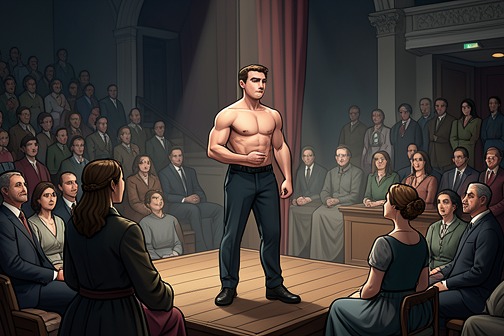
[Gideon recites Ava’s poem for Kelly at graduation](entity:event-recall-event-gideon-ava-kelly-2b2bfe186515), turning a piece Ava had written privately into a public act of remembrance. The performance is at once an account of [Kelly](entity:character-recall-character-kelly-1803105a4412)’s life, a moment of shared mourning, and a disclosure of [Gideon](entity:character-recall-character-gideon-33d9f6e05f5d)’s feelings for Ava. Its meaning lies not only in the poem’s portrait of Kelly, but in the choice to speak it before the school and in the difficult conversation that follows.
## Announcement and Public Setting
At the graduation gathering, a speaker introduces Gideon as a senior who has had some success in slam poetry during the year. He has asked to perform an untitled piece. Ava watches him walk across the stage before an audience of more than a thousand people, and her first response is a smile at seeing him there. It quickly gives way to uncertainty about what he is about to do. The announcement presents him as a performer, but does not identify the poem’s subject or explain its personal importance to Ava.
That uncertainty matters because Ava has written slam poems herself, and poetry in their story has served as a means of expressing what ordinary conversation cannot easily hold. Gideon, too, has already identified a poem of his own, Head of State. At graduation, however, he chooses to perform Ava’s work rather than introduce his piece by title. The poem is announced as untitled, leaving its words and the audience’s encounter with them to establish what it is. His decision makes the performance both an artistic act and a personal gesture, though Ava does not initially know how to read it.
## The Poem’s Portrait of Kelly
The poem moves through a change in tense: its opening recalls Kelly in the present, then shifts into the past. That grammatical turn gives the loss a particular shape. Kelly is first rendered as someone with feelings and a smile; the later tense marks the irreversible difference between remembering her as alive and speaking of her after her death. The poem does not reduce her to the fact of her death. Instead, it describes the distance between the vividness she could perceive and the darkness that came to dominate her attention.
It also presents Kelly’s struggle as more complicated than a simple account of illness or treatment. The poem refers to attempts to find a balance and to Kelly’s difficulty sustaining it, while insisting that she fought against what was happening to her. Its images of a black-plaited princess, shadows, and shifting shapes give that struggle a forceful, almost mythic form without making it into a victory story. The poem holds together the scale of Kelly’s inner difficulties and Ava’s conviction that Kelly continued to resist them. Its movement from remembered vitality to loss is therefore also an effort to preserve a fuller account of Kelly than the fact of her death alone could provide.
## Performance and Audience Response
Ava narrates the scene through what she sees and feels while Gideon speaks. She realizes only when she draws breath that she has been holding it through his performance. Other people in the rows are stunned as well. Gideon nods, leaves the stage, and receives sustained applause; Mr Neville brings him back to bow. Gideon’s quick bow and smile offer a restrained physical counterpoint to the intensity of the poem. Ava does not wipe away the tears on her face. Her reaction is not presented as proof that the performance has resolved her grief; it registers how completely the words have reached her and the audience.
The scene makes public performance an act of witnessing. The poem had originated with Ava, but Gideon gives it a voice before the school community. The shift from private writing to a crowded graduation setting enlarges its audience without changing its intimate subject. The applause acknowledges the performance, while the stunned silence Ava notices during it suggests that the poem has first held its listeners in attention. The event thus joins artistic achievement to remembrance: Gideon is recognized for his slam poetry, but what he brings to this occasion is Ava’s language about Kelly.
## Aftermath and Personal Meaning
After the performance, Ava finds Gideon outside with his parents, speaking with [Mrs Bryan](entity:character-recall-character-mrs-bryan-fc8f88f83de7). [Susan](entity:character-recall-character-susan-518263a3d20e) catches his attention, and Gideon turns toward Ava, then whispers something to his mother before approaching. He looks down and seems thoughtful rather than unusually nervous. The pause before he comes to her gives the exchange that follows a quality different from the public acclaim he has just received: the performance has been witnessed by the school, but its meaning between them still has to be spoken privately.
Gideon explains that Ava had told him to read her poem when he was confused, and that doing so helped him recognize how confused she had been too. He acknowledges that performing the poem was partly about making people think about Kelly and what happened to her. But he also says that he performed it because he loves the poem and finds parts of it expressive of his own feelings about Ava. This disclosure changes the performance’s significance: it is not only a memorial contribution or an act of empathy, but also a way for Gideon to communicate what he cannot resolve between them.
He nevertheless tells Ava that he cannot be her friend for a while. He respects her decision and understands why she made it, but asks her to respect his need not to be around her or speak with her yet. His boundary sits beside the tenderness of having chosen her poem and the candor of explaining why. He then says that he will never let Kelly waste away. The statement does not undo the separation he has requested; rather, it clarifies what the performance has made possible. Gideon can protect the memory of Kelly and speak honestly about loving Ava while still asking for distance. Graduation therefore closes with neither simple reconciliation nor silence, but with a public remembrance followed by a more difficult private truth.
Event 17
Gathering to mark the first anniversary of Kelly’s death
The [Gathering to mark the first anniversary of Kelly’s death](entity:event-recall-event-kelly-705f7086955d) brings Ava and [Kelly](entity:character-recall-character-kelly-1803105a4412)’s family together at [MacGreggor Park](entity:location-recall-location-macgreggor-park-fbb299b56abc) to remember Kelly through stories rather than only through the fact of her death. Recalled by Ava on a later walk past the park, the gathering holds grief and celebration together, while [Lincoln](entity:character-recall-character-lincoln-2a030b7cc671)’s embrace reveals the unsettled bond that survives between him and Ava.
## Background and Setting
Six months after [Kelly’s death](entity:event-recall-event-kelly-s-death-2d54d4dc78e1), Ava feels time has slowed with her loss and believes that other people are already impatient with her grief. She cannot imagine simply getting over what happened. That sense of suspended time gives the anniversary gathering particular weight: it arrives not as proof that sorrow has ended, but as a day on which Ava and Kelly’s family can speak about Kelly together.
The gathering takes place beneath the rotunda in the park, a spot Ava passes again on her way home months later. She remembers standing there with Kelly’s family, telling stories about Kelly’s unconventional antics. The setting becomes a point of return in Ava’s everyday route, linking the shared remembrance to the life she continues to live afterward.
## The Gathering
Ava and Kelly’s family remember Kelly aloud, laughing at the things she used to do and crying happy tears. The two responses are not treated as opposites: laughter belongs to the stories being shared, while tears accompany the affection and loss those stories carry. Their meeting is described as a celebration of Kelly’s life, giving the anniversary a communal form rather than making it solely an occasion of private mourning.
The gathering also lets Ava encounter memories as something that can be shared. Earlier, she had been turning over details of Kelly’s life and trying to understand the pain behind her death. At the rotunda, remembrance includes the vivid, funny person her family and friend knew; Kelly is not reduced to the circumstances of her absence.
## Ava and Lincoln
As Ava and her father walk toward Kelly’s family, Lincoln comes over and hugs her so tightly that her feet lift off the ground. Ava experiences the embrace as awkward, normal, and different all at once. Its mixture of familiarity and strangeness reflects the complicated connection between them: their history is present, but the hug does not resolve it into an uncomplicated friendship or erase what has happened between them.
In the months after the gathering, Ava and Lincoln do not talk much. They occasionally exchange texts, usually when he sends a stupid joke and she replies. Ava understands their bond as something that does not fit neatly into either friendship or family. She does not regret their past involvement, but neither is she proud of it; by the time she recalls the anniversary, she can regard it as part of their complicated relationship without pretending it was simple.
## Meaning and Aftermath
On the later walk past the rotunda, Ava notices that she feels calm, though sadness, hurt, anger, confusion, grief, and love remain. Her regular therapy with [Nola](entity:character-recall-character-nola-184866dca546) has helped her understand that there is no single correct way to feel, and that choices made under the force of those feelings can have consequences. The anniversary gathering is one part of that continuing process, not a final turning point that leaves grief behind.
Ava continues to resist the idea that love for Kelly can be left behind. Instead, she distinguishes moving forward from moving on: Kelly’s death will continue to shape her, but Ava believes she owes it to Kelly to keep living. In that light, the gathering’s laughter and happy tears do not signal forgetting. They show how remembrance can make room for the life Kelly shared with others, even as Ava carries her loss into what comes next.
Event 18
Gideon sends Ava a letter from London
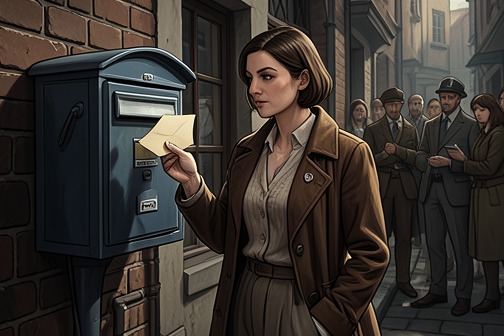
[Gideon sends Ava a letter from London](entity:event-recall-event-gideon-ava-0c18f27294bf) in the form of a small card enclosed in a pale blue envelope. Arriving after Ava has sent him a final letter and received no reply, it overturns her assumption that he has left her behind. Its modest invitation to make contact does not settle their relationship, but it gives their silence a new possibility: communication can begin again, if Ava chooses to answer.
## The Arrival
The envelope reaches Ava at home among the bills in the mailbox. She takes a moment to feel the stamps before opening it and finding a small rectangular card. The approach is ordinary—a letter among household mail—yet the sender makes it charged. Ava has been carrying the absence of a response from [Gideon](entity:character-recall-character-gideon-33d9f6e05f5d), and the envelope gives that unanswered correspondence a direct, physical return.
Her reaction arrives before any account of what the card says: she smiles, breathes out, and feels her eyes begin to well. She recognizes the tears as happiness rather than another expression of grief. That distinction matters in a story where intense feeling has often meant pain, confusion, or bereavement. The arrival does not erase those feelings; it makes room, briefly and unmistakably, for joy alongside them.
## The Silence Before the Card
The message follows a period of separation after Gideon’s graduation. Ava has not heard from him since then. Although he had indicated that he did not want to talk to her, she eventually sends one final letter because she needs to thank him. She writes that she misses him at work and passes on that [Ricky](entity:character-recall-character-ricky-5445a37318ad) misses him too. Ricky’s approving recollection of Gideon adds a small, wry note to Ava’s account, but her letter is chiefly an effort to acknowledge what Gideon has meant to her and to apologize for the hurt she caused.
Ava’s letter also describes the effects of their relationship on her sense of herself. She is grateful that Gideon made her laugh and helped her feel beautiful, and that knowing him helped her see that her life was not wholly wasted. She credits him with helping her want to put things right and become better, and thanks him for his poems and for helping her begin to gather the pieces of her broken heart. These are not presented as a claim that Gideon can repair her or take away her grief: Ava says that he helped her start putting herself back together.
When no answer comes, the absence hurts, even though Ava understands why he might not respond. She supposes that he has moved away, gone to university, and begun the life he planned. The [London](entity:location-recall-location-1bfd335cdd1b) card arrives against that expectation. It does not disclose all that happened during the silence or explain why Gideon did not answer her earlier letter. Instead, it establishes that he is in London and chooses, now, to give Ava a way to reach him.
## What Gideon Writes
The card opens with Ava’s name and a teasingly plain invitation: “Why don’t you text me sometime—you know, like a normal person?” Gideon supplies a British phone number, making the invitation actionable rather than merely affectionate. He then writes, “London sends its love. So do I,” signs off with “Always,” and identifies himself as Gideon.
The message is brief, but its form and details carry the turn. The number offers a practical channel for contact; the personal sign-off makes clear that the note is not just news from a new city. Its gentle humour also differs from a formal apology or a long explanation. Gideon does not use the card to review their breakup, ask Ava to undo it, or promise a particular future. He offers contact and affection without stating what Ava must do with either.
## Meaning and Limits
The scene’s emotional movement is deliberately small: no reunion takes place, and Ava is not shown replying. The change is that silence no longer has to be read as the last word. Earlier, Ava had sent a letter of thanks and apology without knowing whether Gideon would receive or answer it. Now his card answers that uncertainty in a limited but tangible way, leaving the next action open to her.
The letter also sits within Ava’s larger effort to live with grief rather than to declare it finished. She continues therapy with [Nola](entity:character-recall-character-nola-184866dca546) every fortnight and understands that sadness, anger, hurt, confusion, and love can remain present without always overwhelming her. In the same closing stretch of the story, she rejects the idea that she must simply move on from [Kelly’s death](entity:event-recall-event-kelly-s-death-2d54d4dc78e1) while affirming that she can move forward. Gideon’s message does not replace that work or make grief disappear. It arrives in a life still shaped by loss, offering connection as one more possibility within it.
The card’s final word, “Always,” expresses enduring affection, but the scene does not convert that affection into a guaranteed reconciliation. Its significance lies in the invitation and in Ava’s happy tears: after a painful period in which she feared that the relationship had ended in silence, she receives evidence that Gideon still wants a line of communication between them. The book ends this exchange not with a resolved future, but with a number, an open invitation, and the possibility of a response.