
Work, Ownership, and Identity
Being and NothingnessThis thread follows how work and practical use turn objects into extensions of identity while never completing the desire to possess being.
increasing Bearing strength in each event
 decreasing
Bearing strength in each eventdecreasingThe Instrumental World
The Instrumental World
Tools and Ends
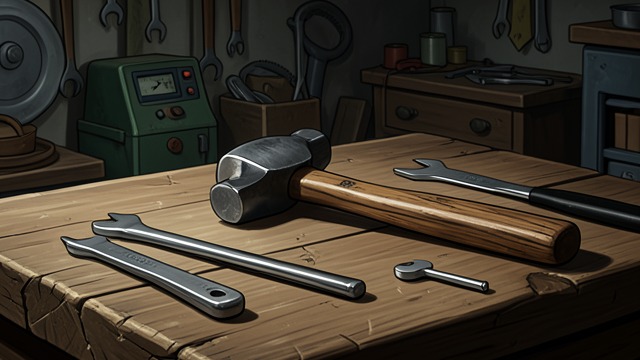
Tools are encountered as parts of practical complexes. A hammer, nail, and surface acquire meaning through the task that binds them.
Work's Horizon
The arrangement of instruments reflects the possibilities of the person who uses them, while the world remains beyond complete decipherment.
Labor as Engagement

Labor as Engagement
Action Before Reflection
A worker acts among tools and demands before asking what the whole life-work relation means. The task organizes attention and conduct.
Reflective Question
The meaning of the enterprise as a whole becomes visible only when reflection places its ends at a distance.
The Object as Mine

The Object as Mine
Ownership's Relation
An owned object is not merely usable property. It appears as belonging to the person and as reflecting a part of that person's being.
Social Recognition
Rights can protect ownership, but they do not by themselves explain the existential bond between possessor and possessed.
Money and Creation

Money and Creation
Power to Appropriate
Money represents the capacity to acquire objects and make them part of a personal world. Purchase feels like a symbolic act of creation.
Concealed Dependence
The object remains independent even as its meaning and use are organized around the owner's projects.
Objects as Self-Image

Objects as Self-Image
Worldly Identity
Clothing, books, furniture, and tools can reflect the owner back to himself. The possessed world becomes an image of what the person is.
Incompletion
No collection of possessions can make the owner fully self-grounding. The image remains a projection of an unfinished project.
Part Two, Chapter Three, Section III
Part Two, Chapter Three, discussion of work and tasks
Part Four, Chapter Two, Section II
Part Four, Chapter Two, discussion of acquisition
Part Four, Chapter Two, conclusion of possession analysis
