
Historical Choice and the Meaning of Events
Being and NothingnessThis thread follows how free projects reinterpret political events and give the past a changing public meaning.
increasing Bearing strength in each event
 decreasing
Bearing strength in each eventdecreasingThe Bastille as an Event
The Bastille as an Event
Fact and Meaning
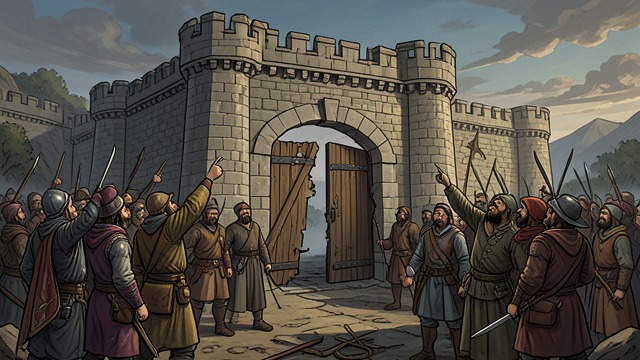
The taking of the fortress is a factual event, but its historical meaning is not fixed by the event alone.
Competing Readings
It may be treated as an isolated revolt or as the beginning of a new political force, depending on the projects that interpret it.
A Revolutionary Past
A Revolutionary Past
The Meaning of Action
Later actors may inherit an earlier event as a precedent, a warning, or a source of political legitimacy.
Responsibility
Their choices do not change what happened, but they determine how the event functions in their present situation.
American Memory of France
American Memory of France
Shared History
A political project can present relations between nations as a debt or inheritance. The narrative makes a collective past available for present action.
Selective Recovery
A different political choice could emphasize other historical ties. The public story is made through the interests it claims to express.
War Reorders the Interwar Years
War Reorders the Interwar Years
Retrospective Naming
The years before a later war can be grouped as an interval between conflicts. That label becomes possible through the events that follow.
Temporal Reframing
A new future turns an earlier present into a bounded and surpassed period, changing its historical meaning without changing its dates.
History Remains in Suspense
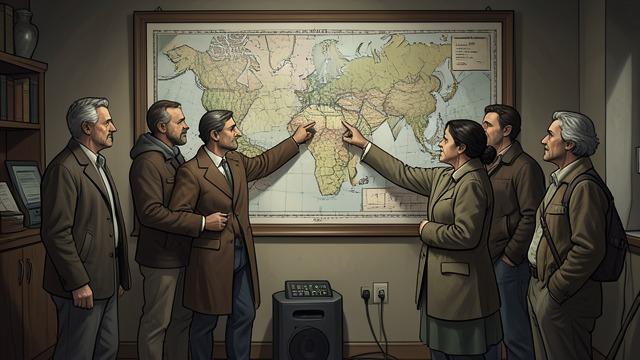
History Remains in Suspense
No Final View
The historian and the political community remain inside history. Neither can take an absolute standpoint that fixes every event's meaning.
Conflict of Projects
Historical interpretations remain open to future choices, and the past continues to be assumed, contested, and reorganized.
Part Four, Chapter One, discussion of the past and history
Part Four, Chapter One, discussion of revolutionary memory
Part Four, Chapter One, example of political history
Part Four, Chapter One, reference to 1918–1939
Part Four, Chapter One, concluding discussion of history
