
The Other's Look as Conflict
Being and NothingnessThis thread traces how the encounter with another freedom turns objectification into reciprocal struggle.
increasing Bearing strength in each event
 decreasing
Bearing strength in each eventdecreasingA Look in the Room

A Look in the Room
Absorbed Action
A person listens at a keyhole, absorbed in the scene and its practical possibilities. The act has no outside for its unreflective consciousness.
Interruption
Footsteps introduce the possibility of being seen. The self suddenly encounters its conduct as an object for another.
The Other Fixes Me
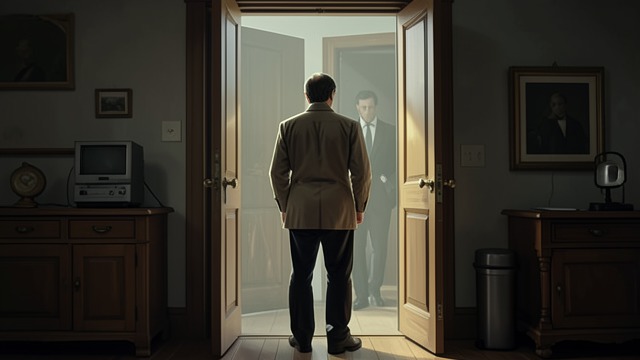
The Other Fixes Me
Objectification
The look gives the self an outside and a nature that it cannot possess from within. Its possibilities appear alienated and exposed.
Unequal Freedom
The Other's freedom can fix the self without being reducible to the self's knowledge. This creates danger and dependence at once.
Reversal into Objecthood
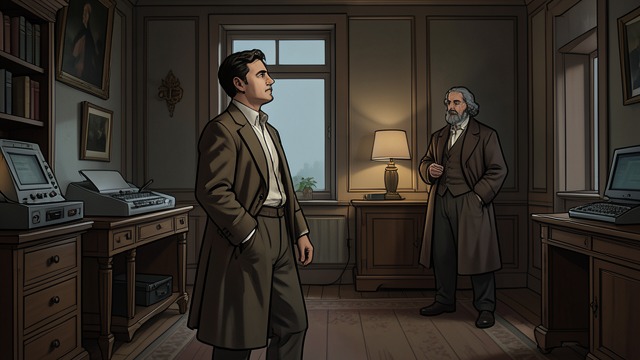
Reversal into Objecthood
Counter-Look
To escape being an object, the self tries to make the Other an object. The move restores a sense of freedom but destroys access to the Other as subject.
Instability
The subject-object reversal does not resolve conflict. Each position contains the possibility of its opposite and collapses into it.
Hate and the Other

Hate and the Other
The Last Refusal
Hate abandons the hope of union and seeks the Other's disappearance. It aims at the Other's existence as a freedom that can make the self an object.
Failure
Even the Other's death cannot erase the past of being seen. The hater remains bound to an alienated identity fixed in the world.
The Unresolved Circle
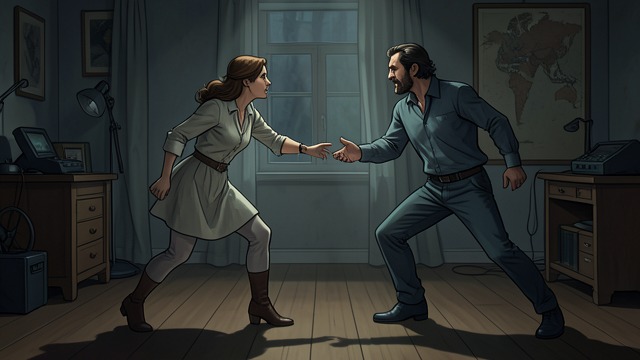
The Unresolved Circle
Recurrent Reversals
Love, desire, indifference, and hate move between the Other-as-subject and the Other-as-object. Each attitude fails by generating its opposite.
Result
No final synthesis ends the conflict. The relation remains an unstable movement between transcendence and objectification.
Part Three, Chapter One, look-at-the-keyhole example
Part Three, Chapter One, immediately after the footsteps
Part Three, Chapter Three, opening account of attitudes
Part Three, Chapter Three, Section II, after sadism
Part Three, Chapter Three, concluding discussion
