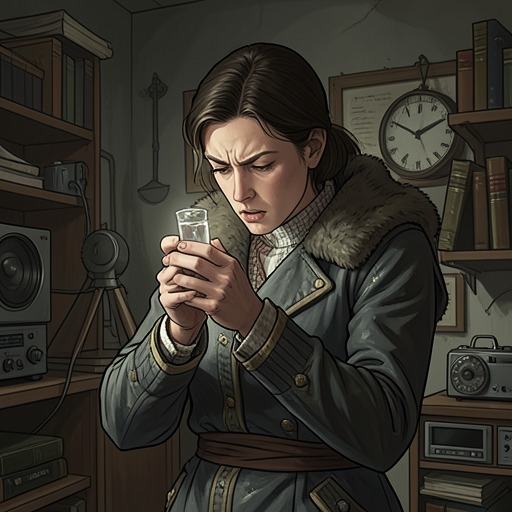
Being-in-itself
Being and NothingnessBeing-in-itself names the non-conscious being of phenomena: a complete, opaque plenitude that is what it is, without distance from itself, inner division, or an underlying secret nature. Its contrast with consciousness is foundational: consciousness exists through self-distance and negation, while the in-itself neither questions itself nor projects possibilities. Yet the two regions are not simply unrelated. The For-itself is the nihilation through which being is disclosed, so the in-itself remains the fullness toward which knowledge and human desire are directed, without ever becoming consciousness itself.
Definition and Appearance
The account begins by rejecting a dualism between an object’s visible exterior and a hidden interior that would contain its true nature. The appearances manifesting an existent are neither superficial coverings nor signs pointing toward a privileged secret behind them; they are equally appearances, each referring onward to others. Force, for example, is not a concealed metaphysical power lying behind acceleration or deviation, but the totality of those effects. Being-in-itself is therefore not a second, inaccessible object concealed beneath the phenomenon. It is the being of the phenomenon, which exceeds any particular act of knowing without acquiring a separate interior essence.
This distinction also keeps objects out of consciousness. A table is not inside consciousness as a representation or neutral mental content: it is in space, beside the window, and its being exceeds any inventory consciousness could make of it. To insert the table’s opacity into consciousness would make consciousness into a thing and send the attempt to know itself into an infinite inventory. The analysis instead distinguishes the object’s plenitude from consciousness’s directedness toward it. As the account of intentionality associated with Edmund Husserl helps establish, consciousness is consciousness of something; its relation to an object does not turn that object into a mental component.
The text gathers the in-itself’s initial definition into three linked claims: being is; being is in itself; being is what it is. These are not interchangeable slogans. The first affirms existence without deriving it from a cause or a prior possibility. The second denies that being relates to itself as a self-conscious subject does. The third describes its full identity with itself. Together they mark a region of being distinct from consciousness, while leaving open the wider question of how these two radically different regions belong to being at all.
Identity, Fullness, and Contingency
The in-itself does not create itself, since self-creation would require it to precede itself. Nor is it properly active or passive. Activity presupposes a conscious being that adopts an end and uses means; passivity describes objects insofar as they do not originate the ends for which activity employs them. Taken as absolute categories, both depend on human conduct and lose their meaning when applied to being itself. The in-itself simply is: uncreated, but not a cause of itself.
Its self-identity is not the reflective unity of a self-conscious mind. Being does not turn back toward itself or hold itself at a distance; it is itself so completely that the reflection constituting a self is absent. The text describes it as opaque precisely because it is filled with itself. The formula that being is what it is may look like a bare logical identity, but here it characterizes a particular region of being, not a universal model for consciousness. In the in-itself there is no internal relation, transition, or becoming by which it could be other than itself. The principle of identity, accordingly, concerns relations that appear to human reality between being and what is external to it; it does not establish an inner network of relations within the in-itself.
This fullness is also expressed as density. In the in-itself, not one particle of being stands at a distance from itself. Identity is the limiting concept of unity: at its extreme, unity gives way to complete equivalence, with no gap between content and container. The account insists that being contains no emptiness, not even the smallest crack through which nothingness could enter. That image prepares the contrast with consciousness, whose being depends on precisely such an empty distance.
Fullness does not make the in-itself necessary or derivable. An existing phenomenon cannot be deduced from another existent simply insofar as that other exists; necessity belongs to connections between ideal propositions, not to the existence of things. Nor can the in-itself be derived from possibility, which belongs to the For-itself. Being is neither possible nor impossible in that sense: it is. Consciousness may call it superfluous because it cannot derive its existence from another being, a possibility, or a necessary law. This is the contingency of being-in-itself: its existence has no foundation that would explain why it must be there.
Consciousness, Negation, and Knowledge
Consciousness differs from the in-itself because it does not coincide fully with itself. The being of consciousness is at issue for consciousness: it exists as presence to itself, with a distance that prevents simple identity. That distance is not another positive object lodged within it. It is the nothingness consciousness has to be in order to exist as a self rather than as a full, self-identical thing. Belief offers a revealing instance. If belief were merely one being contiguous with another, the unity of the For-itself would break into two in-itselfs; instead, belief is present to itself and carries its own possibility of not coinciding with itself.
The relation between knower and known makes the asymmetry especially clear. In knowledge, the known is the being encountered in its fullness; the knower is not another object placed beside it, separated by a pre-existing difference. Unlike the ordinary judgment that an inkwell is not a table, where two constituted objects support the negation, the knower-known relation has no such independent support on the knower’s side. The For-itself is the nothingness through which the in-itself stands out as known. Knowledge is thus not a passive container of representations: it is the For-itself’s relation to being, and that relation has being of its own.
This does not mean that being is measured or produced by knowledge. The For-itself makes being known to itself through the in-itself, but the object disclosed is not reduced to the disclosure. The account therefore refuses both the insertion of a thing into consciousness and the conclusion that consciousness makes the thing exist. The known remains the plenitude of the in-itself; the knower is the nihilation that realizes its presence. Their connection depends on difference, not fusion.
The difference also explains why negation of an object is not reciprocal. When consciousness determines itself as not being a particular thing, that thing does not in turn determine itself as not being consciousness. The thing remains indifferent in its exteriority; the negative relation belongs to the For-itself’s way of existing. With another consciousness, by contrast, negation is reciprocal: each consciousness encounters a being that is itself not that consciousness. This comparison preserves the in-itself’s distinctive indifference while showing why the relation to another subject cannot be treated as a mere relation to an object.
In-itself and For-itself
The in-itself and the For-itself are not two interchangeable descriptions of one kind of existence. The in-itself is full positivity: it knows no otherness, contains no negation, and is not subject to temporality as a consciousness that projects what is not yet and surpasses what has been. Its being cannot be described through transition or possibility. Even when a phenomenon gives way, the analysis warns against treating its nonbeing as though the in-itself itself had experienced a temporal change or negated itself.
The For-itself, by contrast, emerges as the nihilation of the in-itself. In the account of facticity, an attempt by being to found itself would introduce a self or reflective reference into absolute identity. But that reflective reference would undo the in-itself’s identity and produce the For-itself instead. The in-itself cannot become its own ground without ceasing to be what it is. The distinction is therefore not between a material object and a hidden mental substance, but between plenitude that does not relate to itself and consciousness whose existence includes a relation of distance.
The same difference governs possibility and lack. The in-itself does not have to be its own not-yet, permanence, or essence; it has no future toward which it stretches. Potentialities arise correlatively with the For-itself’s upsurge into the world and are fixed in their arising, dispersed through exterior relations. The For-itself’s lack is not a missing part inside an object. It is an ekstatic structure: consciousness is directed beyond what it is toward a possibility it is not yet. Thus the in-itself supplies neither a hidden future nor a self-generated purpose; those structures belong to the For-itself’s way of projecting a world.
The World, Value, and the Ontological Conclusion
The For-itself’s original project cannot be reduced to a particular trait, biological differentiation, or contingent feature of human life. Its fundamental project concerns its own being. Because the For-itself is defined by lack, it projects a possibility as value and desires the being it lacks: the in-itself. But it cannot simply become that plenitude while remaining consciousness. The aspiration is toward in-itself-for-itself, an ideal in which contingent existence would ground itself and consciousness would become substance and cause of itself. That ideal is not an accomplished condition. Human reality remains the lived relation between contingent in-itself and the value projected as in-itself-for-itself.
The concluding synthesis returns to the apparent danger of dualism. The two regions remain radically distinct: the in-itself is what it is, while the For-itself is what it is not and is not what it is. Their connection, however, is not a third substance placed between them. The For-itself itself is the synthetic connection, because it is the pure nihilation of the in-itself. The text compares this to the popularizer’s imagined annihilation of a single atom whose loss would bring a catastrophe extending across the universe: a tiny nihilation at the heart of being is enough to disclose a world. The image makes consciousness neither an independent realm sealed off from things nor a power that absorbs them; it is the opening through which their being appears.
That opening must preserve otherness. If the For-itself could join completely with the in-itself, the difference that makes possibility, knowledge, and world possible would disappear. The ontological account consequently affirms the primacy of the in-itself: it is the being knowledge encounters and cannot exhaust, while the For-itself exists as the non-identical relation that makes encounter possible. Being-in-itself is thus both the absolute contrast to consciousness and the indispensable ground of its disclosure of a world.