Creation-destruction
Being and NothingnessCreation-destruction names a central paradox of appropriation: possessing an object involves making it meaningful through one’s life, while use, damage, destruction, or giving can make that relation feel more intensely one’s own. The concept links ordinary objects and gestures to an impossible ideal of complete self-possession. What seems like a power to create or absorb an object repeatedly meets the object’s independence—and cannot resolve that contradiction.
Possession as Continuous Creation
Possession is not merely a claim to an isolated thing. The possessor draws an object into a lived environment and gives it a functional place there. A lamp, for instance, is more than its bulb, shade, and iron stand: it is also the light it brings to a desk, books, and table, and its role in the owner’s habits of reading or writing at night. Its significance comes from that use and setting. Removed from them and placed among lamps for sale, it ceases to be this person’s lamp and becomes one item in a general class.
This integration makes ownership appear creative. The owner is responsible for the object’s place in a human world, sustaining its particular function through continued use; the surrounding collection of possessions seems to come into being along with the owner’s life. The relation is not simply between a subject and a thing that remains untouched by its possessor: the object’s meaning is shaped by its place in a situation. Yet this creation is continuous rather than final. The object persists independently, and ownership does not alter its underlying existence. Its meaning as possessed depends on the life that incorporates it, even as the thing remains outside that life.
The Contradiction of Appropriation
The object must seem both wholly the possessor’s and wholly independent. A pen can become so involved in writing that the possessor scarcely distinguishes it from the act, yet it remains an intact thing whose ownership is only an ideal relation. Trying to contemplate the pen or a pipe as an object in order to feel ownership can make possession recede: the owner encounters a thing rather than the lived relation to it. Possession is enjoyed not by simply staring at the object, but by going beyond it toward a purpose and using it.
That tension gives possession its force and sets its limit. The possessor projects the self into something outside the self, as though the object could provide a stable, objective form of being. But the object also escapes the possessor at every moment: it remains independent, while the owner’s bond to it must be continually renewed. The ideal behind appropriation is therefore not a completed state of ownership but a wish to be self-grounding—to be both the source of one’s being and a complete, independent being. Possession symbolizes that ideal without realizing it.
Destruction as Appropriation
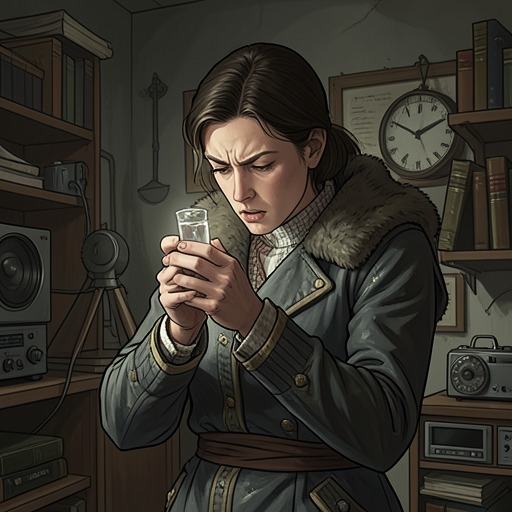
When complete possession proves impossible, destruction can appear to offer a more decisive relation. The destruction of a farm by the person who sets it on fire is described as a reversal of creation: by destroying the building’s existence, the agent seems to become its foundation and to absorb it into the self. A broken glass likewise remains present as something that was, though its former independent existence is no longer intact. Destruction seems to overcome the object’s resistance by removing the thing that stood apart, while the destroyed object persists as a trace for which the destroyer assumes responsibility.
This does not mean that destruction simply achieves what ordinary ownership cannot. Rather, it gives the contradiction another form. The object is treated as the agent’s own through the act that ends its independent state; its former existence remains consequential precisely because it cannot be restored as it was. Destruction thus belongs among appropriative behaviors: it can seem to make the object more completely one’s own, but does so by eliminating the independent object that possession was meant to unite with the self.
Use, Wear, and the Bicycle
Ordinary use already contains a less absolute version of this destructive structure. Riding a bicycle makes it useful and familiar, but also wears it out. That wear may cause practical frustration, especially if replacement tires are difficult to find, yet it can also carry a hidden satisfaction: the object is being consumed through the owner’s activity. The double meaning of consumption—using something up and taking it in—makes the structure of creation-destruction explicit. The bicycle becomes one’s own through use, while use marks and diminishes it.
Possession also exceeds the initial act of acquisition. A banknote may be enough to make a bicycle legally or practically belong to someone, but the owner’s life is needed to realize the possession through errands, longer journeys across France, and the many linked patterns of use those journeys entail. The undertaking can never be finished: death cuts it short. The bicycle therefore illustrates both sides of appropriation—the object is made part of a life through activity, and that very activity consumes it—while showing why ownership cannot deliver a completed state of possession.
Gifts and the Significance of Giving
Giving extends the same structure beyond the owner’s direct use. The account treats a gift as a form of destruction because the giver relinquishes the object’s status as their own and removes it from their immediate surroundings. The potlatch, in which large quantities of goods are destroyed, offers a collective instance of this logic. Whether an object is given away or annihilated, the giver gives up its ordinary presence; what remains is its past relation to the giver.
Giving can therefore be understood as appropriation through relinquishment, not as an action wholly opposed to possession. The giver may take a brief, intense satisfaction in the act of giving, while the gift also places a demand on the recipient to maintain and give meaning to what has been received. The analysis connects that consequence to relations with others, but its central point is the giver’s relation to the object: generosity is not treated as an isolated, irreducible virtue. It can express a chosen way of appropriating, by destruction rather than by creation. In existential psychoanalysis, evidence of generosity consequently prompts a further question about the subject’s original project: why this form of appropriation was chosen.
An Unattainable Ideal
Across ownership, use, destruction, and giving, creation-destruction describes attempts to bridge the divide between the self and an independent world. The lamp acquires its particular meaning through a room and a routine; the bicycle becomes one’s own through journeys that wear it down; the broken or relinquished object remains linked to the person through its absence and history. Each case makes appropriation concrete, but none turns it into a final achievement.
The concept’s significance lies in this unresolved movement. Objects can be organized into a person’s situation and transformed by their use, yet they remain more than that person’s meaning for them. Destruction may seem to close the distance by removing the object, while giving may seem to surrender it; both instead reveal how possession continues to shape the relation. Creation and destruction are thus not simple opposites. They are intertwined ways of pursuing an ideal of complete possession that ordinary life can symbolize, but never bring to completion.