Infanticide
BelovedThe infanticide is the wound at the center of Toni Morrison's Beloved, the act that shatters Sethe's life and the life of 124 Bluestone Road. When schoolteacher, his nephew, a slave catcher, and a sheriff arrive to reclaim her and her children under the Fugitive Slave Law, Sethe, in a desperate bid to keep them from the horrors of slavery, kills her two-year-old daughter—the child who will later be known as Beloved—with a handsaw. This single, violent moment, which the novel circles around and returns to again and again, is not merely a plot point but the origin of the haunting that defines the narrative, the source of Sethe's profound guilt and pride, and the event that the community can neither forgive nor forget. It is the act that makes the novel's central question—what is the nature of motherlove, and what does freedom cost—impossible to answer without confronting the brutal logic of slavery itself.
The Arrival of the Four Horsemen
The infanticide occurs on a quiet afternoon, eighteen years before the novel's present, when the house on Bluestone Road is so still that the four men—schoolteacher, one nephew, a slave catcher, and a sheriff—believe they are too late. They dismount, three of them approaching the house while one stays in the saddle, rifle ready, his eyes trained on the road in case the fugitive makes a dash. The narrative, focalized through the men's wary professionalism, notes that a captured slave might go along quietly for a few seconds, smiling like a child caught with his hand in the jelly jar, only to suddenly roar and grab for the rifle. This caution is why they keep their distance, why they leave the tying to another. The men are experienced; they have seen the quietest ones turn violent. But nothing prepares them for what they find in the woodshed.
The Scene in the Woodshed
Inside the shed, the men are confronted by a tableau of horror: two boys, Howard and Buglar, lie bleeding in the sawdust and dirt at Sethe's feet, while she holds a blood-soaked child to her chest with one hand and an infant by the heels in the other. She does not look at them; she simply swings the baby toward the wall planks, misses, and tries to connect a second time. It is only the old man, Stamp Paid, who has been standing in the woodpile with an ax, who runs through the door and snatches the baby from the arch of its mother's swing. The scene is rendered with a chilling detachment, the men staring at what there is to stare, the ticking time of their hesitation. Schoolteacher, in particular, recognizes immediately that there is nothing to claim: the three pickaninnies they had hoped to take back to Kentucky are not alive and well. Two lie open-eyed in sawdust; a third pumps blood down the dress of the main one—the woman schoolteacher had bragged about, the one who made fine ink, damn good soup, and pressed his collars the way he liked, with at least ten breeding years left. But now she has gone wild, due to the mishandling of the nephew who overbeat her and made her cut and run.
The Aftermath: The Sheriff and the Community
The sheriff, who has come to enforce the law, is the first to break the paralysis. He swallows hard, over and over, and tells the other three, "You all better go on. Look like your business is over. Mine's started now." Schoolteacher beats his hat against his thigh and spits before leaving, and the nephew, who had nursed Sethe while his brother held her down, is shaking, unable to understand why she would do such a thing. The men do not look at the woman in the pepper plants with the flower in her hat—Baby Suggs—nor at the seven or so faces that have edged closer in spite of the catcher's rifle. They see enough nigger eyes for now: little nigger-boy eyes open in sawdust; little nigger-girl eyes staring between the wet fingers that hold her face so her head won't fall off; little nigger-baby eyes crinkling up to cry in the arms of the old nigger whose own eyes are nothing but slivers. But the worst are those of the nigger woman who looks like she doesn't have any, since the whites in them have disappeared and they are as black as her skin, making her look blind.
The sheriff, left alone with the carnage, wants to back out too, to stand in the sunlight outside that place meant for housing wood, coal, and kerosene. He is not afraid, he tells himself, just cold. He does not want to touch anything. The baby in the old man's arms is crying, and the woman's eyes with no whites are gazing straight ahead. They might all have remained frozen till Thursday, except one of the boys on the floor sighs, as if sunk in the pleasure of a deep sweet sleep, and that sigh flings the sheriff into action. He tells Sethe he will have to take her in, that she has done enough to last her, but she does not move. He makes up his mind to go near her and bind her wet red hands when Baby Suggs enters, noticing who breathes and who does not, and goes straight to the boys lying in the dirt. Stamp Paid moves to the woman and says, "Sethe. You take my armload and gimme yours." She turns to him, glancing at the baby he is holding, and makes a low sound in her throat as though she has made a mistake, left the salt out of the bread or something.
The Fight Over the Living Child
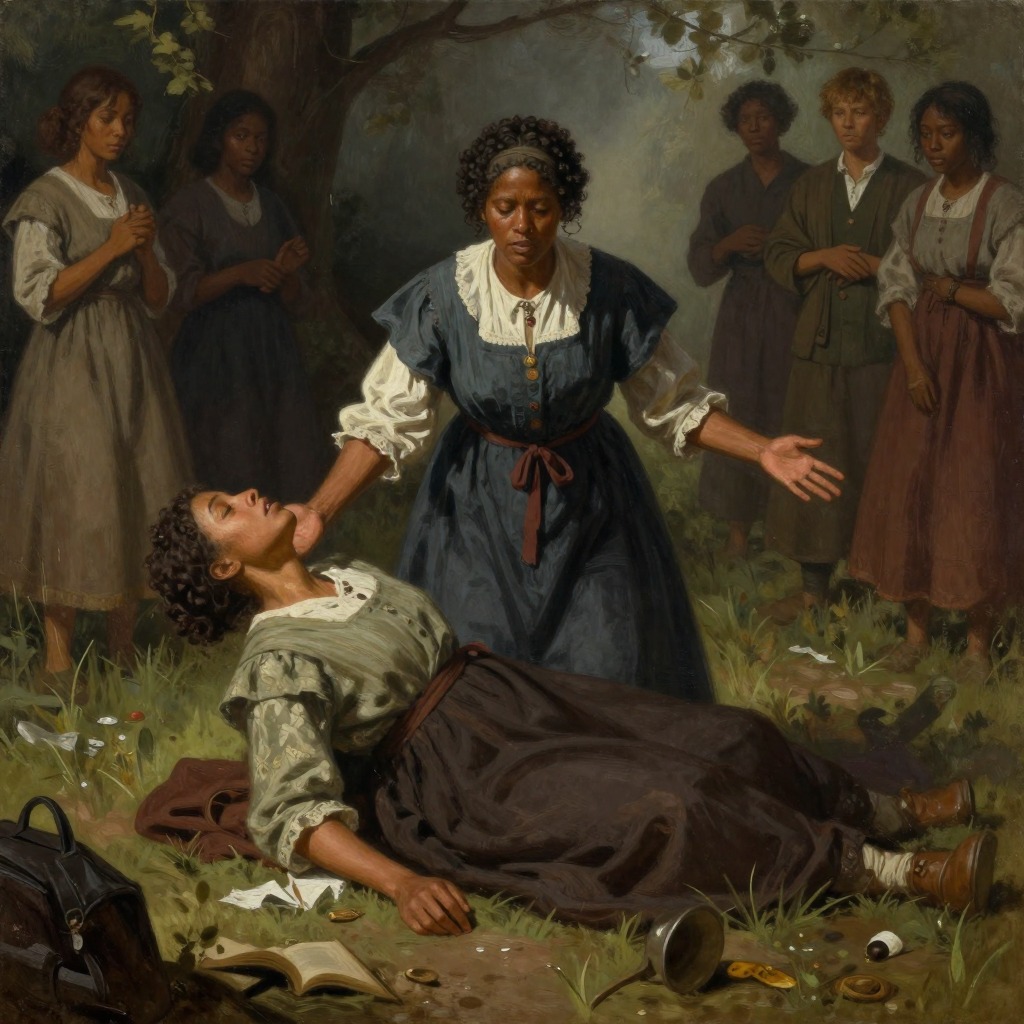
Neither Stamp Paid nor Baby Suggs can make Sethe put her crawling-already girl down. Out of the shed, back in the house, she holds on. Baby Suggs has got the boys inside and is bathing their heads, rubbing their hands, lifting their lids, whispering, "Beg your pardon, I beg your pardon," the whole time. She binds their wounds and makes them breathe camphor before turning her attention to Sethe. She takes the crying baby from Stamp Paid and carries it on her shoulder for a full two minutes, then stands in front of its mother. "It's time to nurse your youngest," she says. Sethe reaches up for the baby without letting the dead one go. Baby Suggs shakes her head. "One at a time," she says, and trades the living for the dead, which she carries into the keeping room. When she comes back, Sethe is aiming a bloody nipple into the baby's mouth. Baby Suggs slams her fist on the table and shouts, "Clean up! Clean yourself up!" They fight then, like rivals over the heart of the loved, each struggling for the nursing child. Baby Suggs loses when she slips in a red puddle and falls. So Denver takes her mother's milk right along with the blood of her sister. And that is the way they are when the sheriff returns, having commandeered a neighbor's cart, and orders Stamp to drive it.
The Cart Ride and the Community's Silence
Outside, a throng of black faces stops murmuring. Holding the living child, Sethe walks past them in their silence and hers. She climbs into the cart, her profile knife-clean against a cheery blue sky, a profile that shocks them with its clarity. Was her head a bit too high? Her back a little too straight? Probably. Otherwise the singing would have begun at once, the moment she appeared in the doorway of the house on Bluestone Road. Some cape of sound would have quickly been wrapped around her, like arms to hold and steady her on the way. As it is, they wait till the cart turns about, headed west to town. And then no words. Humming. No words at all.
Baby Suggs means to run, skip down the porch steps after the cart, screaming, No. No. Don't let her take that last one too. She has started to, but when she gets up from the floor and reaches the yard, the cart is gone and a wagon is rolling up. A red-haired boy and a yellow-haired girl jump down and run through the crowd toward her. The boy has a half-eaten sweet pepper in one hand and a pair of shoes in the other. "Mama says Wednesday," he says, holding them together by their tongues. "She says you got to have these fixed by Wednesday." Baby Suggs looks at him, and then at the woman holding a twitching lead horse to the road. "She says Wednesday, you hear? Baby? Baby?" She takes the shoes from him—high-topped and muddy—saying, "I beg your pardon. Lord, I beg your pardon. I sure do." Out of sight, the cart creaks on down Bluestone Road. Nobody in it speaks. The wagon rock has put the baby to sleep. The hot sun dries Sethe's dress, stiff, like rigor mortis.
The Aftermath: Jail, the Gravestone, and the Haunting
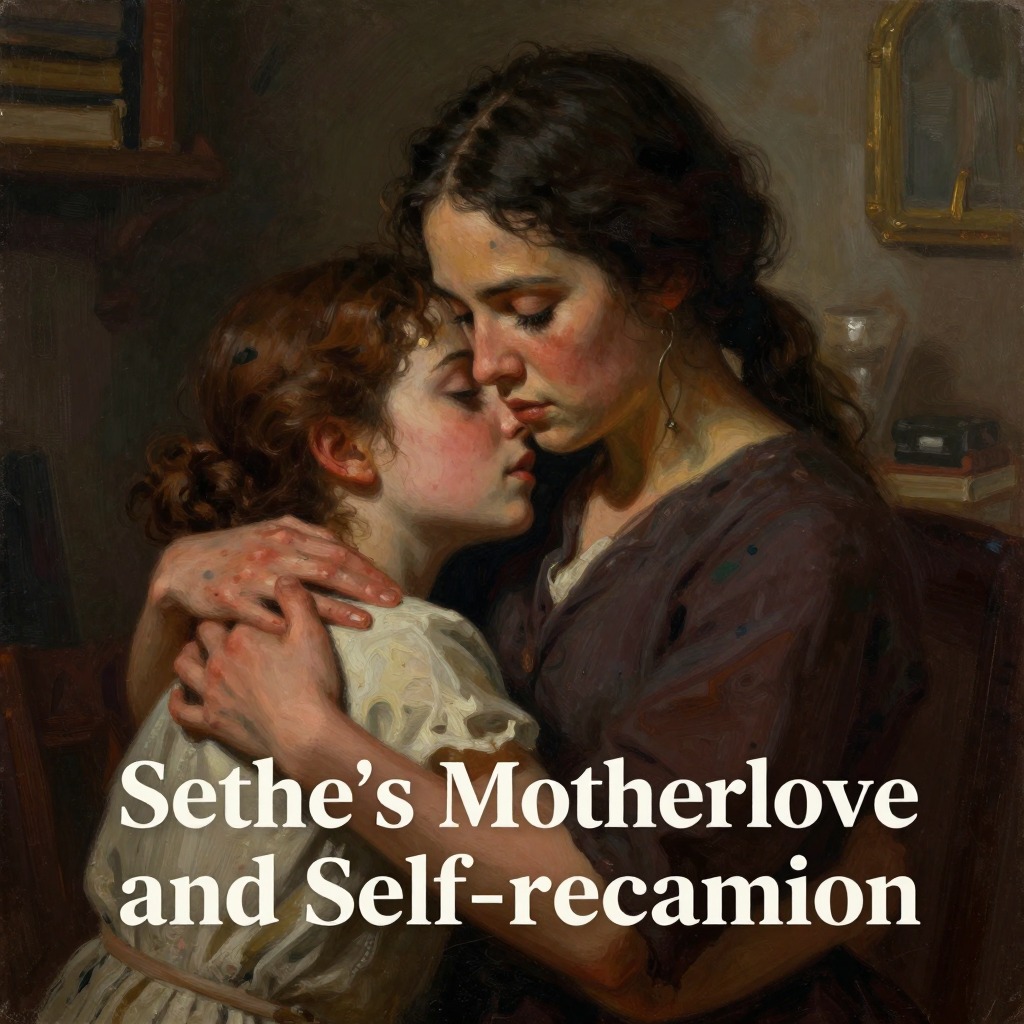
Sethe is jailed, and Denver, still a baby, goes with her. The community's response is mixed: some, like the Colored Ladies of Delaware, Ohio, draw up a petition to keep her from being hanged, while others, like Ella, are horrified by the act. Baby Suggs, who had been the spiritual center of the community, is broken by the event; she retreats to her bed, pondering color, and eventually dies. Sethe, upon her release, uses the only currency she has—her body—to pay the engraver for the word "Beloved" on her daughter's headstone, a transaction that takes ten minutes and leaves her with a lifelong regret that she did not ask for "Dearly" too. The baby's ghost begins to haunt 124, first with small acts of spite—a mirror shattering, handprints in a cake—and then with more violent manifestations, driving away her sons, Howard and Buglar, and eventually being driven out by Paul D. But the ghost's return in the flesh as Beloved, the young woman who appears at 124 after the carnival, is the novel's central mystery, and it is only through the infanticide that the reader can understand who Beloved is and why she has come. The act, which Sethe defends as an act of love—"I took and put my babies where they'd be safe"—is the source of her pride and her shame, and it is the reason Paul D, when he learns of it, tells her, "Your love is too thick," and leaves. The infanticide is not just a past event; it is the force that shapes the present, the reason the community shuns Sethe, the reason Denver is afraid of her mother, and the reason Beloved's presence is both a blessing and a curse. It is, as the novel's final lines suggest, "not a story to pass on," yet it is a story that must be told, again and again, in order to be understood.