
Food as Promise and Disappointment
Big BrotherThis flow traces the novel’s movement from food as anticipated satisfaction to its recognition as a poor substitute for other forms of meaning.
increasing Bearing strength in each event
 decreasing
Bearing strength in each eventdecreasingMeals Are Hard to Remember
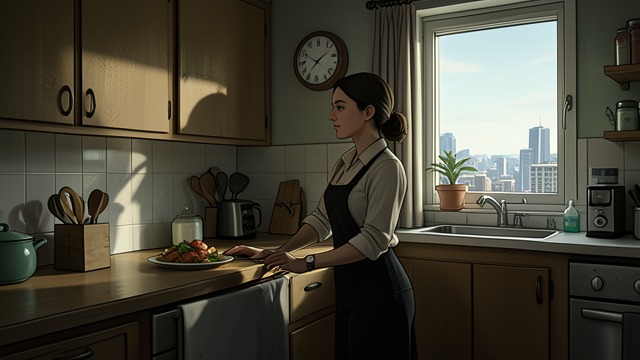
Eating and Memory
Ordinary consumption
Pandora notices that she can remember films, relationships, and milestones more vividly than most meals, despite spending much of her life planning and preparing food. The mismatch challenges her assumption that what occupies time must matter most.
The pleasure lies ahead
She suggests that food’s promise can be more powerful than the moment of eating itself. Anticipation and memory frame the meal, while the actual experience often fails to deliver the satisfaction people expect.
Food Organizes the Day
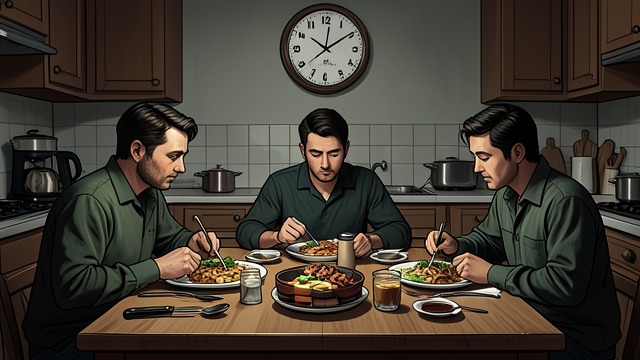
Meals as Social Structure
Time marked by eating
Pandora recognizes that daily life is divided into breakfast, lunch, and dinner, while social invitations routinely revolve around meals or drinks. Eating is not only nourishment but a calendar and a form of company.
Work disappears inside routine
Planning, shopping, cooking, serving, and cleaning take substantial time, even when the meals themselves leave little memory. The household’s structure makes food central without proving that food is the deepest source of satisfaction.
The Final Restaurant Meal
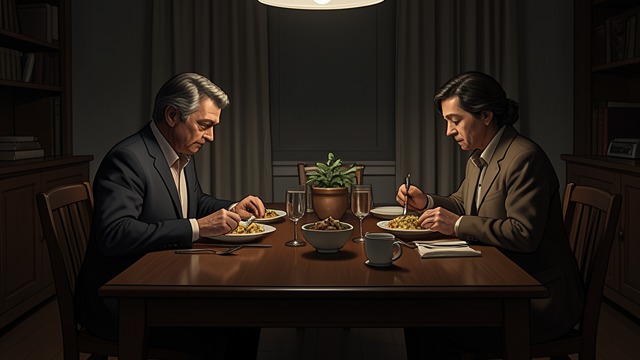
Attention Replaces Speed
A meal carefully observed
Pandora and Edison take several hours over a final dinner, noticing textures, flavors, and small details they would previously have ignored. Pandora asks Edison to eat slowly and consciously.
Pleasure is neither everything nor nothing
The experience shows that food can reward careful attention, but does not fulfill every emotional need. Pandora leaves with a memory she can revisit, aware that the meal’s meaning comes partly from its impending absence.
A Meal After the Flood
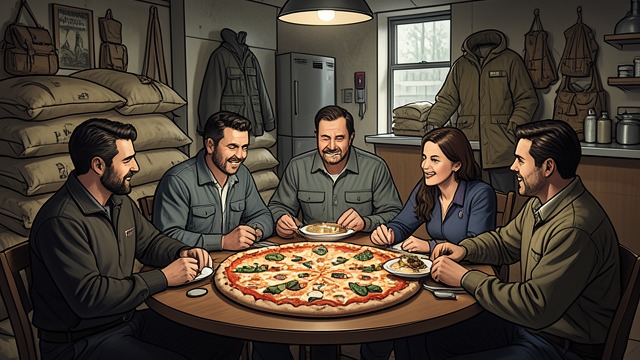
Food in Community
Pizza after labor
After a day of exhausting volunteer work, Edison eats pizza with the people who have been filling sandbags. Pandora’s permission makes the meal part of a shared effort rather than a secret binge.
Context changes meaning
The food itself is not fundamentally different from the forbidden pizza that once broke their agreement. The difference lies in company, labor, and the absence of hiding, showing that eating carries meanings beyond calories.
Nothing After the Goal
Satisfaction Has Limits
Food disappoints
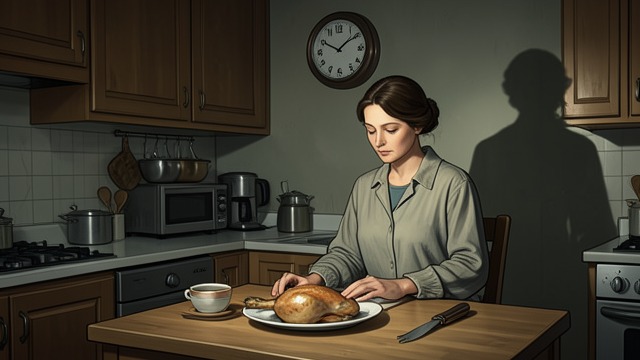
Pandora discovers that ordinary meals do not resolve what to do with life. A chicken breast remains a chicken breast, and even a well-prepared dinner cannot repair her strained marriage or decide her future.
Hunger points elsewhere
The experience leads her to question whether food has been asked to replace other pleasures and purposes. Her closing thought that people are meant to be hungry reframes appetite as a need that can motivate rather than simply comfort.
At the beginning of the novel
During Pandora’s reflection on domestic life
The night before the liquid plan begins
The third day of the flood response
After Pandora returns to ordinary meals
