“Food is by nature elusive”
Big Brother“Food is by nature elusive” is the narrator’s claim that food exerts its power less through lasting pleasure than through the promise of satisfaction. The idea connects appetite to memory and anticipation, but the novel tests it against the bodily and emotional costs of severe restriction: what begins as a theory of desire becomes a lens for Edison and the narrator’s diet, her anxious encounter with soup, and the signs that their regimen is harming them.
The promise and failure of satisfaction
The narrator arrives at the claim while reflecting on her own taste and work. She describes herself as plain, like white rice, and recalls that although she ran Breadbasket, Inc. for eleven years, the dishes she remembers most clearly are failures. Among them is a rice-flour rosewater pudding that turned into a stringy mass; the many ordinary dishes blur together. That contrast—vivid disappointment against forgettable routine—leads her away from food as mere sustenance and toward food as an idea.
In her formulation, food is less a substance than the prospect of being satisfied. The anticipation of the next bite and the memory of the last one can be more compelling than eating itself; the actual experience, she suggests, scarcely arrives. Because food does not reliably deliver what it promises, eating more can become an attempt to reach a satisfaction that remains just out of grasp. The same elusiveness makes food alluring and potentially dangerous, and helps explain why dieting can take on the force of religious or political conviction.
Appetite, success, and family
The narrator places eating within a broader account of animal need and human striving. She argues that the drive to eat motivates much of human endeavor, and treats abundant body size as evidence of success in competition for resources—while noting that nature can punish the very success it produces. The practical instinct to save food for the future, represented by a pantry stocked against hard times, becomes part of her concern about her country. Yet her personal stake is closer: she cares about her brother, and the scrutiny of his life begins, aptly, at lunch.
This movement from a general theory to a family story makes the expression more than an abstract observation about pleasure. Food is bound up with the narrator’s understanding of Edison, their shared history, and her wish to help him. The later diet will promise control and a changed future, but the claim that satisfaction remains elusive also shadows that promise: discipline can reorganize appetite without making food, or the needs it carries, disappear.
The diet’s rewards and costs
During the liquid-diet project, the narrator and Edison treat their changing appetites as both a physical process and a shared achievement. When they recognize signs of ketosis, they name the occasion their Ketosis Party. Edison becomes less resistant to the plan and says he has more energy than when he was eating heavily, though he does not equate the resulting highs with heroin. Their walks, which also fill time, become a ritual of mutual resolve: they pass fast-food restaurants without giving in and take pride in their distance from ordinary indulgence.
That sense of superiority is not simply relief from craving. The narrator compares living on four envelopes of protein powder a day with an aristocratic position above the world of fast food. At Christmas, she and Edison pass turkeys and pies in Hy-Vee to buy paper towels and packets of aspartame. Yet she also describes black days in which everyday disorder and Edison’s cheerful remarks provoke anger. The diet’s shared identity and sense of mastery therefore coexist with irritability and strain; its rewards do not settle the deeper question of what eating, or abstaining, can provide.
Restriction becomes frightening
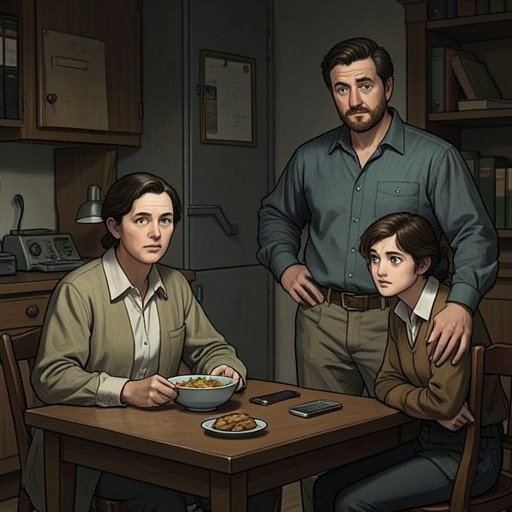
Later, the narrator’s own response to food complicates the earlier celebration of control. At a meal with Oliver, a bowl of canned tomato soup is placed between them. Its presence produces anxiety: she regards it as both appetizing and unacceptable, pushes the croutons aside, and explains that she repeatedly dreams of food being taken away or of beginning to chew before stopping herself from swallowing. Oliver tells her that this pattern is mentally ill and urges her to eat.
The moment exposes a reversal. The narrator had thought Edison was the one with the problems and that her own plainness protected her from developing anything similarly extreme. Now the prospect of a single spoonful frightens her. She had imagined ending the liquid diet with a carefully planned ceremony and a more appealing meal, but Oliver insists that she is not at a ceremonial occasion and warns that her condition is medically dangerous. She eventually confronts the soup, and recognizes that being frightened by the act of eating is itself frightening.
A principle put under pressure
The expression holds together experiences that might otherwise seem opposed: eating in pursuit of pleasure, restricting food in pursuit of control, and fearing the act of eating itself. The narrator’s theory describes why food’s promise can outlast its delivery; the diet narrative shows how that promise can be redirected into pride, shared purpose, and rules. When restriction becomes a source of fear and danger, the theory is no longer only about the elusive pleasure of a meal. It also describes how an ideal of satisfaction or control can keep its hold even when the practice meant to achieve it has ceased to feel safe.
Edison’s condition gives that danger a concrete timeline. As he approaches six months on the liquid diet, the narrator notes that his renewed strength has ebbed: he is short of breath, his hands tremble at the piano, and his concentration at work falters enough that he sometimes sews garments with the finished side facing out. These signs help prompt her to question whether the regimen can continue. The expression’s force lies in that growing discrepancy between what food—or its renunciation—seems to promise and what the body actually receives.