Big Presents in Small Packages (BPSP)
Big BrotherBig Presents in Small Packages (BPSP) is the restrictive weight-loss program around which Pandora and Edison organize a joint effort to address Edison’s severe obesity. The plan gives their sibling bond a practical focus and supplies the regimen with medical authority, numbers, and rules; over time, however, its strictness also draws Pandora into dangerous restriction. The narrative’s central tension is that a program intended to restore health and purpose can become another source of risk when adherence matters more than eating safely.
Medical Rationale and Structure
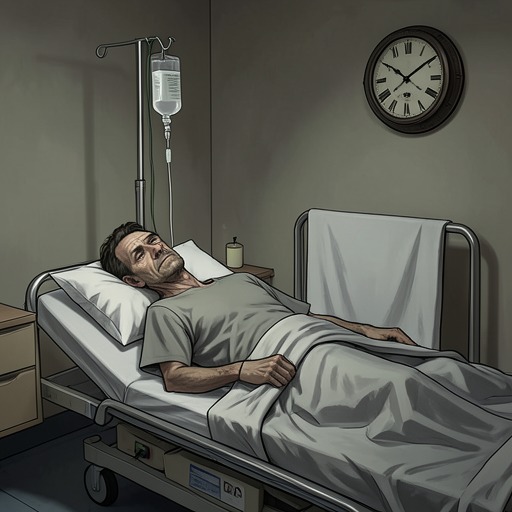
The decision to pursue an extreme diet follows a clinical consultation. Edison’s doctor identifies prediabetes, elevated blood pressure, edema, reduced lung capacity, and increased cancer risk, while warning that continued smoking makes emphysema likely. He considers Edison’s heart stronger than expected but still sees him as a candidate for cardiovascular disease. Pandora asks whether Edison can tolerate a severely restrictive diet; the doctor says probably, with medication available to lower his blood pressure. The program is therefore presented as a response to specific health concerns, but not as a simple or risk-free remedy.
Pandora proposes beginning at five to six hundred calories per day, with a later increase first to eight hundred and then to twelve hundred. She argues that Edison’s size demands an ambitious effort. When she asks the doctor to establish his weight, he looks to Edison for permission; Edison rejects the suggestion that the figure must remain secret. This exchange makes measurement part of the program’s structure while also showing that the number belongs to Edison, not solely to the plan or its organizer.
The regimen’s rules include periods on powdered meal replacements and a required break from the envelopes. After four months, Oliver points out that Edison and Pandora should already have taken at least a week away from them after three months. He insists that Edison will eventually have to return to ordinary eating and learn to manage normal-sized portions. BPSP thus contains a transition built into its design: the aim cannot simply be continued abstinence, but must include the capacity to eat again.
Shared Discipline and Its Rewards
At first, the program gives Pandora and Edison a powerful sense of alliance. Edison becomes less resentful and reports having more energy than when he was overeating. The siblings walk together, using exercise both to stay active and to fill time, and take pride in resisting fast food. Their attention to food does not disappear: they notice the distinctions between cooking oils and condiments, while passing restaurants without buying anything. The restraint turns into a shared identity, as if they possess special powers that set them apart from people still indulging in familiar pleasures.
That sense of superiority sharpens during Christmas. While shopping at Hy-Vee, they pass holiday foods and buy paper towels and packets of aspartame instead. The contrast captures both the regimen’s reach into daily life and its emotional reward: the siblings make ordinary errands into demonstrations of self-control. Yet this triumph depends on a stark division between permitted restraint and forbidden pleasure, a division that will become harder to sustain safely.
Measurement, Shame, and Control
The scale gives the project a public, numerical measure of progress, but its authority extends beyond health. Before her first weigh-in at Prague Porches, Pandora removes her shoes, sweater, pocket change, and comb. The reading is 168. She experiences immediate shame despite reminding herself of her work, her care for her family, and her intention to accompany Edison through a difficult effort. The number feels like a judgment of character, not merely a measurement of body weight.
The episode complicates the program’s promise of objective assessment. Clinical numbers can identify risks and help guide treatment, but Pandora’s response to the scale shows how readily measurement becomes moral verdict. BPSP is not only a calorie schedule: it creates a framework in which success, failure, discipline, and personal worth can become entangled. That pressure helps explain why a regimen with formal limits can still encourage its participants to push beyond them.
Pandora’s Restriction and the Need to Stop
Although the program is designed around Edison, Pandora’s participation becomes independently hazardous. Oliver researches BPSP before she moves into Prague Porches, checking for warnings about the plan. He later confronts her after learning that the pair have continued the powdered regimen beyond its intended schedule. Pandora explains that she could not get Edison to take a break because he was afraid; Oliver counters that the plan requires returning to food, and challenges her idea of perfection as unbroken compliance. In his account, eating what one needs, neither more nor less, is a healthier standard than indefinite abstinence.
The danger becomes clear in Pandora’s response to soup. When Oliver insists she eat, she describes recurrent dreams in which food is taken away or she stops herself from swallowing. Faced with a bowl of soup, she experiences profound anxiety rather than relief at the prospect of breaking the fast. Oliver calls the state medically dangerous and threatens to take her to the hospital if she does not finish. The moment marks a reversal: a program pursued in the name of health has made eating itself frightening for Pandora.
Oliver’s intervention also contests the program’s authority from within the siblings’ circle. He has been a close friend and practical supporter, researching BPSP and worrying that the arrangement may estrange Fletcher, but he does not treat loyalty to Pandora as a reason to endorse the regimen without limit. His concern shifts the emphasis from willpower to safety. The episode does not establish a diagnosis; it shows the concrete warning signs that make continued restriction untenable.
The Six-Month Limit and Return to Food
As the six-month mark approaches, the costs of the all-liquid diet become increasingly visible in Edison. He has grown shorter of breath, developed a tremor in his hands at the piano, and lost concentration at work, where he sometimes sews fabric with its finished side facing out. Although he had seemed stronger earlier in the spring, that improvement has ebbed. Pandora recognizes that living on four envelopes of powder each day cannot continue indefinitely, even as she remains caught between wanting to protect Edison and wanting him not to be alone.
After the difficult bike ride that makes her reconsider the arrangement, Pandora ends the liquid diet on its six-month anniversary. Edison objects that he has not reached his target weight of 163 and asks for a couple more months. She refuses, citing the program’s six-month maximum and his already-missed week of ordinary food. She directs him to begin with soup, soft digestible starch such as overcooked potato, fruit juices, and vegetable purées. Rather than prepare the elaborate vichyssoise she once imagined for a ceremonial first meal, she opens a can of cream of chicken soup. The unceremonious change in menu signals that the immediate priority is not aesthetic reward or a perfect milestone, but ending a regimen that has gone on too long.
BPSP therefore functions as both a structure for mutual support and a test of the limits of discipline. The siblings’ shared resolve gives their effort its early energy, but the program’s numbers and rules cannot by themselves guarantee safety or a durable relationship with food. Its decisive turning point comes when Pandora stops treating continued restriction as proof of success and makes the six-month ceiling binding, even though Edison has not reached his stated target.