Joint Custody years
Big BrotherThe Joint Custody years name the period in which the sitcom’s fictional family became an enduring counterpoint to the Appaloosas’ real one. For Pandora and Edison, the show was not merely part of their father’s celebrity: its characters and storylines gave durable form to childhood memories, sometimes making the television family feel more legible—and more loving—than the family at home.
The Fictional Family and the Real One
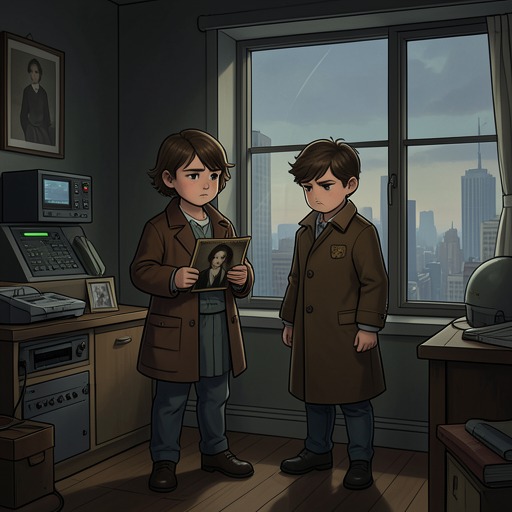
Travis Appaloosa played Emory Fields, a father in a successful television family. Pandora grew up alongside a series of parallels: her father was both Hugh Halfdanarson and Travis Appaloosa, while the sitcom’s Emory was a more successful paterfamilias than the self-absorbed father she saw only occasionally at home. On Wednesday nights for eight years, she watched Maple Fields, a sweeter and more altruistic girl who was always trying to reunite her parents. Maple was played by Floy Newport, a child actor Pandora idolized; at times, Pandora wished the show had continued and the real family had been canceled instead.
The parallels extended to names and identities. Pandora briefly used Appaloosa in college, imagining that if people thought they knew who she was, she might know herself too. But questions about whether she was related to Travis made her feel reduced to a link to her father’s fame. When she moved to Iowa, she resumed Halfdanarson, the family name she regarded as her real one. Her reluctance to discard the show’s past did not mean she wanted celebrity to define her; it reflected how closely the program had become bound up with the childhood she shared with Edison.
Episodes as a Shared Language
The show gave the siblings a common way to revisit what Pandora calls their sick, stupid history. She rarely discussed her childhood with Fletcher, and did not tell him for months that her father had been a television actor. With Edison, by contrast, she could return to a past she neither wanted to rely on for importance nor felt able to abandon. The sitcom’s fictional family was an imperfect, script-enhanced alternative to their own, but its memories belonged to them both.
That shared language remained audible decades later. At two in the morning, Edison began reciting the opening of the theme song, recalling that Emory Fields was a right-on dad; Pandora joined him to see whether she still remembered the lyrics. The late-night singing made the old television script a form of sibling contact, an almost bodily memory that had persisted long after the episodes themselves. Pandora reflects that the song had been carved into her mind so deeply it might be among the last memories to erode.
The Show’s Stories Reframed in Adult Life
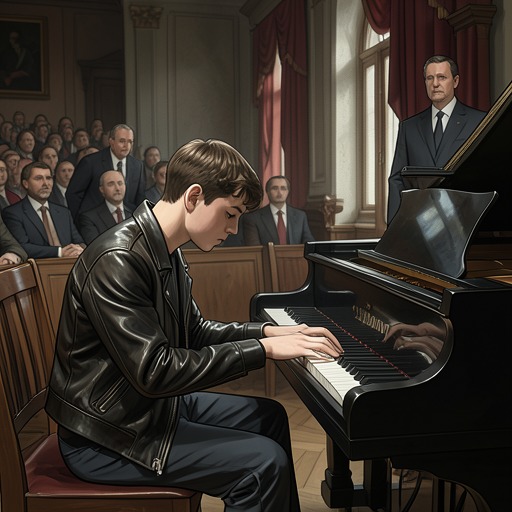
When Edison left home for New York at seventeen to pursue jazz, Pandora experienced his departure as the loss of her remaining ally after their mother’s death. The sitcom supplied a close fictional echo: Maple’s older brother Caleb also left to become a jazz pianist, though the show sent him to Seattle and kept him available to advise his sister. Edison’s real departure was more absolute. He left for Manhattan with a backpack, cassettes, and no place to live, and Pandora later understood that the fictional version had softened the separation she had actually endured.
Years later, as Edison prepared to leave again, Pandora recognized the old feeling of being caught between loyalties in the show’s custody plot. Maple, who had spent years controlling information, faced the prospect of testifying about confidences shared by her father; Pandora, with Edison in the guest room and Fletcher awake down the hall, felt similarly divided between her brother and her husband. The memory did not simply explain her present distress: it made her wary of using a television character to interpret her emotions, even as the resemblance was difficult to resist.
The show also colored adult family tensions. When Edison and Pandora stayed up talking and woke Fletcher, his entrance recalled Travis interrupting the children in their Tujunga Hills kitchen. As children, they would turn to homework or silently load the dishwasher until their father left. Now Pandora felt that she and Edison had recreated that old social arrangement, placing Fletcher outside their conversation. The remembered scene helped her name the conflict as more than a late-night disturbance: their sibling intimacy was altering the geometry of her marriage.
Memory, Image, and Family Conflict
The sitcom’s afterlife was not limited to remembered episodes. Fletcher emailed Travis a photograph of Edison for Pandora’s birthday, and Edison confronted Fletcher over the image, which exposed his changed body to their father. The photograph turned private family knowledge into something Travis could see and judge. In another call, Travis dismissed Edison’s progress and launched into a complaint about a television premise, a jarring contrast between his attention to fictional characters and his lack of evident delight in his son’s news.
For Pandora, then, the Joint Custody years endure as both a source of consolation and a measure of absence. The program offered siblings a shared archive: a theme song they could still sing, fictional children whose troubles shadowed their own, and a script through which old separations and present conflicts could be recognized. Yet its idealized family could not repair the real one. Its significance lies in that unresolved double vision—the television household as a refuge and a distortion, remembered fondly but never mistaken for home.