Pandora and Fletcher’s Marriage
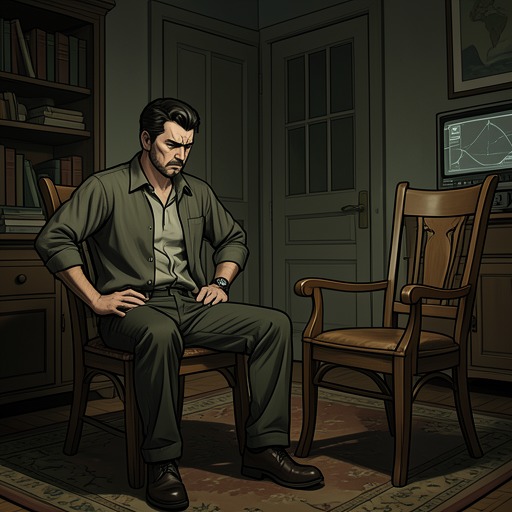
Big BrotherPandora and Fletcher’s Marriage is tested when Pandora makes her brother Edison’s needs the center of her life, leaving Fletcher to experience her long absence as a choice against their marriage. The conflict is not simply about how long she will be away: it exposes a familiar family arrangement in which Pandora and Edison close ranks while her husband is left outside. Fletcher’s decision to seek a divorce makes that imbalance explicit, but his later request that Pandora come home shows that separation has not ended the relationship.
Marriage Under Strain
Pandora recognizes that her closeness with Edison repeats an arrangement from childhood. When Fletcher enters the room while she and Edison are talking, she feels she has reversed the expected order: as husband and wife, she and Fletcher were meant to spend time together, while her brother’s arrival should have interrupted their conversation. The old family geometry, once organized around their father’s presence, now places Fletcher in the position of the person who has walked into a sibling bond already in progress.
The strain becomes part of ordinary domestic life. Pandora anticipates Edison’s departure for a tour of Portugal and Spain partly because she is tired of being caught between her brother and her husband. After work, she must decide whether to stay upstairs with Edison or go down to greet Fletcher in the basement. Fletcher’s attention is absorbed by his woodworking; when he emerges to make dinner, Edison often occupies the conversation with jazz anecdotes. The difficulty is not a single quarrel but the repeated displacement of the couple’s time by the household’s new arrangement.
Fletcher also objects to the way Edison’s dependence draws on the wider family. He tells Pandora that Edison benefits from Cody’s kindness but is using it up, and questions what Cody receives in return. Pandora points to piano lessons and the chance to practise compassion; Fletcher counters that this may be pity rather than help. Their disagreement over Cody reveals a larger difference in how they understand care: Pandora sees kindness as a meaningful form of support, while Fletcher fears that the family’s generosity enables Edison without improving his circumstances.
The Year Apart
Pandora’s extended commitment to Edison turns a domestic disagreement into a marital rupture. Fletcher recalls that she left him and the family for six months, while the arrangement had in practice become a year. He emphasizes that choices have consequences and tells her that feelings change through cause and effect. His controlled manner gives the confrontation particular weight: the dispute has moved beyond negotiating Edison’s place in the household to judging what Pandora’s absence has done to their marriage.
Fletcher finally states that he wants a divorce. He says Pandora has tried to have both her marriage and her chosen role alongside Edison, and insists that she has made her choice. He also makes clear that his children will remain with him. The ultimatum changes the terms of Pandora’s caregiving project: she is no longer simply away from home while helping her brother, but separated from her husband and facing the possibility that the marriage will formally end.
The separation persists through the summer of the Cedar Rapids flood relief effort. Fletcher remains silent from the house on Solomon Drive, and he does not acknowledge their July anniversary, not even by text. Pandora lives with the daily fear that a bailiff will arrive with divorce papers. Cody continues visiting Pandora and accompanying her and Edison to the movies; despite Pandora’s attempts to discourage her from carrying messages about her father, Cody acts as a go-between. The separation therefore reshapes the family beyond the couple themselves, drawing a fourteen-year-old into the communication gap between her parents.
Family Boundaries and Conflict
Pandora’s sister Solstice accuses her of keeping Edison’s troubles from the family and preventing others from reaching out. Pandora answers that Edison deserves privacy and that she did not want to broadcast his weight problem. Solstice calls the problem severe and says she, too, is Edison’s sister. Pandora refuses responsibility for managing their relationship and tells Solstice that nothing prevents her from contacting him herself. This confrontation clarifies Pandora’s role as an information intermediary: her protection of Edison also controls who knows what, intensifying the conflict over who has a claim to care for him.
Fletcher’s complaint that Pandora may return and report his words inaccurately shows how little trust remains in the family’s communications. He knows the siblings’ habits, he says, and does not want their private conflict retold with him cast as the villain. His decision to speak in front of Edison rather than preserve the argument as a private exchange between spouses makes the sibling bond itself part of the marital dispute. The marriage is caught in a triangle: Pandora mediates between husband and brother, while Fletcher sees that mediation as evidence that she has ceased to recognize the couple’s shared business.
Return and Unresolved Reconciliation
At the end of the year Pandora has been away, Fletcher asks her to come home. He acknowledges that he had asked before she was ready, and says that part of what has changed is that the year is over. He also explains that he had believed Pandora’s family had ruined Tanner, their only son, but has reconsidered. His request links the possibility of return both to time elapsed and to a change in his view of the family that had come between them.
Their renewed closeness is conveyed through a simple gesture: Fletcher reaches for Pandora’s hand, and she registers the difference between his touch and Edison’s. They kiss fully clothed in Pandora’s bedroom. The scene establishes that Fletcher is still her legal husband and that the separation has not erased their intimacy, but it does not by itself settle the future of the marriage. Edison interrupts to tell them that two guests are leaving; when Pandora and Fletcher emerge more than an hour later, the gathering has largely dispersed and the speakers are silent. The reunion therefore occurs inside a family celebration that continues around them, while its interruption and aftermath leave the reconciliation personal and unfinished.
Significance
The marriage’s central conflict is a contest over boundaries, not a simple opposition between affection and indifference. Pandora’s care for Edison is sincere, yet her own account shows how easily the sibling bond recreates an earlier family arrangement at Fletcher’s expense. Fletcher’s demand that she choose makes the cost of that arrangement unavoidable; his later invitation home, in turn, prevents the separation from becoming a final answer.
The year apart also gives the relationship a structure of delayed consequence. Fletcher warns that feelings change through cause and effect, and the months of silence make his warning concrete: an anniversary goes unacknowledged, divorce papers seem imminent, and Cody becomes a messenger between parents. When Fletcher asks Pandora to return, the passage of the promised year becomes a condition for renewed intimacy rather than proof that the original conflict has disappeared. The marriage remains defined by the unresolved work of balancing sibling loyalty, parental ties, and obligations between spouses.