Tanner leaves home for California
Big BrotherTanner’s departure for California is a flight from school and from the ordinary path to adulthood, but not a settled break with his family: he leaves without warning, seeks shelter with his grandfather, and receives a practical route into television work through Pandora. The episode tests the family’s competing ideas of exceptional promise and earned experience, then appears again in the book’s ending with an important qualification: Tanner’s return and eventual HBO job are true, but the broader redemptive story surrounding the family is largely the narrator’s invention.
Causes and Departure
Tanner’s flight is preceded by conflict over his ambitions and his education. Earlier, when Edison Appaloosa encouraged him to consider television rather than feature films, Edison offered to connect him with people in the industry, including a friend at HBO. Pandora worried that Tanner’s expectations were already unrealistic and did not want them reinforced. His departure makes that concern newly consequential: rather than finish school and gradually pursue the work, Tanner leaves before graduation and heads toward California.
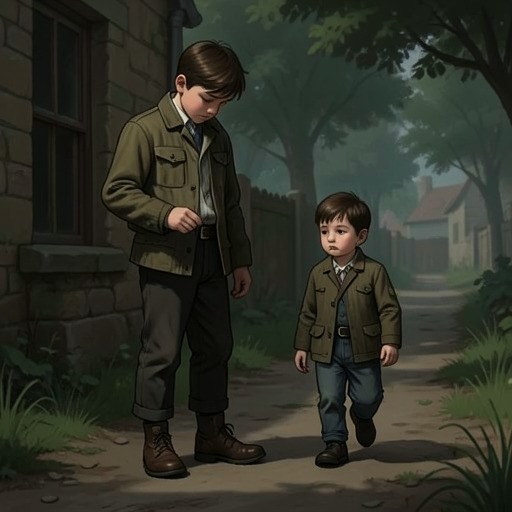
Fletcher tells Pandora that Tanner has quit school with only two months remaining. The decision is deliberate, Fletcher says: Tanner would rather escape just before becoming an ordinary high-school graduate. Two days later, while Fletcher is downstairs working on a rush commission, Tanner packs his computer and favorite T-shirts and goes. He leaves no note and leaves his cell phone behind, preventing Fletcher from contacting or tracking him. None of Tanner’s friends has heard from him. The missing phone makes the departure more than an impulsive announcement; it is an effort to make himself unreachable.
Fletcher concludes that Tanner has gone to California, comparing the choice to the path taken by Pandora’s father, Travis Appaloosa. Tanner has failed American History, along with his other courses, and Fletcher believes the family’s own past has supplied the model he has followed. Before leaving, Tanner has begun calling himself Tanner Appaloosa, rejecting Feuerbach as insufficiently commercial. His borrowed name and destination link his attempted reinvention to the television family and public identity that shaped Pandora’s childhood.
Shelter and Family Negotiation
Tanner eventually arrives at Travis’s home and stays there. Travis tells Pandora that he has not turned the homeless boy away, though his description of Tanner is hardly celebratory: he calls him cocky and complains that the food costs are adding up. He has been paying for meals at Taco Bell and In-N-Out Burger and is auctioning television memorabilia online, including props from Joint Custody, because he needs money. Tanner’s flight therefore does not take him straight into independence; it leaves him dependent on a grandfather whose hospitality is real but financially strained.
Pandora responds by turning that strained arrangement into a possible exchange. She proposes that Tanner help Travis sort his papers, collect old fan mail, arrange scripts, and assemble material for the memoir Travis has long wanted to write. She suggests that Tanner could also improve his grandfather’s website and gather memories from producers and actors who worked on Joint Custody. The proposal redirects Tanner’s ambition from an imagined leap into a screenwriting career toward the less glamorous work of researching and organizing one.
Pandora sends Travis a check and asks to speak with Tanner. She presents the work as an internship: he should learn the television business from someone who knows it, meet Travis’s contacts, and take the assignment seriously. The terms are deliberately unromantic—an intern works hard and long hours without pay, receiving experience instead. Tanner answers that this is what he had in mind, though Pandora’s account makes clear that he has been made to take the call. Her intervention neither endorses his disappearance nor simply orders him home; it makes his chosen destination answerable to work.
Ambition, Inheritance, and Work
The episode draws force from the contrast between Tanner’s claim to a special future and the labor needed to enter a profession. Pandora recognizes in him a version of Edison’s earlier self-confidence. Edison’s first major breaks had come when he was around twenty, and he had treated early success as proof that he belonged among the exceptional. Pandora reflects that real work—her own years running Breadbasket, for example—had taught her to notice the effort of deliverymen, bakers, and postal workers, whose labor attracted no declaration that they were special. Tanner’s departure puts that critique into action: access to television is not the same as readiness for it.
Travis’s connection to the family’s television history is both an inherited resource and a source of distortion. Pandora grew up with the discrepancy between her father, Hugh Halfdanarson, and his television persona, Travis Appaloosa, who played Emory Fields, an idealized father in Joint Custody. The program’s fictional daughter, Maple Fields, offered Pandora an idealized counterpart as well. The family’s screen history gives Tanner a recognizable model for imagining a future in California, but it also encourages him to treat a famous surname and proximity to the industry as shortcuts. Pandora’s proposed internship uses the same history differently: scripts, fan mail, interviews, and professional contacts become material to work on rather than evidence of automatic distinction.
Return and Retrospective Qualification
The book’s closing account separates what happened to Tanner from the narrator’s more elaborate imagined resolution. Tanner did undertake a prolonged, largely unpleasant informal internship with Travis. He returned to Iowa and finished high school; after graduating, he followed up on an old contact from Edison and became a runner for HBO. These details confirm that the California episode did not end with permanent estrangement or a simple triumph achieved by skipping school. Tanner’s route toward the industry included a return to the qualification he had tried to evade and a later opportunity connected to Edison’s network.
That confirmation appears within a broader act of coming clean, as Pandora admits that much of the story she has told herself about Edison’s transformation is not true. She identifies Tanner’s internship, return, graduation, and HBO job as facts, while acknowledging that other parts of her account are invention or wishful explanation. The distinction changes the meaning of the runaway episode: the family can help Tanner find a workable next step, but the narrator cannot make that help prove that every person in the family has been transformed. Tanner’s departure remains a genuine crisis in school, safety, and family responsibility; its eventual outcome is narrower, and more credible, than a complete redemption.