Travis Appaloosa
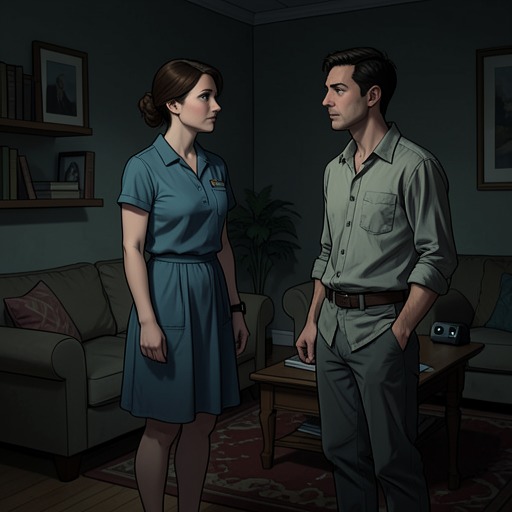
Big BrotherTravis Appaloosa is the stage name of Hugh Halfdanarson, the father of Pandora and Edison and a former television star best known for playing Emory Fields on the successful sitcom Joint Custody. To his children he is at once a source of shared childhood memory, a vain and unreliable parent, and a man whose old public identity persists long after the attention and opportunities that sustained it have faded. The distance between his screen image and his family life gives the sitcom’s remembered ideal of fatherhood a complicated, enduring place in the siblings’ lives.
Identity and television career
Travis assumed his stage name when Pandora was six and Edison nine. The name struck his children as artificial, and they continued to call him Travis with an affectionate, skeptical edge. Yet the name acquired a kind of naturalness through repetition: from 1974 to 1982, Joint Custody made Travis Appaloosa a familiar presence in American homes, just as Hugh Halfdanarson had hoped. His screen role as Emory Fields, a father more successful at family life than the man his children knew at home, would become one of the central distortions through which Pandora understood her childhood.
His casting reflected a quality he himself did not particularly value. Travis had auditioned for Apple’s Way, a series about a father leaving Los Angeles for his hometown in Iowa, but the producers thought he lacked the fish-out-of-water quality they wanted. In Iowa, they felt, he fit right in. The casting director’s interest was in his wholesome, farm-stock presence: Travis could perform that quality, but Hugh possessed it. This distinction briefly softened Pandora’s view of him when she saw him in old episodes. Watching her parents as younger people made them seem less like authorities and more like ordinary, lost adults without special access to truth or justice. For a moment, she felt that she and Edison might have judged their father too harshly.
A family shaped by the sitcom
Pandora’s childhood was crowded with doubles. Her father Hugh played Travis Appaloosa, who played Emory Fields, a fictional father more capable of being a paterfamilias than the self-absorbed man she saw at home. Pandora herself could use either Halfdanarson or Appaloosa, while the sitcom’s Maple Fields offered a sweeter, more altruistic counterpart to her onscreen. The actress who played Maple, Floy Newport, became someone Pandora idolized. At times, the child wished the show would continue and the real family would be canceled instead.
That screen family was not simply a source of embarrassment. Pandora still valued Joint Custody for its portrayal of siblings as inhabiting a world of their own, while their parents misunderstood the children’s strongest loyalty to one another. The siblings could mock their father’s show together, but external ridicule felt different. When Tanner and Cody called its sets and performances lame after Pandora bought all eight seasons on DVD, she tried to join their laughter, then put the discs away before the first season was over. The old program preserved a shared history she did not want to depend on for a sense of importance, but could not entirely abandon.
The theme song remained another durable piece of that history. Late one night, Edison began singing its opening line in a deep, robust voice, and Pandora joined in to see whether she still remembered the lyrics. She reflected that such memorized words could outlast much else, imagining the song as the last memory to erode in a nursing home. The sitcom was both an object of sibling ridicule and a private language through which the two could still reach their childhood.
Parenting and the persistence of attention
The siblings’ relationships with Travis were uneven. Edison spoke to their father about once a year and reported that Travis resented Pandora’s success with her toy company, Baby Monotonous, dismissing it as her “doll babies.” Pandora, by contrast, usually called about once a month, partly because the dutiful calls helped her feel less guilty about leaving their father’s care to Solstice, who lived nearby. Travis rarely asked much about Pandora’s life. His questions, when they came, were cursory; conversation soon returned to his own stalled career and disappointments.
Travis remained preoccupied with the entertainment industry and with the recognition he felt he deserved. When Pandora spoke with him, he could dwell on the decline of his endorsements, including the medical-truss company Ab-Sure, which had been the last to drop him. He complained that television stars now earned nearly as much as Hollywood actors, unlike the “chump change” he claimed to have made. His talk also implied that the money was already spent, leaving little inheritance for his children. The complaints presented both his sense of having been overlooked and the practical consequences of a career whose returns had not endured.
His assessments of newer television revealed the same attachment to his own standards and former standing. In a call before Edison left Pandora’s home, Travis criticized Mad Men for its period details, its use of Christina Hendricks, and its familiar story of a man with a past. He preferred The Fugitive. Later, when he called to ask whether Edison was avoiding Fritos, he ignored Pandora’s account of her brother’s improved health and renewed piano practice long enough to denounce Breaking Bad. He found the premise of a timid chemistry teacher becoming a drug dealer implausible and predicted the show would not get a second season. His impatience with other people’s success and his eagerness to pronounce on television kept his own thwarted ambitions close to the surface.
Family entanglements and late life
Travis’s bond with Edison could be painful even when it was distant. After Fletcher emailed him a photograph of Edison, Travis’s remark that his son was “a human parade float” caused Edison to feel humiliated. He protested that Travis was still his father, regardless of how badly he behaved, and blamed Fletcher for sending the image. The incident made plain that Edison’s attachment had survived years of limited contact: an insult from his father mattered precisely because the relationship still mattered.
In later life Travis took in Tanner, who arrived at his door homeless and asked for his hospitality. Travis described the teenager as a cocky waif, but he had not turned him away. He also complained that Tanner expected a family discount for learning the media trade from him, while expenses mounted and a proposed sale of Joint Custody memorabilia, including Caleb Fields’s sheet music, appeared to be going nowhere. Pandora suggested that Travis put Tanner to work sorting papers, arranging old fan mail and scripts, and researching a memoir. She offered to send money and asked to speak with her son, encouraging him to treat the stay as an internship and to learn seriously from his grandfather. Even in this late arrangement, Travis’s hopes of renewed professional relevance and the family’s practical support remained entangled.
Death and narrative significance
Travis died of a fatal stroke. His death hit Edison harder than Pandora expected, and a photograph she had emailed their father became a source of painful consolation. Taken as Edison approached his Coming of Size celebration, the image showed him lean, eager, and luminous. Pandora was relieved that Travis’s last portrait of his firstborn was not the humiliating image that had caused the earlier quarrel. She had called this captured quality the “essence of Edison”; after Travis’s death, the framed photograph remained on the wall of her study, where she continued to contemplate it with complicated sorrow.
Travis’s significance rests in the contrast between performance and inheritance. Joint Custody gave his children an idealized father and a lasting language for their shared past, while their actual father often directed attention back to himself and struggled to sustain his former importance. Yet Pandora’s recollections resist reducing him to either the sitcom star or the disappointing parent: seeing him young, remembering the family’s private jokes, and keeping the photograph sent before his death all complicate the distance between his public image and the father his children could not simply discard.