Travis Appaloosa–Joy Markle affair
Big BrotherThe Travis Appaloosa–Joy Markle affair is both an act of infidelity and a fracture in the family’s shared story about its past. Travis’s relationship with his Joint Custody costar becomes public after Magnolia Halfdanarson’s death, but Pandora Halfdanarson and Edison Appaloosa disagree about when they understood what was happening. The affair’s intimate consequences spill into the television family they performed, the siblings’ trust in one another, and the conflicts that later gather around Edison’s place in Pandora’s home.
Beginning and disclosure
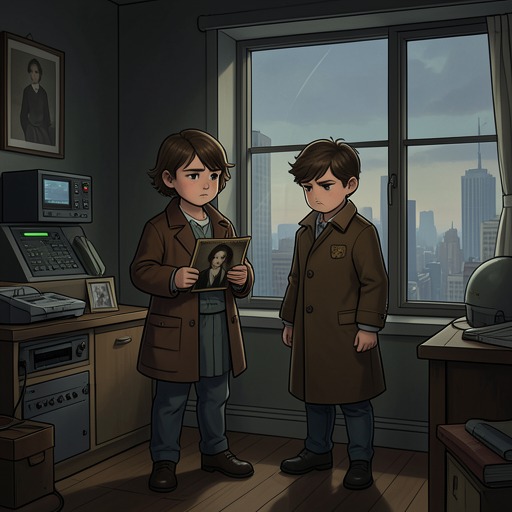
When Pandora was thirteen, she came home from school to find Joy waiting to tell her that something was wrong with Magnolia. The choice of messenger carried an unmistakable, uncomfortable implication: the woman who played the children’s television mother was now standing where their real mother’s family might have expected someone else to be. Joy’s appearance sharpened the moment’s theatrical quality. Her hair, no longer arranged in the bun she wore as Mimi, and her low-cut scarlet dress seemed to Pandora like an overdrawn performance; Joy knelt to speak to her as though the child needed to be pitied. Travis was at the hospital, emotionally affected despite the contrast between years of professionally performed feeling and the inarticulate distress of an actual family crisis.
The affair became open after Magnolia’s death. Pandora remembers that neither she nor Edison knew about it until Travis began seeing Joy publicly; Edison maintained that he had understood for years that his father and Joy were involved. The discrepancy matters to Pandora less as a question of who was more perceptive than as a question of whether Edison had kept the secret from her. If he knew and did not tell her, the concealment would have made their closeness feel less mutual. Their different accounts leave the affair’s hidden history unresolved, making uncertainty itself part of its effect on the siblings.
Joint Custody and the family’s competing memories
The television routine gave the affair a domestic counterpoint. Pandora recalls that the family never missed Joint Custody: on Wednesday nights, she and Edison pretended they had forgotten or had something else to do, yet they still ended up watching at nine. Travis watched with them. In retrospect, Edison identifies his father’s stopping as the “tip-off” that he had started up with Joy. The siblings thus remember the show not only as entertainment but as a weekly family practice whose small changes could be read as evidence of an adult relationship.
Their memories also divide over Magnolia’s response to Travis’s career. Pandora suggests that her mother’s frequent headaches and limited interest in the show may have left Travis feeling snubbed. Edison answers that Magnolia hated the program, what stardom had done to Travis, Los Angeles, and the people with whom Travis surrounded himself. He frames her own singing ambition as having been run over by the life that followed Travis’s success. Pandora’s thought that Magnolia’s death might itself be a metaphor acknowledges the cost of that history, while Edison’s recollection of Magnolia Blossoms—the vanity record he says he took from Travis—keeps her unrealized musical life in view. He doubts that her fragile voice could have sustained a professional career, but the record remains evidence that she had wanted one.
Fallout onstage and at home
Travis and Joy did not last. Pandora describes their affair as dependent on Magnolia’s presence in a way that made its show-business mischief more exciting; once there was no one left to betray, the arrangement lost its prior structure. Its ending did not simply erase what had happened. Pandora says that the pair’s later falling-out introduced genuine acrimony into their portrayals of Emory and Mimi, making Joint Custody’s last two seasons the series’ best. The private rupture therefore altered the texture of the public performance: acting out a family conflict became more compelling when the performers themselves had acquired a real grievance.
The affair’s family history also shapes how intimacy and loyalty are understood after Magnolia’s death. Pandora remembers the childhood closeness she shared with Edison as a fierce mutual attachment that her husband, Fletcher Feuerbach, resented. She does not initially believe being a devoted sister need diminish her devotion as a wife, and she sees the sibling bond as a relationship with its own alliances, secrets, and rules. That history helps explain why Edison’s possible silence about Travis and Joy would trouble her: withholding the truth would not be a minor omission but a breach within the very intimacy she values.
Later echoes of the family triangle
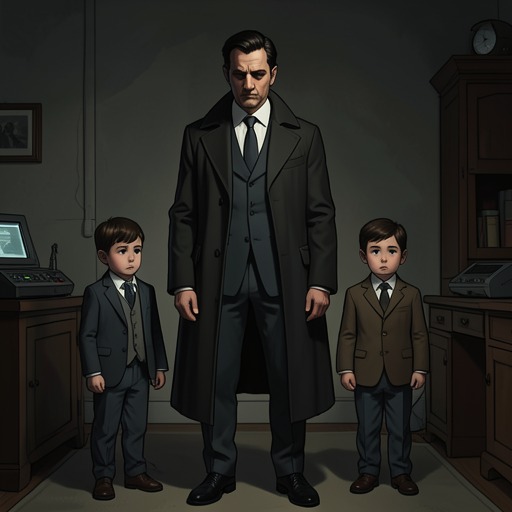
Years later, Edison’s presence in Pandora and Fletcher’s household recreates, in altered form, the feeling of being caught between a spouse and a sibling. When Fletcher comes upstairs and finds Pandora and Edison talking late, Pandora is reminded of Travis’s entrance into the family kitchen when she and Edison were children: they would turn to homework or the dishwasher and wait for their father to leave. She recognizes that the old arrangement has reappeared, now with her husband occupying the position her father once held. Her concern about Edison’s eventual departure for a tour of Portugal and Spain is largely a wish to escape this divided domestic attention.
Fletcher eventually makes the conflict explicit in front of Edison. He says that Pandora has demonstrated who matters most to her and objects to having their private business exposed before her brother, whom he suspects will carry the conversation back to her in a distorted form. Then he tells Pandora he wants a divorce. This later marital crisis is not the Travis–Joy affair repeated: the relationships and circumstances differ. But Fletcher’s accusation that Pandora’s sibling allegiance has displaced their marriage echoes the earlier household’s difficulty in keeping marital loyalty, family intimacy, and private information within separate boundaries.
Significance
The affair’s narrative force lies partly in what the siblings cannot settle. Edison claims earlier knowledge; Pandora remembers a later discovery and fears that he may have kept her outside the truth. Their disagreement preserves the limits of each person’s version rather than supplying a single authoritative account. The affair is also bound to performance at two levels: Travis’s work on Joint Custody, where family life is acted, and the children’s learned habit of reading entrances, absences, and Wednesday-night routines as signs of what their parents will not say.
Its consequences persist beyond the couple. Magnolia’s disapproval of the television career, the unrealized ambition represented by her record, Travis’s public relationship with Joy, and the siblings’ conflicting memories all become parts of a family history that cannot be reduced to the affair alone. The breakup adds authentic bitterness to the sitcom even as the original family arrangement has already been irreversibly changed. Later, when Pandora’s marriage comes under pressure from her closeness to Edison, the earlier story supplies a pattern of divided loyalties—not a simple cause, but a reminder that intimacy in this family repeatedly becomes a question of who is included, who is left out, and who is expected to keep the secret.