Travis Appaloosa–Magnolia Halfdanarson marriage
Big BrotherTravis Appaloosa and Magnolia Halfdanarson’s marriage joined an ambitious television actor to a woman whose Midwestern sense of home never sat easily with his Hollywood life. Its fracture became inseparable from the fictional family of Joint Custody: Travis’s costar Joy Markle was also his lover, and after Magnolia’s death the children could not agree on what Travis had known, what their mother had suffered, or what her death meant. The narrator’s effort to distinguish fact from belief makes the marriage less a settled backstory than a continuing source of family conflict and competing memory.
Background and Public Life
Magnolia came from Oberlin and a solid, formerly industrial family; her father edited the local newspaper for decades. She met Hugh, who would take the name Travis Appaloosa, at a regional horse show in Dubuque. The narrator doubts Magnolia expected his acting ambitions to last, imagining that she may have assumed he would eventually return to his parents’ farm. A life organized around rural routines and long-awaited rain might have suited her better than the celebrity world he entered.
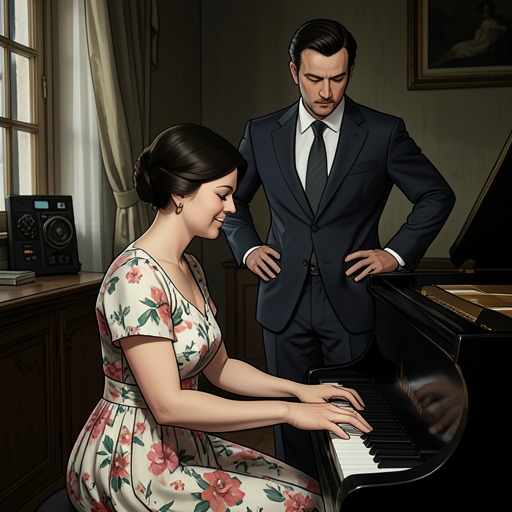
As Joint Custody became successful, the gap between that imagined life and their actual one widened. At parties in Los Angeles, Magnolia felt out of place: she once confided that she waited out drunken gatherings in a locked bathroom while revelers knocked on the door before giving up. She detested Travis’s pompous, self-promoting friends and privately wept whenever the show was renewed. In public she used Appaloosa to humor her husband, but her checkbooks kept the surname of the man she thought she had married. That small division between public accommodation and private identity captures a marriage whose shared name and television image concealed a growing estrangement.
The Affair and the Children’s Accounts
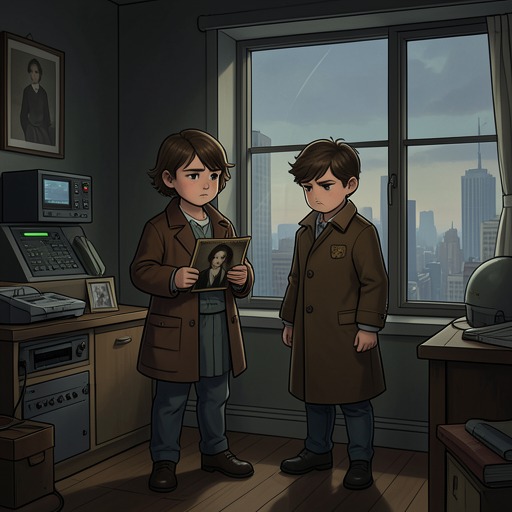
When the narrator was thirteen, she came home from school to find Joy waiting to tell her something. In retrospect, the choice of Travis’s costar to break the news carried an especially cruel implication: the television mother seemed to be taking the place of the real one. Joy, who played Mimi on the show, appeared in a low-cut scarlet dress and stooped to speak to the girl; the narrator read the gesture as melodramatic before she even understood what was wrong. Travis was at the hospital, visibly affected, his practiced gestures of emotion overtaken by the inarticulate force of actual feeling.
The siblings later held incompatible accounts of when they learned Travis and Joy were having an affair. Edison insisted he had known for years; the narrator believed neither of them knew until Travis began seeing Joy openly after Magnolia’s death. The difference mattered to her not simply as a question of who had been more perceptive. If Edison had known all along, she could not bear the possibility that he had kept the secret from her. Their disagreement thus placed sibling trust inside the larger wreckage of the marriage: what one child called knowledge, another experienced as possible betrayal.
The affair did not last. The narrator reflects that it had depended, in part, on Magnolia’s presence as the supposedly credulous wife in the familiar show-business arrangement; without her, the affair lost the structure that had made it exciting to its participants. Travis and Joy later fell out. Their real acrimony nevertheless sharpened their performances as Emory and Mimi, and the narrator considers the show’s last two seasons its best. The irony is stark: the marriage’s damage became dramatic material, improving the fictional couple even as it helped destroy the real one.
Magnolia’s Death and the Family’s Explanations
The narrator recalls Magnolia’s death with striking literalness: her mother was standing at the intersection of Foothill Boulevard and Woodland Avenue and stepped off the curb; a UPS truck passed a fraction of a second later. That is the account she trusts. She does not regard her mother’s death as suicide, nor does she see natural causes as a narratively inadequate explanation that must be replaced by a more dramatic one.
Edison tells a different story. He believes Magnolia saw the truck and deliberately gave herself up to its bumper, making her death an act of despair over Travis’s betrayal. The theory converts the mother’s death into an accusation against their father and fits Edison’s longstanding conviction that Travis was an asshole. The narrator understands the emotional appeal: after a death, a moral explanation can seem to rescue grief from being only loss. But she insists that facts and beliefs are not the same, and that people reshape what happened to give it a more satisfying form. Her reconstruction leaves open what Magnolia knew about the affair, while refusing to treat suspicion as proof.
Magnolia may have been depressed, the narrator considers, and her condition may have worsened after Solstice was born. But the daughter remembers not knowing how to judge a mother who slept through whole afternoons: she could not tell whether this was a sign of depression or a comprehensible response to a painful life. The narrator likewise thinks Magnolia probably knew Travis was cheating, without claiming certainty. This qualified account resists both the easy image of an oblivious wife and Edison’s more definite story of a deliberate suicide.
Family Memory and Lasting Consequences
For the narrator, Magnolia remains a touchstone of authenticity, and her move to the Midwest becomes a kind of homage. That attachment coexists with the knowledge that her mother’s life in Los Angeles was lonely and constrained, and that the children inherited no single, uncontested version of the marriage. Edison’s accusation-centered memory and the narrator’s insistence on uncertainty are not merely different judgments of Travis; they are different ways of making a mother’s death bearable.
The marriage also echoes through the siblings’ later intimacy. The narrator recalls that she and Edison used their parents as weapons in the more central relationship between the two of them, and that their childhood closeness could make her husband, Fletcher, resentful. When Edison stayed with her, an ordinary late-night conversation could reproduce the old family geometry: Fletcher entered, and the siblings felt as though they should stop talking, just as they had once fallen silent when Travis came into the kitchen. Magnolia and Travis’s marriage therefore persists beyond the affair and death as part of the children’s inherited pattern of loyalty, secrecy, and divided attention. The fictional family on television could be replayed and improved by private resentment; the real family had to live with memories that could not be made to agree.