George
Bird BoxGeorge, the former owner of the house that becomes a refuge, is remembered as a generous host and an inventive, restless thinker. His attempt to learn whether film could make it safe to see the creatures ends in his death. The failed experiment haunts the shelter’s later history: it gives the danger a personal precedent, and makes Malorie recognize in Tom a man capable of repeating George’s fatal determination.
Identity and Place in the House
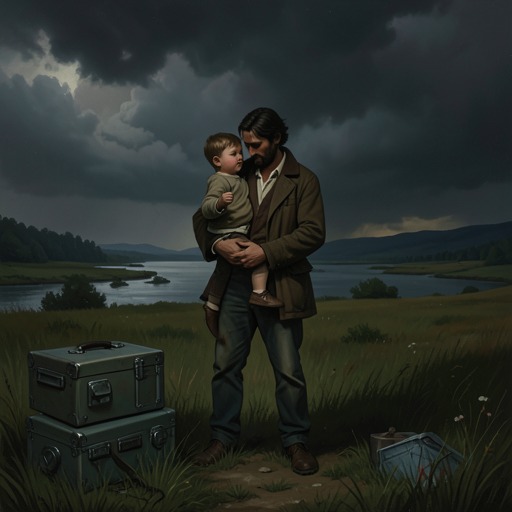
George owned the house before the survivors gathered there. Tom tells Malorie that he was the first person to answer the newspaper advertisement George placed, at a time when fear was already driving people to lock their doors. Rather than close his home against strangers, George invited them in. Tom remembers him as generous and progressive, someone who continually offered ideas and wanted the group to find a way to confront the new danger.
George’s presence persists in the shelter even after his death. The house is not merely a place where survivors happen to live: it was George’s home, the site of his experiments, and the repository of belongings he left behind. When Malorie eventually enters the attic, she sees boxes of his things among the blankets, old books, old clothes, and plastic parts. The covered attic window shows that even a room hardly used is subject to the shelter’s rules of concealment, while George’s stored possessions make the danger’s history tangible within the protected space.
The Search for Indirect Vision
George’s central idea was that the creatures might be observed without being seen directly. If sight itself was dangerous, Tom recalls him wondering whether the survivors could alter their line of sight with refracted glass, lenses, telescopes, or binoculars. George was not content to leave the question as speculation. He wanted the group to test possible ways of seeing, treating experimentation as a practical response to a threat they did not understand.
He eventually made a recording with an old VHS video camera. Without telling the others, he set it behind a blanket hanging in the dining room. Tom describes waking first one morning to find George asleep on the floor there; when George heard him, he hurried to the camera and announced that he had recorded five hours of footage. He believed the film might contain a cure: if indirect vision could capture the creatures without exposing the viewer to them directly, the recording might reveal a way to survive.
Tom was skeptical. He doubted that the five-hour recording was likely to have captured anything, and he thought watching it was a bad idea. George nevertheless presented a plan to the household: one of the others would tie him to a chair in an upstairs bedroom while he watched the footage. Being restrained, he reasoned, would prevent him from harming himself if the experiment went wrong. His proposal placed the group in a conflict between the hope of learning something and the possibility that an experiment could endanger everyone.
Conflict, Consent, and Death
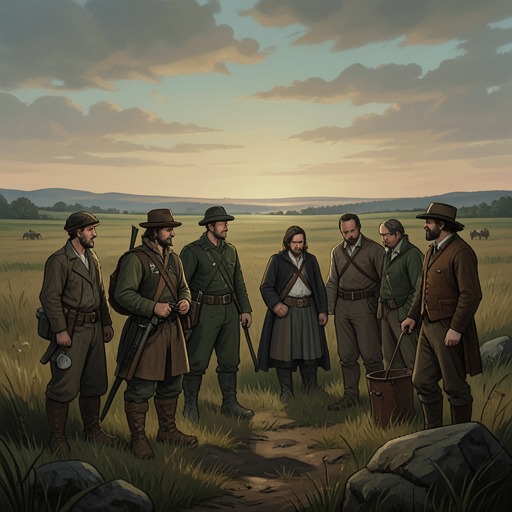
Don objected strongly. He argued that George was a danger to the household, that nobody knew what they were dealing with, and that if George suffered harm, the consequences could extend to the rest of them. Felix and Tom were not opposed, however, and the group voted; Don alone resisted. He threatened to leave, but the others talked him out of it. George finally insisted that he did not need permission to act in his own house, and Tom agreed to tie him to the chair.
The incident becomes the household’s clearest early account of what happens when someone sees one of the creatures. Tom later tells Malorie that George saw one just before he died. The revelation gives the abstract warning a human history: the owner who had opened his home to strangers and tried to solve the crisis became one of its victims. Tom tells Malorie he will explain George’s story, while also describing the radio reports as evidence that something living is causing the catastrophe and that even a moment of seeing it may be enough.
Aftermath and Narrative Significance
George’s experiment remains a point of reference long after the household has moved beyond its first attempts to understand the threat. When Gary arrives, Tom explains the shelter’s circumstances, including how George died. Later, as Malorie considers the risks Tom and the others take, she recalls the video and concludes that Tom is much like George. She also thinks that Tom idolized him. The comparison makes George more than a lost predecessor: his example shapes how Malorie reads Tom’s courage, and how she fears that courage may repeat an earlier disaster.
At the end of the novel’s journey, George’s failure returns in a changed setting. At Tucker, Rick explains that the community once blinded themselves with whatever was at hand—forks, kitchen knives, even their fingers—because blindness seemed the absolute protection. They later fortified the place and abandoned that burden. Hearing this, Malorie thinks of George and his failed experiments, and remembers that she nearly blinded her own children in desperation. The contrast links George’s search for sight without danger to the later community’s search for safety through blindness: neither response is simply an abstract theory, but each is tested against bodies, fear, and the demand to keep others alive.
George’s story helps establish the limits of knowledge in the novel. His ingenuity and willingness to act do not yield a cure; the recording becomes an emblem of a question the survivors cannot safely answer. The house he opened offers protection, but its history also warns that curiosity can carry a cost the household cannot contain. Through Malorie’s later recollection of the video, George’s death continues to shape the meaning of both experimentation and protection.