Malorie flees to the Riverbridge safe house
Bird BoxMalorie flees to the Riverbridge safe house after Shannon’s death, turning a newspaper classified into a route toward possible survival. The journey carries her from isolation and grief into a guarded community whose shelter depends on strict blindness precautions and improvised systems for living without reliable water, communication, or public services.
The decision to leave
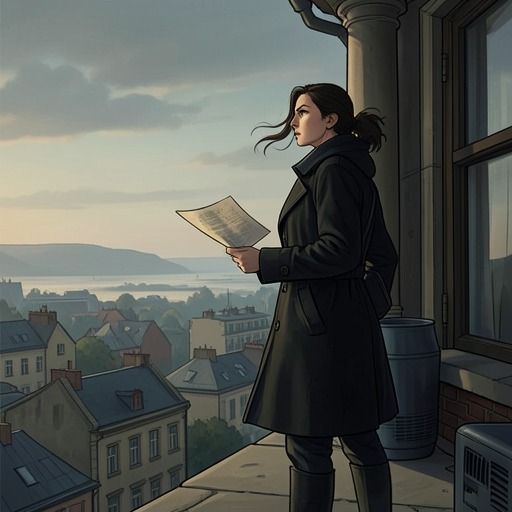
Alone in the house after Shannon’s death, Malorie recognizes that she needs both safety and another person’s help. She searches a stack of newspapers kept under the kitchen sink until she finds the classified advertisement for Riverbridge, where strangers are inviting strangers into their home. The notice supplies a destination, but not certainty: she has to decide whether to trust people she does not know in a world where the danger outside remains poorly understood.
Riverbridge is twenty minutes away. Malorie knows that Shannon saw something outside and died, and now she must get herself and her child somewhere safer. The advertisement becomes more than information on a page; clutching it, she commits to leaving the house, despite having no assurance that the people at the other end will accept her.
A drive through a changed landscape
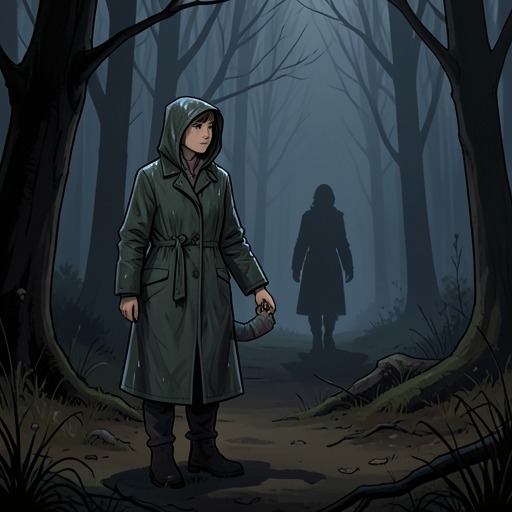
The trip brings Malorie back through a place she visited years earlier, on New Year’s Eve. Then, Shannon drove through slushy streets while people celebrated the coming year. Now it is the middle of July, and Malorie drives alone, scared and grieving. The contrast between that remembered outing and the present journey makes familiar roads feel newly exposed and uncertain.
She travels at no more than fifteen miles per hour, looking for street signs and other cars. She sometimes closes her eyes and then opens them again while continuing to drive, keeping her attention on the road ahead. The landscape gives her evidence of collapse: homes have their windows covered with blankets or boards; storefronts are vacant; parking lots are empty. She follows a route marked on the map beside her, while guilt over leaving Shannon dead at home accompanies the drive. Malorie did not bury her sister; she left her behind.
Near the destination, she passes Roundtree, Ballam, and Horton streets before reaching Shillingham Lane. She recognizes that she is close and turns onto the street already knowing the number, 273, which has occupied her thoughts throughout the drive. The ordinary suburban houses, overgrown lawns, and covered windows make the safe house part of a neighborhood visibly adapted to danger. A few cars outside one house help her identify the place she is seeking.
Admission under precautions
At the house, Malorie closes her eyes, gets out, and carries her suitcase toward the entrance without looking. She crosses the lawn, reaches the porch by feel, finds the doorbell, and rings. When nobody answers, she rings again and knocks repeatedly. The delay leaves her fearing that the journey has brought her to a dead end.
Voices inside debate whether to admit her. Malorie calls that she has not seen anything, says her eyes are closed, and explains that she found the advertisement in the paper. A man instructs her to keep her eyes shut and come in quickly when the door opens. Once she hears the click, she moves forward; hands pull her inside, and the door closes behind her. Shelter is granted, but entry is not treated as proof that she is safe.
A woman explains that the household needs to feel around and confirm Malorie has come alone. With her eyes closed, Malorie listens while the residents use broomsticks to check along the walls and touch her shoulders, neck, and legs. Someone also checks the closed door behind her. The process turns arrival into an inspection governed by the same caution that shapes life outside: trust is possible, but only alongside measures intended to control unseen risks.
Shelter and its limits
After her arrival, Tom explains that the house belongs to no one present because its owner died. The Internet has stopped working, the household believes the people who maintain the cell towers have stopped working or died, and its cell phones ceased functioning weeks earlier. The landline still works, though Tom does not know whom they could call. His account gives Malorie a first outline of the wider breakdown: reaching a refuge has not restored the communications or services on which ordinary life depended.
The household’s electricity has a local source. Tom says a hydroelectric power plant may keep producing power if its gates were left open appropriately, and that the river powers the house. But the home has no running water; residents fetch water from the well and use buckets for sanitation, carrying waste to latrines dug in the woods. These tasks, like movement through the house and grounds, have to be done blindfolded. The river offers a basis for hope and a reminder that survival depends on fragile arrangements rather than a return to normal life.
The residents also think about how the house could be defended if something entered it. Tom considers the cellar’s old, delicate lock unreliable and identifies the attic bolt as much stronger, making the attic the better place to secure themselves. The difference between those doors gives the house an internal geography of relative risk: even a refuge must be divided into safer and less safe spaces.
The dangers of relying on the well soon become concrete. When Felix goes to draw water, he carries a wooden bucket, follows a path edged with pieces of old picture frames, and remains tied by a rope to a stake outside the back door. At the well, he feels its cobblestone rim and considers whether someone could fit inside before turning the crank. After the buckets he fills remain untouched for twenty-four hours, the household grows thirsty, and the question of whether the river water can be drunk becomes urgent. The shelter’s survival routines cannot eliminate uncertainty about the basic resource on which they depend.
From refuge to a longer route
The safe house becomes a starting point for later survival rather than a permanent guarantee. Years afterward, Malorie is still living under the constraints of blindness, and an injury to her shoulder makes the physical cost of travel especially clear. Her past injuries include falls on the cellar stairs and while carrying a bucket from the well; even familiar household tasks have exposed her to danger. When she eventually has to leave by river, the same landscape that once offered shelter becomes part of a hazardous escape route.
The river behind the house, about eighty yards from the well, is later the route Rick recommends. He tells Malorie that the trip will be at least twenty miles and warns that taking the river is exceptionally dangerous, although it may lead to a better place. The advice links the initial refuge to the later journey: the river that helps sustain the household also becomes the means by which Malorie and the children must seek another home.
At the end of that journey, Malorie reaches a facility where Rick describes a more developed means of survival. Its residents grow their own food and have captured chickens, a cow, and two goats, with plans to seek more animals and build a small farm. For the children, who have seen no living animals other than fish, this environment offers a new possibility beyond the tightly managed household. In retrospect, the flight to Riverbridge marks the beginning of Malorie’s movement from solitary flight to a life organized around shared shelter, practical vigilance, and the search for a safer community.