Malorie names the children
Bird BoxMalorie names the children at Tucker after arriving at a place where survival may no longer demand that every thought be spent on immediate danger. When Constance asks them their names, Malorie recognizes that the question has never mattered to her in quite this way before. She calls the Girl Olympia and the Boy Tom, and the children respond with shy happiness. The moment makes naming an act of recognition: Malorie allows the children, and herself, a kind of personal life that the crisis had kept at a distance.
The Question at Tucker
Constance kneels beside the children and asks their names. The question opens a space Malorie has not previously allowed herself to occupy. Until then, she has called them by their roles, the Girl and the Boy, names that keep attention on the practical demands of protecting and guiding them. Now, as she considers the question, she feels that there may be room in her life for the luxury of names.
The setting sharpens the change. Tucker is presented as a self-sufficient community, with a medical team dedicated to rehabilitating blind people, and Constance tells Malorie that the place should bring her peace. Malorie’s decision to name the children follows this prospect of safety; it does not erase their history of danger, but it signals that life might include more than keeping them alive.
Olympia and Tom
Malorie names the Girl Olympia, placing a hand on her head as she speaks. The Girl looks at her quickly, blushes, and smiles. Her response is small but unmistakable: she likes the name. The naming is not merely Malorie’s private decision; the child’s expression gives the exchange a moment of mutual recognition.
She then names the Boy Tom, pressing him close to her body. He grins, shy and happy. Both children receive names in direct response to Constance’s question, but the gestures differ: Malorie touches Olympia’s head and draws Tom against her. In each case, the name is joined to physical closeness and to a visible sign that the child welcomes it.
Relief and a New Family Future
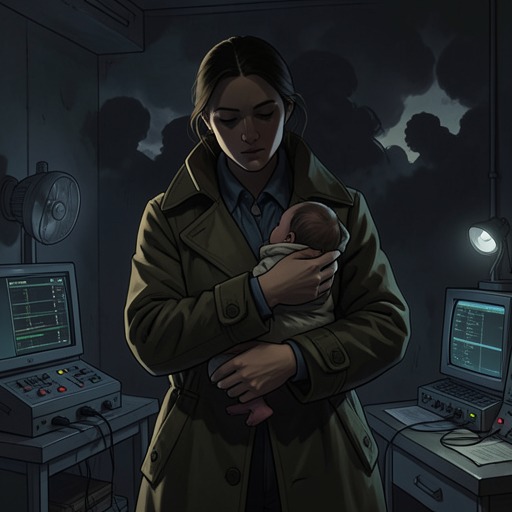
After naming them, Malorie kneels and hugs both children. She cries, and the narration identifies the feeling as relief. The tears give the scene its decisive emotional turn: after a long period in which survival has governed how she relates to the children, she can respond to them not only as people she must protect but as the particular children she loves.
The naming also connects the family’s immediate future to the community Malorie has left behind. As she cries, she thinks of her former housemates working together to bring water from the well, sleeping on the living-room floor, and talking about the new world. She remembers Shannon laughing, finding shapes and figures in the clouds, and treating her with curiosity, warmth, kindness, and devotion. These memories accompany the naming rather than interrupt it: the children’s names make room for a future, while the remembered household shows the human bonds that helped make such a future imaginable.
Significance
This event changes the meaning of the children’s identities within Malorie’s family. The labels Girl and Boy had suited a life organized around vigilance and necessity; Olympia and Tom are names that allow each child to be recognized as an individual. The children’s smiles and shyness confirm that the act reaches them, while Malorie’s embrace and tears show what it releases in her.
The moment’s importance rests not on a sudden end to the danger but on a shift in what Malorie can imagine after reaching Tucker. The promise of a community and of care for blind people gives her a setting in which peace is conceivable; naming the children makes that possibility intimate. Her relief is therefore both an immediate response to safety and an opening toward a family life no longer defined solely by emergency.