Phone book
Bird BoxThe Phone book is a mundane object made consequential by the collapse of ordinary communications: in a world where cell phones no longer provide a dependable answer, its printed numbers give Tom a concrete way to search for other survivors. First encountered as something missing from an otherwise fruitful house, it later becomes the basis of Tom’s calling campaign and, through the pen kept beside it, part of the practical setting for Malorie’s conversation with Rick.
Absence and Material Context
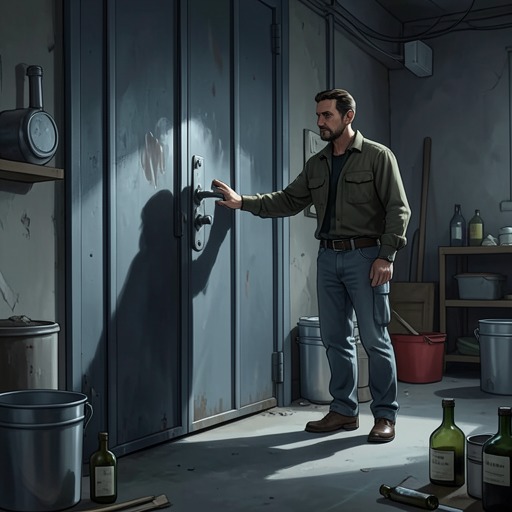
During an early search, Tom and Jules find a house that yields useful supplies, but no phone book. They pack canned goods, paper, two pairs of children’s boots, two small jackets, and a sturdy plastic bucket before falling asleep there. The absence matters because the object is not yet available for the kind of communication Tom will later organize. The narration connects that absence to the modern habit of carrying cell phones, which has left the printed directory behind.
The house also bears signs that its original homeowners prepared to leave town deliberately. Among them are directions to a small Texas city on the Mexican border, a crisis-survivor manual marked in pen, and extensive supply lists. Receipts record purchases ranging from flashlights, fishing poles, knives, and boxed water to a generator, a crossbow, gasoline, and firewood. These traces give the missing directory a particular force: the house contains evidence of planning for survival, but not the tool Tom will eventually use to seek human contact.
Tom Turns the Directory into a Plan
Later, Tom returns to the safe house looking tired but well. He says the dogs worked and led the men, then announces that he has brought something from his own house that he hopes will help further. With Felix helping him handle the duffel bag, Tom unzips it and lets its contents fall onto the foyer floor: a phone book.
Tom immediately gives the object a purpose. He proposes calling every number in it, insisting that someone will answer. The directory is no longer simply a leftover from an older communications system; in his hands, its accumulated contacts become a search strategy. The contrast between the first house, where the book was missing, and Tom’s return with one makes the object’s importance legible through action: an earlier lack becomes the occasion for a deliberate plan.
The narration describes the phone book as only a phone book, while also showing Tom making it into a beacon. That tension defines its role. It cannot guarantee that anyone will answer, and the evidence does not establish the outcome of the proposed calls. What it does provide is a repeatable method and a reason to imagine that the isolated household might reach someone beyond itself. Tom closes the immediate exchange by saying it is time to eat, placing the ambitious plan within the ordinary work of sustaining the group.
A Working Object in Malorie’s Conversation
The phone book remains present after Tom’s announcement. When Malorie speaks with Rick and agrees to write down his instructions, she reaches for a pen kept by Tom’s phone book. The babies cry during the exchange, and Rick notices that she has a baby with her. The directory therefore appears not only as the emblem of Tom’s outreach effort but also as part of the household’s practical environment: it is where a writing tool is kept when Malorie needs to record information.
Across these appearances, the book connects two forms of communication. Tom turns its printed entries outward, toward unknown people who might answer; Malorie uses the pen beside it to receive directions from Rick, an established contact. Neither use restores the old world’s effortless connectivity. Instead, the object supports laborious, fragile contact—one number at a time, or instructions written down by hand. Its significance lies in that modest usefulness: amid the failure of familiar technology, a discarded-looking directory still offers a way to organize hope and preserve essential information.