Shannon
Bird BoxShannon is Malorie’s sister and an absent but enduring presence in her story: her death propels Malorie toward safety, while memories of their ordinary closeness return at moments when Malorie is trying to survive. The novel first establishes their bond through the practical and playful friction of sharing a home, then shows how grief carries Shannon into the new world Malorie must face without her.
Identity and Life with Malorie
Nine months before the children are born, Shannon and Malorie live together in a modest rental that neither has decorated. They moved in only three weeks earlier, despite a friend’s concerns. Both are described as popular and intelligent, but in each other’s company they tend to become unglued. Their first day carrying boxes into the rental already displays that intimacy through a dispute over the bedrooms: Shannon argues that her larger dresser entitles her to the bigger room, while Malorie counters that the other room has the better window.
The disagreement is small, but it introduces a relationship at ease with teasing and contradiction. Their shared domestic life is not presented as idealized harmony; it is familiar enough to include competing claims over space and the ordinary objects they bring with them. That unceremonious closeness becomes important later, when Malorie’s memories preserve Shannon not as a distant figure but as a companion in daily life.
Death and Its Consequences
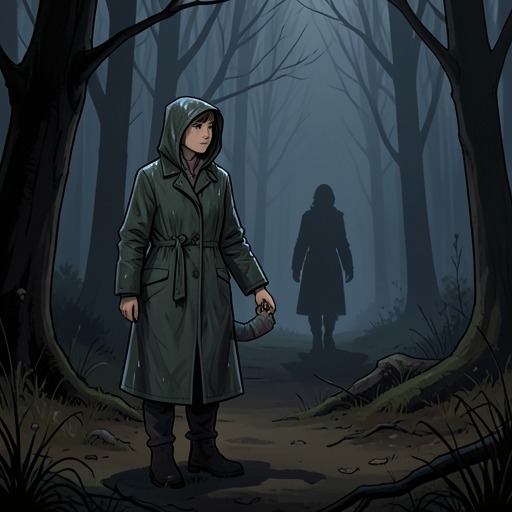
Malorie finds Shannon dead on the bathroom floor, where a pair of scissors has been left in her chest. The discovery overwhelms her. She calls the police, receives no answer, tries her parents, and gets no answer there either. Though she tells Shannon she will get help, she cannot bring herself to turn the front-door knob. The scene makes the crisis intimate before it becomes a journey: the public emergency has entered the sisters’ home, and Malorie is left to respond without the support of the people or institutions she tries to reach.
Searching through newspapers beneath the kitchen sink, Malorie finds a classified advertisement for Riverbridge, where strangers are inviting strangers into their home. She understands that Shannon saw something outside and that it killed her; with a child to protect, Malorie decides she must reach safety. Shannon’s death therefore changes Malorie’s immediate course: the advertisement becomes a possible refuge, and fear becomes a reason to leave. The narrative does not provide a fuller account of what Shannon saw or explain the circumstances beyond this connection, keeping the threat unresolved while making its consequence unmistakable.
A Sister Remembered
Shannon returns to Malorie’s consciousness through memory during a later struggle to hold on. Malorie tells herself to think of Shannon and to hold on to her, then remembers the two of them lying on a sunny hillside and finding familiar faces in the clouds. As children, they point out shapes resembling classmates; Shannon inches closer, rests her head beside Malorie’s, and joins the game. They spend hours looking for faces in clouds, needing only a nose, an ear, or a suggestion of curls to make a figure appear.
This recollection sets the sisters’ shared way of seeing against the catastrophe’s threat around Malorie. Their childhood pastime turns looking into a collaborative, playful act: one sister proposes a shape and the other finds it too. Later, seeing has become dangerous, and Malorie must keep her eyes closed. The memory does not undo Shannon’s death, but it restores a moment in which their closeness depended on looking together rather than fearing what might be seen.
Presence in the House and the New World
Even after Malorie reaches the communal house, Shannon remains a measure of what has been lost and a companion in thought. When Felix takes a bucket toward the well, the wood bucket’s weight is described as grounding him; elsewhere, the housemates’ routines make the practical strain of survival visible. The group has limited supplies, unreliable communications, and no running water, and its members must organize daily tasks under blindfolds. These details define the world into which Malorie arrives, in sharp contrast with the sisters’ recent shared rental, but they do not replace the personal loss that brought her there.
Malorie’s later recollections keep Shannon within that collective history. At the end of her journey, she thinks of the housemates working together to bring water from the well, sleeping on the living-room floor, and discussing the new world. Within the same memory, Shannon appears laughing as she finds shapes in clouds, curious, warm, and doting toward Malorie. Her image is joined to the memory of Tom as someone always trying to solve a problem and to his love of living. The grouping places Shannon among the people whose companionship continues to shape Malorie’s understanding of survival, even though Shannon cannot share its later stages.
Narrative Significance
Shannon’s role is defined by the movement from ordinary intimacy to irreversible absence. The early bedroom quarrel establishes the texture of a sisterly life before the disaster; the classified advertisement and Malorie’s failed attempts to summon help show the practical consequences of Shannon’s death; and the cloud memory allows their bond to recur within Malorie’s later ordeal. These are not separate versions of Shannon but successive ways the narrative makes her presence felt: as a housemate, as the reason Malorie seeks refuge, and as a remembered source of warmth.
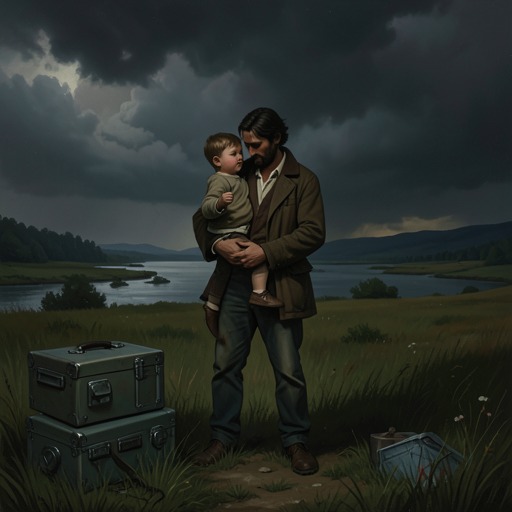
The cloud game also gives the memory a particular force in a story organized around the danger of sight. As children, Shannon and Malorie look at the sky together and make faces from what they see. In the new world, Malorie’s survival depends on not looking directly at the threatening creatures, and she later remembers Shannon while keeping the babies’ eyes covered. The contrast does not make Shannon’s death an answer to the mystery of the creatures; instead, it shows what their threat has taken from Malorie. Shannon survives in the narrative as the sister Malorie loses and continues to remember, a connection to the shared life that existed before fear dictated how anyone could see.