Tom and Robin’s father-daughter relationship
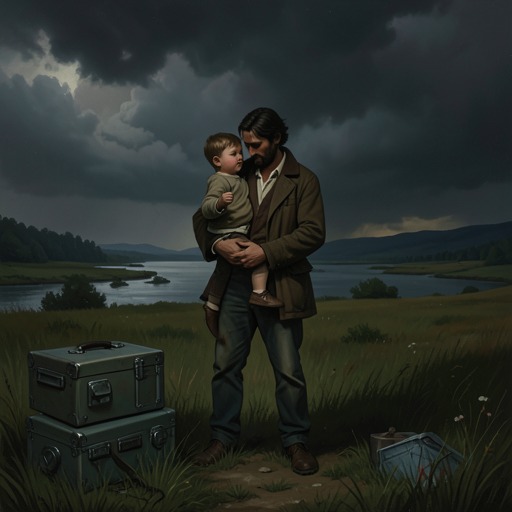
Bird BoxTom and Robin’s father-daughter relationship joins affectionate attention to a painful failure of protection: he knows Robin through the small, distinctive things she notices, tries to shelter her as the world becomes frightening, and later carries her memory into the dangerous work of survival. Her death becomes a private loss that returns in his thoughts and in the ordinary objects he encounters.
Identity and everyday intimacy
Before the crisis, Tom is both Robin’s father and a teacher. He remembers her as unusually perceptive for an eight-year-old, with interests that reveal how closely she attended to the world’s details. She preferred the instructions for a toy to the toy itself, a film’s credits to the film, and the way something was written to its more obvious subject. She also noticed expressions on Tom’s face. Her description of his hair and his answer about whether he shone like the sun ended in a private comparison: Robin told him that he was more like the moon when it was dark. The memory makes their closeness specific: Tom recalls not only that he loved his daughter, but how she looked at him and what she found worth noticing.
That attention gives the relationship a particular texture. Robin’s way of reading instructions, credits, writing, and facial expressions suggests a child who found meaning at the edges of things; Tom’s recollection of those habits keeps her distinct from the generalized image of a child endangered by the crisis. His account also identifies an earlier absence in her life: Robin’s mother died during childbirth, and Robin had never met her. Tom tells Malorie about this loss as part of what she needs to know about him and his daughter.
The crisis enters their home
When reports about the creatures began appearing in the news, Tom initially resisted living in fear. He tried to maintain daily life and wanted Robin to feel less afraid of what she had heard at school. As the danger became harder to set aside, however, their ordinary routines narrowed. Parents began withdrawing children from school, and the school closed, first described as a temporary measure and then as lasting until the community could again regard it as safe. Tom’s own school also closed around the same time, leaving father and daughter together at home. He remembers seeing how much Robin had grown and how rapidly her mind was developing, while recognizing that she was still too young to understand the full gravity of the reports.
Tom did not want to conceal the news from Robin, but his protective instincts sometimes led him to change the station. The radio became frightening enough to bring her nightmares, and he spent considerable time calming her. Their precautions became explicit agreements: neither would look out of the windows, and Robin would not go outside without his permission. Tom describes the difficulty of trying to make her believe that life was both safe and horribly unsafe. His care is therefore bound to an impossible task: he can set rules and comfort her, but cannot give her a reliable account of the danger or make the outside world secure.
Loss and its unresolved question
Robin began spending nights in Tom’s bed. One morning, after she had spoken the night before about wanting life to return to how it used to be and about wanting the mother she had never known, Tom woke to find her gone. He initially told himself she was adjusting to the new life. In retrospect, he wonders whether she had already understood the seriousness of what was happening outside their home before he did. His account marks a painful contrast between a father’s attempt to preserve childhood and a child’s recognition that the familiar world had changed.
Tom found Robin dead in the bathtub. The circumstances establish the scale of his loss, but not its cause in the sense that troubles him most: he cannot know whether she looked outside or made her decision without seeing the creatures. He leaves that question unanswered. The uncertainty matters to their relationship because Tom’s memories do not resolve into a simple explanation that would make him able to understand or prevent what happened. His grief is made of intimate knowledge of Robin alongside a final, consequential gap in what he can know about her.
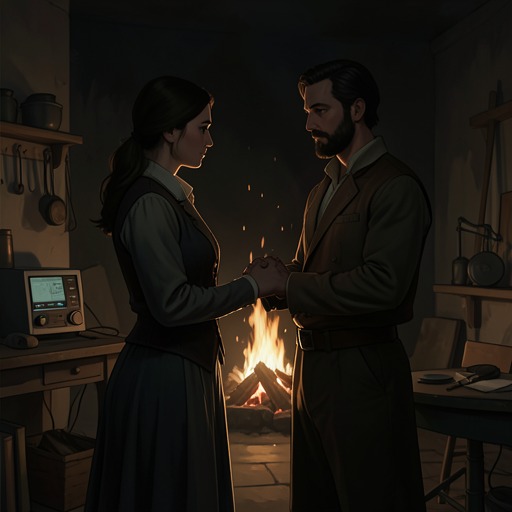
When Tom tells Malorie about Robin, she reaches for him and holds him. He does not cry; after a moment, he goes to the shelves and begins marking the paper. The scene connects disclosure to action without suggesting that the work erases his grief. Robin’s story has been entrusted to another person, while Tom returns to the task in front of him.
Memory carried into survival
Robin continues to accompany Tom after her death. During an outing in which he and the others use broomsticks to feel their way forward, Tom senses the change from the concrete porch to the lawn and briefly feels exposed and unsure. He steadies himself by thinking of Robin and silently framing the errand as getting dogs for them. The memory functions as practical resolve: recalling his daughter helps him continue moving through a world where sight cannot be trusted.
Later, inside a stranger’s house with Jules, Tom recognizes a toy and sees a photograph of a fair-haired young boy. The child reminds him of Robin, and Tom reflects that nearly everything he has encountered since her death has done the same. He imagines the family who once lived there together—parents and child hearing the early reports and watching the news—then returns in thought to Robin. The scene links his personal bereavement to the broader absence of ordinary families: there is no evidence of a pet, but what weighs on him is the absence of people. Robin’s memory is not confined to recollection of their own home; it shapes how he reads abandoned domestic spaces and the human lives they once held.
Significance of the bond
The relationship is shown through remembered particulars, protective routines, unanswered loss, and recurring acts of remembrance. Tom’s account preserves Robin’s humor and perceptiveness, but it also records the limits of parental protection under the crisis: he could change the station, calm her after nightmares, and establish rules, yet he could neither restore the old world nor know exactly what led to her death. In later scenes, the thought of Robin helps him act, while her resemblance to children and families he encounters makes absence newly visible. Their bond thus persists not as a resolution of grief but as a continuing presence in Tom’s choices and perceptions.