Ice contains no future, just the past, sealed away
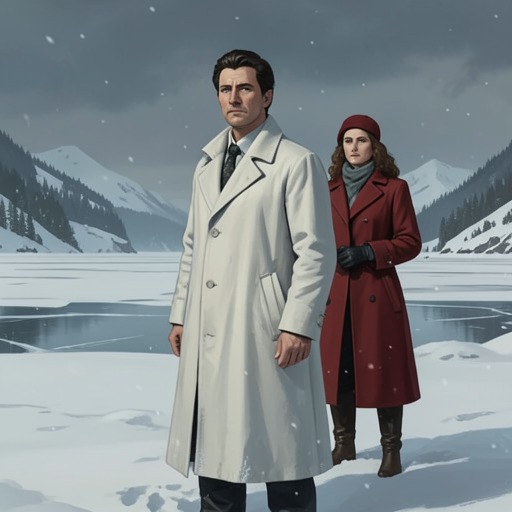
Blind Willow, Sleeping Woman“Ice contains no future, just the past, sealed away” is the Ice Man’s explanation of ice and the limit of his knowledge: he can perceive and preserve the past, but has no conception of what lies ahead. The expression becomes the story’s governing contrast between preservation and futurity. What first sounds like a cool account of his unusual perception grows ominous when his wife imagines herself frozen into the past and, later, fears that their child and family will remain trapped at the South Pole.
Meaning and Origin
The Ice Man gives the expression in response to his wife’s question about whether he can see her future. He denies being able to do so, saying he is not interested in the future and has no concept of it. Instead, he describes the past as sealed inside clear ice, where everything remains distinct and preserved. His image makes ice a medium of knowledge, but a strictly retrospective one: it can reveal what has been, not what will be.
The distinction also clarifies the Ice Man’s unusual knowledge of his wife. He knows intimate details of her family, age, interests, health, school, and friends, including things she herself has forgotten. He compares looking at her to looking deep into a clear block of ice. Yet this ability does not amount to foresight. The expression sets a boundary around his power even as it makes that power unsettlingly comprehensive.
The Ice Man’s Own Past
The wife later asks why the Ice Man never speaks about himself, including where he was born, what his parents were like, or how he became an Ice Man. He replies that he does not know the answers: he has no past of his own, although he knows and preserves the past of everything else. The image therefore carries a paradox. Ice holds the histories of other things, while the being most closely associated with ice cannot locate his own beginnings.
Their relationship makes this absence concrete. After they return to Tokyo, they date every weekend, usually sitting together on a park bench and talking rather than going to movies, cafés, or restaurants. The Ice Man hardly eats, and their conversations range across many subjects, but he never tells her about himself. His silence is not simply withheld biography: by his own account, there is no personal history for him to recount.
The Expression Becomes a Fear
The wife’s later dream gives the Ice Man’s idea a frightening human form. She dreams that she falls into a deep hole, is frozen, and remains conscious but unable to move. In the dream she has no future; she becomes part of the past as it steadily accumulates, while others watch her disappear into it. The dream does not establish what will happen, and the Ice Man insists that dreams come from the past rather than the future. His reassurance—that dreams should not control her—does not dispel her uncertainty.
The contrast between his calm certainty and her fear sharpens the expression’s ambiguity. If ice preserves, it also arrests change: to be preserved is to have no future in which to move or become otherwise. The story does not confirm that her dream predicts events. Instead, it lets the language of sealed time shape her apprehension as the couple prepares to travel south.
South Pole and Consequences
Before their departure, the wife regrets suggesting a trip to the South Pole. She notices changes in her husband: he grows quieter and more stubborn, his eyes seem more piercing, frost increasingly covers his fingers, and he stops eating. When she proposes Spain or another ordinary destination instead, he refuses; he has already bought their tickets and purchased a fur coat and fur-lined boots for her. Her repeated dream of freezing makes the journey feel threatening, but the story presents that fear through her perspective rather than as a confirmed prediction.
At the South Pole, winter closes off departure. The runway is buried under a hard sheet of ice, and the Ice Man says that no planes or ships will come until spring. Three months after arriving, his wife realizes she is pregnant and becomes convinced that their baby will be a tiny Ice Man, with his eyes and frost-covered fingers. She also believes their family will never leave the South Pole. The story does not present these convictions as independently verified facts; it gives them as her understanding of what their isolation and her husband’s nature mean.
The expression thus ends in a tension rather than a resolution. The Ice Man’s account of ice begins as a limit—he can know the past, not the future—but the wife experiences that limit as a possible fate: a life sealed into the past, with no way out. Even as she says she knows that he loves her, she feels increasingly alone, and the words of love seem to recede into the past. Ice preserves what it contains, but preservation here cannot promise warmth, change, or release.