Identity dissolution and depersonalization
Blind Willow, Sleeping WomanIdentity dissolution and depersonalization are recurring states in which the narrator can no longer experience himself as a stable, continuous person. During the flight with Izumi to Greece, the fear of losing a suitcase becomes a crisis of identity; later, on a nighttime walk after Izumi has disappeared, the narrator again feels that his body is merely a substitute. The episodes connect the loss of familiar possessions and the absence of Izumi with his fear that the self they helped sustain has vanished.
First episode: the suitcase on the flight
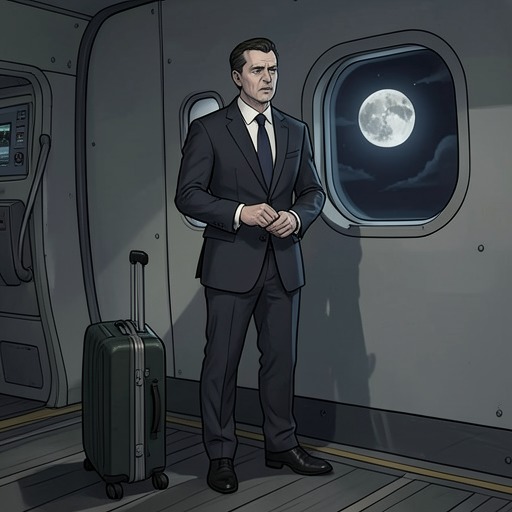
The first episode begins as the narrator and Izumi travel toward Greece after abruptly leaving Japan. Each has packed a medium-sized blue Samsonite suitcase. As their plane passes over Egypt, the narrator imagines that someone has taken his bag by mistake. Because so many identical cases exist, he fears arriving to find a stranger’s belongings inside his own. The possibility that the bag may not be his turns a practical worry into a question of whether anything connects him to his life.
The narrator imagines that if the suitcase is lost, Izumi will be the only remaining link to his former identity. He feels as if he has disappeared and describes the person occupying his seat as no longer himself: his mind has attached itself to packaging that only resembles him. The image makes his sense of self seem contingent on recognition and continuity rather than securely grounded in his body.
The fear becomes physical and difficult to control. The narrator experiences sustained shaking, sweating, and a sense that the body he occupies could break apart. He wants both mind and flesh to disappear. Izumi holds his hand and embraces him without speaking; the narrator understands her silence as an awareness of what he is feeling. Her presence offers contact at the moment when he cannot feel securely attached to himself.
When the shaking subsides, the narrator relaxes and sleeps. He wakes to the Aegean below the plane. The change does not resolve the larger uncertainty about identity, but it marks the end of the acute episode: the flight continues, and the feared separation from his own life has not, at that point, occurred.
Return of the state on the island
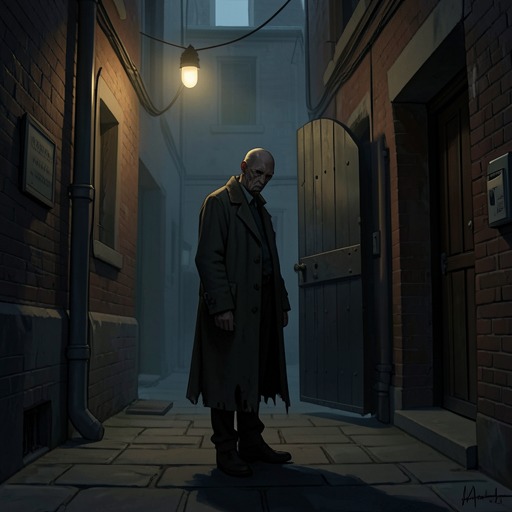
The experience recurs on the Greek island after Izumi disappears. The narrator follows music toward a village where he suspects a wedding celebration is taking place. At a crossroads, he considers which way to go and imagines Izumi hearing the same music and choosing the path uphill. As he climbs, he suddenly feels that he has disappeared. The moonlit walk brings back the feeling he had aboard the plane: the person moving through the landscape seems like a stand-in rather than his real self.
He tries to verify his identity through his own body, but the ordinary recognition of face and hand fails him. He imagines himself as a puppet animated for a brief time, lacking the glow of real life. He wonders where the real self could be. The question repeats the airplane episode’s central division between an apparent person and an inaccessible, supposedly more authentic one.
A voice that sounds like Izumi answers that the narrator’s real self has been eaten by cats. He looks around and recognizes that the voice has been in his head; the landscape offers no visible confirmation of it. Rather than treating the statement as an external event, the passage presents it as part of the narrator’s distressed consciousness. The imagined answer gives his fear a stark form: the self he is trying to locate may already be gone.
Objects, memory, and attempted anchoring
The narrator tries to withstand the episode by reaching for something real. He compares the effort to clinging to a rock at the bottom of the sea while a wave passes overhead, and reaches into his pocket for coins. Their presence gives him a physical object to hold, though it does not make the surrounding uncertainty disappear. The gesture echoes the earlier importance of the suitcase: material things become possible anchors when the narrator cannot rely on a settled sense of self.
He also recalls the apartment he left in Unoki and, especially, his jazz record collection. He remembers collecting records by white jazz pianists of the 1950s and 1960s, searching shops, trading with other collectors, and valuing the intimate atmosphere of albums that were not necessarily first-rate. He can recall the weight of the records and details of their covers, but he has left them behind. Memory makes the collection present in thought while confirming its absence from his life; the records cannot be recovered as objects or heard again in this lifetime.
This contrast sharpens the crisis. The narrator can summon precise memories of a former home and its possessions, yet those memories do not restore the identity associated with them. The coins offer immediate physical contact, while the record collection supplies a more elaborate image of a life relinquished. Neither removes the fear, but together they show how the narrator searches for continuity in objects after severing ties with his former surroundings.
Izumi’s disappearance and the limits of reassurance
Izumi’s absence intensifies the returning state because the narrator has already understood her as the remaining connection to his life. On the hillside he asks where she has gone and how he can continue alone on the remote island. He describes her as the one thing holding together his fragile, provisional self. The phrasing makes their relationship more than companionship in exile: in his own perception, it has become a support for the coherence of his identity.
The narrator attempts to explain the episode to himself as exhaustion and emotional strain, telling himself to hold on to what is real. Yet the music, the apparent voice, and his uncertainty about what he hears leave him unable to trust perception completely. He continues uphill to look for evidence of the celebration he believes he heard. At the summit, he sees the sea, harbor, and sleeping town; there is no sign that a gathering took place. The empty hill does not establish what the music was, and the narrator returns without the confirmation he sought.
That night he cannot sleep. His thoughts return to cats, now imagining them in the locked apartment he left behind. The episode closes not with a recovered identity or a clear explanation of Izumi’s disappearance, but with the narrator held through the night by the moon and by images of his own absence. Across the two episodes, depersonalization registers the cost of losing familiar possessions, home, and the person he regards as his last personal anchor; the narrative leaves the reality of the island’s music and the fate of Izumi unresolved.