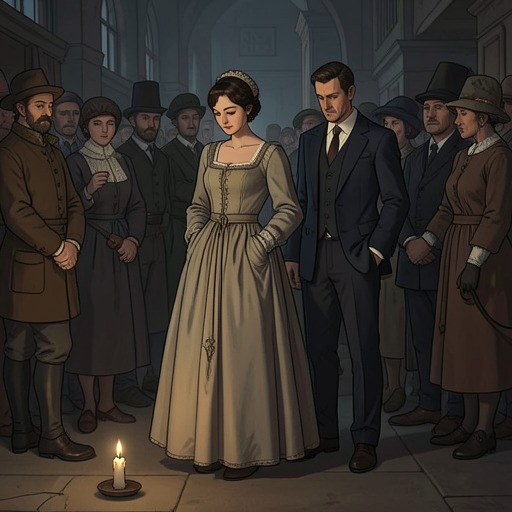
Junpei
Blind Willow, Sleeping WomanJunpei is a writer whose adult relationships are shaped for years by a pronouncement his father makes when Junpei is sixteen: that exactly three women in a man’s life will have real meaning. Junpei initially treats this as a rule to obey, and the loss of a woman he regards as the first such person leaves him afraid to commit. His eventual relationship with Kirie leads him to count her as the second, yet also to see that the countdown itself is not what matters; what matters is deciding to accept another person completely.
Identity and Background
Junpei and his father share a family bond but are not close enough to speak openly about their feelings. His father rarely offers him philosophical advice, which makes the declaration about three significant women unusually vivid in Junpei’s memory. The remark comes without explanation of its basis, but its certainty gives it the force of a settled law. Junpei listens in silence and later wonders whether his mother is one of his father’s three women, questions he cannot bring himself to ask.
At eighteen, Junpei leaves home to attend college in Tokyo. He becomes a writer, but takes longer than most people to turn feelings into concrete action. That delay becomes consequential: the first woman he believes has real meaning for him marries his best friend before Junpei can express his feelings. She later becomes a mother, and Junpei removes her from the future possibilities he imagines for himself. In the terms of his father’s theory, only two places remain.
The Countdown and Its Costs
After that loss, Junpei assesses each new relationship by asking whether the woman has real meaning for him. The question creates a conflict between wanting to meet someone important and fearing that he will use one of his few remaining chances too soon. He doubts his ability to express love at the right time and in the right way, and often imagines that he seizes life’s trivial opportunities while letting the essential ones pass. The thought leaves him discouraged.
The same caution shapes his conduct. After spending several months with a woman, he may seize on a small trait or behavior that displeases him and feel, privately, relieved. He tends to remain in pale, indecisive relationships until they dissolve without argument or confrontation. He becomes adept at choosing convenient partners, avoiding relationships that might be difficult to end. Whether this pattern comes from his temperament or from his father’s theory remains uncertain to him; he sometimes thinks of the theory as a curse.
Near college graduation, Junpei has a violent argument with his father and breaks off contact. The estrangement does not free him from the older man’s idea. Instead, the unexplained three-women rule persists as an obsession. Junpei even half-jokingly considers whether turning to men could release him from the countdown, but women remain the only people he is sexually interested in.
Meeting Kirie
At thirty-one, Junpei meets Kirie, who is thirty-six, at a party for the opening of an acquaintance’s small French restaurant in Tokyo. His close friend has cancelled, leaving Junpei alone at the bar with a glass of Bordeaux. As he prepares to leave, Kirie approaches with a purple cocktail and asks whether he is a writer. Their age difference and the chance circumstances of the meeting mark a new beginning, but Junpei’s familiar habit of measuring relationships against his father’s theory remains in the background.
The relationship ends without a quarrel. Junpei waits months for Kirie to contact him, and his attempts to call her do not go through. By summer, he accepts that she does not intend to see him again. The quiet ending resembles the earlier breakups he has allowed to fade naturally, but his response to Kirie is different: he cannot settle whether she belongs in the countdown or what the feeling he has for her should be called.
Change and Ending
Junpei gives himself another six months to decide whether Kirie was one of the women who had real meaning for him. During that period he writes a large number of short stories with intense concentration. As he works, he thinks of Kirie as alone somewhere high with the wind, recalling her words, “Just me and the wind.” The memory clarifies that his feeling is unlike what he has felt for other women: it has a distinct weight and cannot be exchanged for something else. Even if they never meet again, he believes, her absence will remain with him.
At the end of the year, Junpei decides to count Kirie as number two. Yet the decision no longer carries the fear that one final place must be protected at all costs. He recognizes that the numbers and the countdown have no meaning beside the choice to accept another person completely. His development is not a reunion with Kirie or an escape from loss; it is a change in how he understands love. The rule that once encouraged him to delay and withdraw gives way to a willingness to acknowledge what the relationship meant, even without possessing or recovering it.